

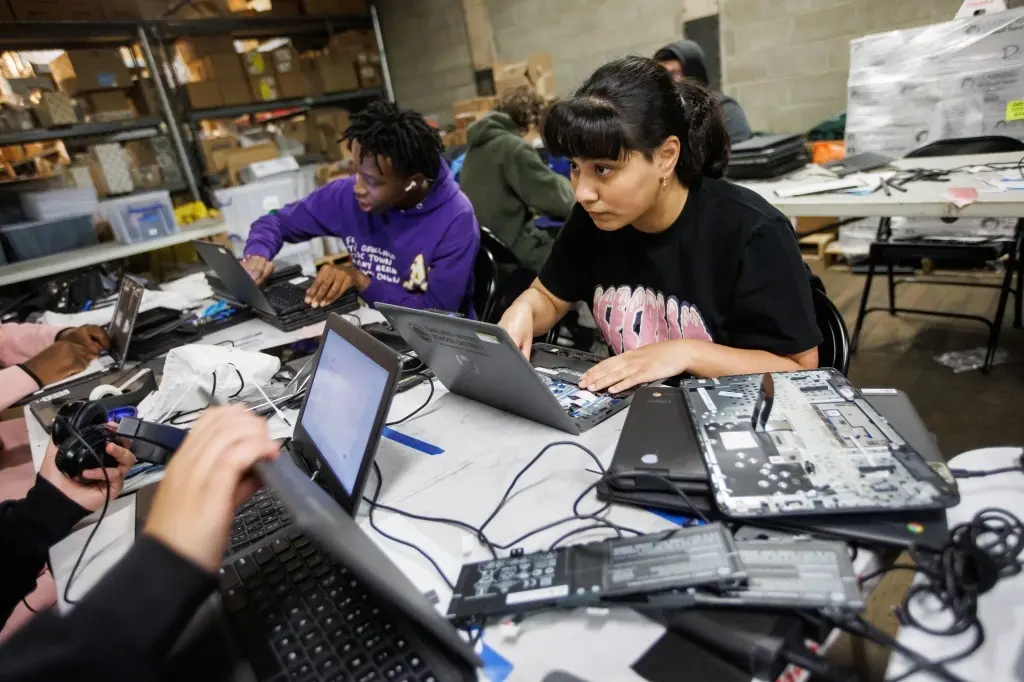
There are few things quite as emblematic of late stage capitalism than the concept of “planned obsolescence”.
Companies making mass market devices should be required by law to support them indefinitely, or until they publish the technical specs sufficient for community support and repair.
The upgrade cycle they’re allowed to get away with today is not only a ridiculous drain on people’s money, but also a shameful source of pollution and waste.
until they publish the technical specs sufficient for community support and repair.
I want to see phones with no further official OS support have their boot loaders opened up so a lightweight OS can be installed on them instead. I’ve had iPhones in the past that have been absolutely rock solid after a battery replacement that lost iOS support, and with that a whole bunch of resale value. So I now tend to sell mine a year or so before they’re likely to be dropped.
But I genuinely think that I’d hold on to an iPhone that could have an alternative OS installed. This is, of course, why none of the major manufacturers allow this. Gotta put the profits ahead of the ethics.
Exactly, bootloader locking should be downright illegal. If EU wants to make phones last, they need to mandate that you can unlock the bootloader (WITHOUT bullshit like having to get an unlock code from the manufacturer). Want to lock it down for certain software features like payments, etc? Ok, fine, I can live with that, so long as I can unlock it if I so choose and keep all HARDWARE functionality intact.
On another note, the manufacturers should be upstreaming and mainlining their drivers in the Linux kernel. ChromeOS and Android are both built on Linux, yet they keep all their hardware support in forks and branches that are left to wither and die rather than submitting those changes upstream. Only a select few ARM SoCs have mainline support. If the companies would just put a bit of extra effort into doing things right rather than the shitty hack jobs they do now to get products out the door as fast as possible, we could have a much better ecosystem around old phones. Of course, the shittiness is by design.
Comments upon comments ignorant of the realities of the privacy laws governing this domain and the implications on firmware, driver and OS security support. “Just install Linux on it” is a completely unworkable solution. As some have pointed out, the places where this is done have a much thicker IT departments staffed with higher grade professionals to make it work. The thing to be mad here about is the shit support from vendors across the stack. If I had to guess, the worst offenders are probably the SoC vendors who typically ship firmware and driver updates as is the tradition.
I mean, even if just installing a different OS were an option, you’d need to install and setup that OS on a few hundred computers or more. I used to work for a place that would essentially do the enterprise enrollment in bulk before shipping off the computers to schools. I could only setup a bit under 100 over an 8 hour workday, assuming no major issues (like captchas on the login step, or the wifi going out). Keep in mind that we also had specialized little microcontroller* USBs specifically for doing all the enrollment keypresses, and enough of those for someone to setup multiple computers at once.
I am actually curious as to how you would make a locked down managed linux OS akin to ChromeOS. Maybe there would be a way to do something like that that’s also faster to setup, but idk.
*centipedes are the name for the ones we used.
That’s exactly the problem. The standard GNU/Linux distro isn’t suitable to allow carrying the responsibility that an innumerable number of users with physical access won’t be able to pwn those machines. Machines that are used by others too. You absolutely can make an OS like that out of Debian or Ubuntu, or what have you. Google has - Chrome OS - but it’ll take a significant development effort. You’d have to basically redo at least some of the work they’ve done. And let’s say you did all of that. Then you end up deploying it on an ARM-based fleet. And there’s a wild vulnerability in the WiFi firmware blob, and the SoC vendor no longer supports it. Every student has root and we’re back to the original problem. 👨🚀🔫
And that’s why instead of getting hardware from a vendor and hoping for the best, you might want to get it in writing that they’ll support their crap till a date. Then you stamp that as the EOL date for that laptop and you present it as part of the spec to whoever might want to buy this laptop. There’s no escaping this problem unless there are no proprietary blobs on the system, which is unlikely for ARM, or you have a solid development team and you’re large enough to have a source sharing contract with the vendor that lets your team fix the vulnerabilities and support the hardware for as long as you like. It’s probably much easier to achieve on x86, which costs more per unit up front.
I am actually curious as to how you would make a locked down managed linux OS akin to ChromeOS.
Because Linus Torvalds stupidly refused to change the Linux license to GPL3.
What difference would the kernel licence make in this context?
This sounds like there’s a market for a Linux distro that behaves like ChromeOS and can be centrally managed.
Honestly people should stop buying Google products…
I manage my schools IT - and when we started out a few years ago my board were pushing aggressively for Chromebooks. The service provider were talking about how they could roll out hundreds of Chromebooks at the touch of a button. When I asked about the lifespan of a Chromebook I got vague answers. I knew we would get a couple of years max out of each one so I instead pushed for much more expensive MacBooks. 5 years on and we are still using our original MacBook we got back then, with photoshop and other software.
x86 Macs are not the greatest example of longevity at this point.
Really? I just handed down a 2017 MacBook Pro – still supported by Apple, meaning it runs the latest OS, and gets patches.
Can you give me an example of any other device with longer software support from the original vendor, at no cost to the end user?
Not ideal that we had a percentage of our MacBooks on x86 cpus when the M1’s came out. But I will say they are still running strong. Others have pointed out that newer OS updates won’t work on the older MacBooks. But that’s not a deal breaker for us as we don’t run anything that’s OS specific enough to make the older models obsolete. We have factored in 5 - 7 years of use out of the laptops and we’re on course for that. I myself and using a 10 year old MacBook at home, and although I can’t fire up the latest Adobe Premiere on it, I can certainly get 99% of my work done on it.
Ironically the only way to use some old Macbooks these days is to put Chrome OS Flex on them. Apple is far more aggressive about killing off old hardware when it feels like it. You can still use them as-is of course but over time the browser and other web based apps degrade and refuse to work because of issues with TLS, CA certs (expired), discontinued backend APIs and unsupported web content APIs.
Chromebooks expire? What the fuck? Are there logistical problems with installing Linux on these devices?
All of these machines make for decent Linux laptops. I picked up an EOL Chromebook for $35 last year and installed Debian on it. Decent little machine. Not terribly fast but very useable.
These are Linux laptops. But yes, they’ll work better if you put your preferred distro on them.
I turned one into an Emacs machine, it was £20 and I fucking love it. It’s built like a tank too. It’s a dell Chromebook 11.
deleted by creator
I’m currently in the market for something like a Chromebook but I’m not buying one because of stuff like this.
If you want a fancy Chromebook, there’s the Framework Chromebook (or you could just get the regular Framework laptops)
I am very happy using a surface go with Linux (used arch with GNOME for a while, now trying out KDE Neon for a change).
Those are great for hosting a Ubuntu server (as long as they are not CPU intensive). You can buy a dongle to connect it to the router for Ethernet, then add a SD card or connect a hard drive by USB and it’s quite solid. There’s a few tweaks needed but it’s an incredible learning experience.
After reading all the comments, I’m just gonna say that if you don’t allow kids to tinker and do their thing, they will learn a lot slower and your “investment” will be left mostly unused. (age range proper hardware/OS of course.) The school policy is not doing the kids a favor, it’s a waste of time and tax money that you cultivate a generation of people get used to chrome book and google apps. That’s the ultimate purpose for school license being cheaper.
Why are schools pushing so hard for enslaved Linux laptops?
The service life of the devices was known up-front. You can check for yourself the service life dates of every Chrome OS machine here:
https://support.google.com/chrome/a/answer/6220366?hl=en
The correct deployment strategy would be to make a big purchase at the front end of a device’s lifecycle and then only replacements from then on out so that you get the most out of every machine. Future capital purchases would be with a new device and termination date.
I think this point is really important, and allow me to go one step further: I work in the public sector of education and purchasing technology is such a complex issue that IT governance has to be involved with decisions like this. That’s to say that, without a governing body to review purchases (outside of whoever handles the actual procurement, i.e. funds leaving the bank account), mistakes like this will happen.
We can be upset with planned obsolescence, but there’s distinctly a human error here where there wasn’t enough research and planning.
Hey Mike Judge should make a movie about this
Anyone got a non-paywalled version of the article?
Sorry! I didn’t realize it was paywalled because I could see the whole thing. Hopefully this should work:
When I was in 9th grade it was netbooks with Windows 7 and they were also terrible and fated for the recycling bin before I was a junior.
In most enterprise IT your lifespan for hardware is between 5 and 7 years maybe 10 for printers and network switches.
I’m sure most schools try to stretch hardware as far as it will go but IT would have known when they bought the Chromebooks that they’d not be long for this world as cheap as they were and that’s the price they would pay for paying such a low price.
I think what is sticking up the works is on an administrative level, higher ups are expecting IT departments to stretch EOL dates like they used to do with Windows machines but now they absolutely can’t and Admin didn’t plan to have to buy all new whether or not IT did