What’s your evidence, Richard Easton??!?
You must log in or # to comment.
Our mother who art in WiFi
Thy beacon come
Thou handshake be done
In ac as in 802.11ACK
Let me tempt you with some SYN
No thanks, I’m FIN.
SYN-ACK
Give us this day our daily bandwidth,
And forgive us our connectivity issues,
As we forgive those who disrupt our signal.
From the wiki page
During the late 1930s, Lamarr attended arms deals with her then-husband arms dealer Fritz Mandl, “possibly to improve his chances of making a sale”.[41] From the meetings, she learned that navies needed “a way to guide a torpedo as it raced through the water.” Radio control had been proposed. However, an enemy might be able to jam such a torpedo’s guidance system and set it off course.[42] When later discussing this with a new friend, composer and pianist George Antheil, her idea to prevent jamming by frequency hopping met Antheil’s previous work in music. In that earlier work, Antheil attempted synchronizing note-hopping in the avant-garde piece written as a score for the film Ballet Mechanique that involved multiple synchronized player pianos. Antheil’s idea in the piece was to synchronize the start time of identical player pianos with identical player piano rolls, so the pianos would be playing in time with one another. Together, they realized that radio frequencies could be changed similarly, using the same kind of mechanism, but miniaturized.[4][41]
Gotcha, WiFi is a bunch of tiny pianists in a box
Life is like a box of pianists.
This post is inaccurate. Neither WiFi nor GPS use FHSS, nor is Lamarr anything close to singularly credited with FHSS’ invention (the earliest patent is credited to Nikola Tesla). This also implies that the Allies used her parent - they did not.
Also Richard Easton is the son of the man who invented GPS and had every right to be skeptical of this claim, and it looks like Internet dipsh*ts have bullied him into deleting his twitter account over this.
Wikipedia link for Easton (and Parkinson) credit for GPS: https://en.m.wikipedia.org/wiki/Global_Positioning_System#:~:text=Bradford Parkinson%2C professor of aeronautics,with the rank of colonel.
Ee times article referencing FHSS and Nikola Tesla:
The internet truly is a wonderful place, is it not?
To be fair, I’d be skeptical if you told me Andy Griffith was the father of 3D printing.
Though I’d google it instead of asking for evidence first.
This is mostly wrong: while she did invent what would later be called Frequency Hopping Spread Spectrum (FHSS), it isn’t used in modern WiFi or in GPS. It is used in Bluetooth though.
I should point out that techniques like FHSS are only a part of what makes up a radio communication method. You can’t say it was “the basis of Bluetooth” just because FHSS is one of the many technologies used in Bluetooth. She certainly contributed though.
So she’s the reason Apple removed the headphone jack?

I don’t know who this guy is. Did he do something to Lamarr?
Note that this frequency hopping is no longer used in most WiFi networks today. It is, however, critical to classic Bluetooth, and BLE still somewhat uses it. I have no idea how it’s related to GPS.
Frequency hopping in wifi was never well supported. 802.11a was primarily DSSS and afaik, very few, if any consumer devices supported the FHSS mode.
Indeed. Just speaking from a signals point of view, frequency hopping is not competitive for high bandwidth applications. It is however surprisingly durable in the presence of interference despite its simplicity. We’re seeing this play out in newer Bluetooth standards.
It goes to show that being a good actress doesn’t mean that you can’t also be good at tech, even if you don’t like to to brag about it.
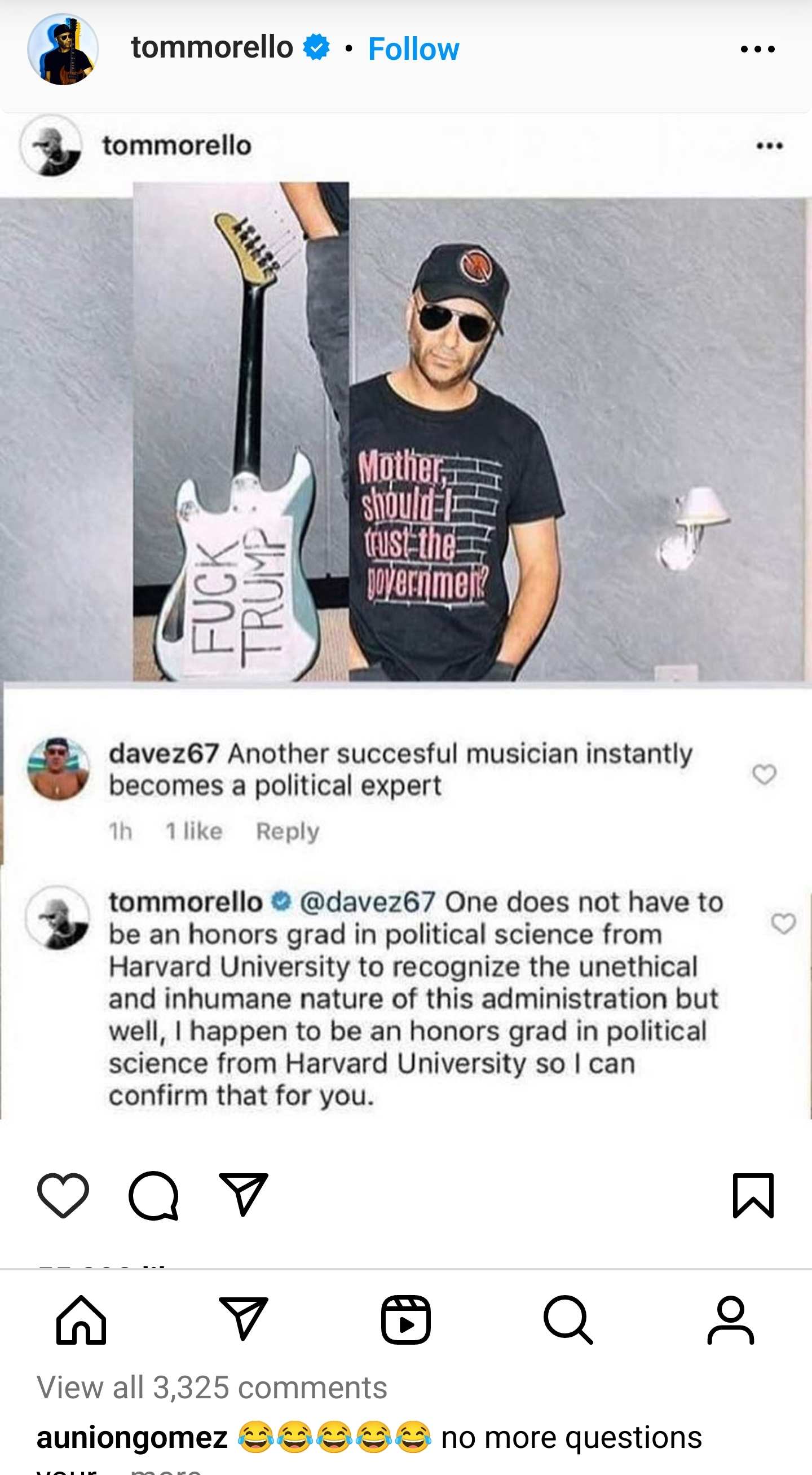
Reminds me of that time someone got into a Twitter beef with Rage Against The Machine. They dropped the “it’s not like you have a degree in political science or anything” line. The lead guitarist went to Harvard for social sciences.
I totally agree with the first part (can’t agree with the second because I’m not an honors grad, not in political science, and not from Harvard)
I like both of Brian Mays carreers. The one as the guitarist of Queen, and the one as an astrophycisist
Saw Queen perform with Adam Lambert a few months ago. They played one or two pieces written by Brian May that really tied those two professions of his together. It blows my mind that he’s worked with NASA and the like quite a bit over the years.
I’m from a Tech and Science background (unfinished Physics degree, most-definitelly-finished EE degree and then about 2 decades at the bleeding edge of Informatics) and some years ago came in contact with the Theatre Acting world for a couple of years whilst living in London (UK), doing various short courses, seeing fringe Theatre and getting acquainted with various (not famous) actors and directors.
Most were surprisingly (for me, at the time, with my pre-made ideas from my Science background and 2 decades in Tech) intelligent people.
Good acting using modern acting techniques and good directing do require quite a lot of brains to pull do well, IMHO, since in things like method acting well before there’s any acting of what’s on a script, there’s a whole process of analysing them and various techniques for discovering the emotions of the character (best I can describe in a short space), at least for stage acting.
The only main difference in capabilities, I would say, is that at least in Acting there is a much higher proportion of Extroverts than Introverts, the very opposite of the proportion in Science and Tech, and Introverts are the ones with the personality type that’s detailed oriented and hence more likely to come up with things like new or changed processes for doing things (IMHO).
This is one of the strangest sentences I’ve ever read, even with context. In the history of the human race, has anyone specifically accused good actresses of not being good with tech?
Woman make thing!? Me no likely! Woke lie!
Fucking troglodytes.
Seems to be more than that to his question though
https://lemmy.world/comment/9701067
Plus the child comment seems relevant

First thing i thought of too lol
Too bad she didn’t get the joke
This is 1874. You’ll be able to sue her!
https://patents.google.com/patent/US2292387A/en
For anyone else curious about this patent.
Okay, well, I’m a network professional with a specialty in wireless and a keen interest in historical wireless networking, and “non-standard” stuff is also quite interesting. I’m no Richard Easton.
I want to start with a disclaimer, by no means would I, nor should I be interpreted to be saying or implying that any contribution, regardless of source, isn’t valuable. Whether it comes from a woman, or man, white, black, or any color in-between, non-binary, gay, bi, trans, whatever. The contributor is valuable and their contribution is always valued.
That being said, FHSS, has its uses, and it’s been used in wireless. It’s a valid technology that should be recognised as such. As with many things, it wasn’t a singular effort, and nobody should imply otherwise.
As others have pointed out, the most commonly known technology which employs FHSS is Bluetooth; and trust me, trying to track down issues caused by BT interference is a nightmare because of it. Generally I avoid the problem by not using the 2.4ghz ISM band as much as possible, but I digress.
For those saying it’s not part of 802.11, it actually is. It’s an old part of the protocol which has long since been replaced and it is considered obsolete by the IEEE 802.11 group.
However, in the 802.11 protocol, sometimes called 802.11 prime (Wikipedia calls it “legacy”), it states: “[802.11] specified two raw data rates of 1 and 2 megabits per second (Mbit/s) to be transmitted via infrared (IR) signals or by either frequency hopping or direct-sequence spread spectrum (DSSS) in the Industrial Scientific Medical frequency band at 2.4 GHz.” https://en.wikipedia.org/wiki/IEEE_802.11_(legacy_mode)
All I want to really add, is that networking is a team sport. If companies and people didn’t work together to make it function, then it wouldn’t work.
Only by collaborating and working together towards improvement and an increase in the ability of the technology to work across all platforms, vendors, manufacturers, and devices, can we get it to function at all. This fact is as true now as it was when FHSS was invented. Everyone needs to work together in order to make any real progress. Otherwise, all of our wifi stuff would “speak” different languages, and nothing outside of a single companies product line, would work with anything else.
Everyone’s contributions have helped wifi get to it’s current state, and that should never be forgotten.
I also work with Wi-Fi and am a CWNE, this post is spot on, thank you for writing this with such accuracy and clarity.
I’ve been thinking of going for my cwna/cwne. I just haven’t taken the time to figure out how to go about it.
Any pointers? Obviously I have a pretty solid foundation of knowledge, it’s just the whole getting it written thing that I’m most unsure of.
Though, having a good resource for studying just to review, would be nice as well.
For CWNA, the study guide and practice tests are all that I would recommend to pass the exam. The guides contain really good information although I’m sure you’ll know a lot of it already. For the CWNP, CWSP and CWAP, I’d recommend the study guide and practice tests again, but with some online research for any topics you’re struggling with. The CWAP exam is quite tough so you’ll need to get hands on with packet captures. But in general I found most exams to be fair and related to the real world, no vendor specific nonsense or horrible trick questions.
Once those are done the CWNE requires three short essays (less than 1000 words). And some other form of input, such as a white paper or blog, the CWNP website has this detailed but don’t worry too much about that now.
For the CWNA, I’d start with the study guide and see how you take to it. I found it really useful throughout my career. Feel free to reach out in the future if you have any questions.
It’s a brief five-minute Google search for me, but it seems that everyone has problems with both reading comprehension and/or causality evaluation.
I think it’s great that such a patent exists and that the technology was invented by her. Yet, even checking the frequency-hopping spread spectrum page on Wikipedia shows that it was only one invention in the long series of discoveries and technologies, which was neither the first, nor the most crucial of them, and this particular option seems to be one of the sources of inspiration for later technologies (along with a bunch of predecessors).
The rest of the criticisms regarding the choice of Wi-Fi over Bluetooth is already mentioned in the comments of others.
I really don’t want to minimise the contribution of an individual towards the development of sophisticated technologies, and I have zero qualms about this individual being a woman, I just think that the presentation oversells the achievement which might cause additional mockery from those who do think that women (and actresses at that!) have no business in anything serious.
What I actually find impressive, however, is that a woman, at the time where women’s rights were far from what they are today (just read about her first marriage, that must have been hard), could be both an actress, an inventor, a producer, all while leading quite a bitter life it seems. Not many can boast that.
I guess where I’m going with that is that she, as many others, may be best praised as an example of a complex person that had many achievements as well as many hardships. Using her as a basis of “Didn’t think an actress could do something worthwhile? Gotcha!” statement seems a bit shallow.
edit: However, since this post showed me that a person like Hedy Lamarr has existed in the first place (yeah, I’m not well-versed in mid-20 century American culture, sorry), and interested me (and likely a bunch of others) enough to Google her biography, I’d say it’s a net positive regardless.
Don’t try and oversell “famous woman does tech thing”. Try and and make people aware of the women who actually did really cool tech things. Marie Curie was a bad ass
There is a great documentary about her on Netflix. It covers her love of science and her attempts to get her design to the military for the war effort.
Seems there’s more than one. Take your pick
https://www.youtube.com/results?search_query=hedy+lamar+patent+documentary
Fire up the ROFL-copter, we got a live one.