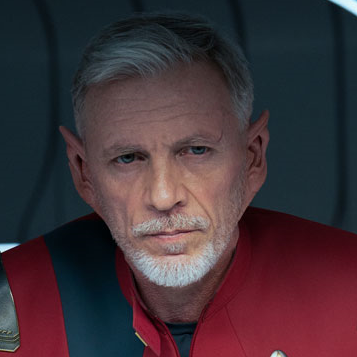
From Janeway, Picard and Sisko to modern Star Trek: what happened to the ethical future we were once asked to imagine?
I have been watching Picard, and I am genuinely surprised by how much the ethical structure of Star Trek has changed.
I am not talking about nostalgia, and I am not saying that characters should remain exactly the same for thirty years.
I am talking about something much more fundamental.
TNG, DS9 and Voyager were built around an ethical premise that, for me, was one of the strongest elements of Star Trek:
THE END DOES NOT JUSTIFY THE MEANS.
This principle appeared again and again.
Characters could make mistakes. They could become angry, afraid, traumatised or confused. They could even cross ethical lines.
But the line existed.
And when they crossed it, Star Trek stopped and examined what that meant.
That was the difference.
The characters did not simply ask:
Can we do this?
They asked:
Do we have the right to do this? What will this choice make us? What responsibility comes with the power we have?
Voyager is probably the clearest example.
They were trying to cross an impossible distance to return home. They could have justified almost anything through survival.
But they did not.
Again and again they accepted a longer journey, greater risk and personal sacrifice because reaching home could not justify destroying another civilisation, exploiting another species or abandoning the principles they represented.
That was not weakness.
That was the entire point.
Humanity had evolved technologically, but Star Trek proposed that perhaps we could also evolve ethically.
And this is where I struggle enormously with Picard.
Picard himself feels fundamentally different.
The Picard I knew could certainly be wrong, but his reasoning had extraordinary internal coherence. He questioned himself. He debated. He understood that being captain was not simply having authority — it was carrying responsibility for how that authority was used.
The new Picard often feels reactive, impulsive and strangely ineffective.
For me, that is not simply “an older and more vulnerable Picard”.
It changes the architecture of the character.
And Seven of Nine is even more difficult for me.
Seven was one of the characters I identified with most.
Her journey in Voyager was not simply about becoming emotional or “more human”.
It was about learning how to be human while maintaining discipline, logic and integrity.
She struggled with identity, belonging and emotion, but what made her extraordinary was precisely her effort not to become governed by impulse.
She could be wrong. She could be severe. She could misunderstand human behaviour.
But revenge was never the foundation of the character.
Her relationship with the Doctor was particularly important because both of them were learning what humanity meant almost from the outside. Their logic often exposed the inconsistencies of ordinary human behaviour.
Now I find Seven driven by anger, punishment and revenge.
At times she feels closer to a Klingon archetype than to Seven of Nine.
For me, this is not character development.
It is a different character.
And the change goes beyond Picard and Seven.
The entire universe feels different.
The older Star Trek made an extraordinary effort to maintain coherence.
Character coherence.
Ethical coherence.
Political coherence.
And even scientific coherence, as far as science fiction could reasonably achieve it.
Of course there were mistakes across hundreds of episodes, but you could feel that the writers cared about the rules of the universe they were creating.
A decision made years earlier could still matter.
A species had a culture and internal logic.
Technology had rules.
Characters carried the consequences of what they had experienced.
And most importantly, Star Trek was never simply fantasy in space.
It was asking something.
What could humanity become if we improved?
Not if we became perfect.
If we improved.
What would happen if curiosity became stronger than conquest?
If responsibility became stronger than ego?
If knowledge created an obligation rather than simply power?
If we learned that having the ability to do something did not automatically give us the moral right to do it?
That was what made Star Trek different from ordinary science fiction.
It was not the Enterprise.
It was not warp drive.
It was not aliens.
It was the idea that the future could contain people who had learned something that we still struggle to understand today.
I started watching Star Trek when I was around 18, and this philosophy genuinely influenced the way I grew up.
I saw many things I already believed in expressed in a more evolved society, and it made those principles feel possible rather than naïve.
Responsibility mattered.
Integrity mattered.
The method mattered as much as the result.
The end did not justify the means.
DS9 challenged this perhaps more
- JANEWAY — Caretaker THE COST OF DOING WHAT IS RIGHT
“I’m not willing to trade the lives of the Ocampa for our convenience.”
JANEWAY — CARETAKER 70,000 light-years from home. The easier way home would cost someone else their future. She refuses.
- PICARD — I, Borg POWER DOES NOT CREATE THE RIGHT TO USE IT
Caption:
PICARD — I, BORG He could destroy the enemy that once destroyed him. Having the power does not give him the right.
- SISKO — In the Pale Moonlight WHAT HAPPENS WHEN THE END DOES JUSTIFY THE MEANS?
Caption:
SISKO — IN THE PALE MOONLIGHT He crosses the line — and he wins. The episode is about the moral price of that victory.
JANEWAY I will sacrifice our advantage rather than sacrifice them.
PICARD I will not become my enemy in order to defeat him.
SISKO I crossed the line to save millions — now I have to live with what I became.
When did Star Trek stop making the moral cost the story — and start treating moral compromise simply as character development?
You’re absolutely right, it’s not the same. I refuse to watch the new franchise because I find it depresses me. It’s so far off from the shows I know and love.
I think it’s hard to blame one person for its divergence, so I blame them all. Cast, creators, producers, and writers equally.
What I like to say is that Star Trek: Picard (STP) is so bad it tries to retroactively drag Star Trek: The Next Generation (TNG) down with it. If you take STP as canon, it means the Federation and one of its best Captains were lying all along about having principles. Red Letter Media did an excellent analysis of how terrible it was, and it depressed the hell out of them. Alex Kurtzman is so much of a hack he didn’t even bother asking why Star Trek is great, he just went straight for generic action sci-fi with interpersonal conflicts
That was not weakness. That was the entire point.
Okay, chatgpt. 🙄
Not sure why you’re getting downvoted, I was already convinced it was LLM generated and I didn’t even notice that bit. The fact that their response to you is completely different seals it.
You’re surprised that someone writes differently when writing a long post about something they obviously care about vs responding to a baseless accusation that only warrants half a thought? Care to elaborate?
thanks
They called Uhura a white skin.
I sincerely don’t understand what would lead you to think the post is AI written, I was enjoying reading people discuss Star Trek before coming across this AI thread, and after having my human written comment called AI not too long ago it bothers me to see what seems to me like earnest writing be called AI.
That’s where I’m coming from when I say that I’m willing to argue, but I follow the core tenets of arguing I learned in philosophy 101 to assume the other person (you) have something worth saying and that questions of meaning come before questions of truth. I’m open to being wrong, but I haven’t seen anything to convince me that I am.
After reading this thread I went back and skimmed through the first several lines of the post with an eye for AI/human indicators, and found three things that gave the impression of a human touch before coming back and writing my comment. First, there was a sentence in all caps, which seems weird for an LLM to do as I believe they usually go for a more neutral tone that’s antithetical to digital shouting. Second, 7o9_99 skipped the oxford comma in at least one place and a cursory internet search tells me that LLMs tend to make full use of that.
But the big thing that I feel bad saying but easily overlooked while reading it for the content is that the post is terribly formatted. My experience has been that LLMs write nice looking paragraphs, and if it does break things out into single lines it tends to do so with bullet points. This post breaks out each sentence into a new line instead of using any real paragraphs that reads to me like a person’s stream of consciousness rather than the more structured writing of an LLM. I guess you could argue they went through and hit enter everywhere to add the new lines but that seems like more work than an LLM user would be willing to put in.
Does that make sense?
Edit: The comment I responded to originally asked “Are you trying to understand or are you just looking to argue?” I’m not sure why they edited it and gave no indication that they did.
bro they called Uhura a white skin
I’m so confused. Who said that? Why was the comment I responded to edited to say the same thing you just did?
OP wrote that in another comment. CTRL+F, my dude. using an AI to write your trek love letter is so fucking cringe.
no dear is my text and my reflections
I highly doubt that, but in case it’s true, consider not allowing yourself to be brainwashed so thoroughly by LLM writing patterns.
Removed by mod
Do you have any particular examples of the “the ends justify the means” attitude you seem to think is so prevalent now?
Yes sure a lot and a lot… but Seven is the clearest example for me.
In Voyager, she repeatedly learns to restrain impulse, revenge and Borg-style utilitarian logic in favour of individual rights and ethical judgement. In Picard, she becomes a vigilante and ultimately kills Bjayzl out of revenge even after Picard explicitly challenges that choice. … she changed is nto mroe seven of nibe and all the character behind…
More broadly, Picard normalises extrajudicial violence, revenge and “necessary” moral compromise much more than TNG/Voyager did. My point is not that older Trek never crossed those lines . DS9 absolutely did. The difference is that older Trek usually made crossing the line itself the ethical problem of the story.
That distinction matters to me: not “nobody ever does wrong”, but the narrative still knows that the means require moral scrutiny.
In Picard, she becomes a vigilante and ultimately kills Bjayzl out of revenge even after Picard explicitly challenges that choice.
And you believe the show was endorsing the fact that she did it? Portrayal of an act is not an endorsement of that act. Seven did plenty of shady stuff on Voyager, from trying to take over the ship to disobeying orders and waking up the Vaadwaur.
That distinction matters to me: not “nobody ever does wrong”, but the narrative still knows that the means require moral scrutiny.
You seem very determined to make the case that the new shows don’t provide that, but I simply don’t agree.
On a slightly unrelated note:
What’s up with double-spacing every sentence?
It’s really
annoying to read
if you ask me.
I think you are partially trapped in nostalgia. Star Trek has never been this philosophically pure. Picard broke the Prime Directive in S1 by having contact with the Edo. And then regrettably prevented them from executing Wesley for trespassing a flower bed. Either should’ve cost him his command.
When Data has an inappropriate chat with a girl on a dying planet, JLP jokes with Riker about the level the shit is up to for them. And there are no palpable consequences for any of this behaviour.
Picard doesn’t feel like he should plant the Borg bug in Hugh. Admiral Valarian Canapés wholeheartedly disagrees. And while I like Picard’s reasoning, from a ten thousand foot perspective I agree with her. With the benefit of hindsight, it would have prevented the best TNG movie from existing but perhaps we would have also been spared Picard S2-3.
Late TNG and early DS9 with the introduction of Starfleet Al Qaeda, i.e. the Marquis, is a turning point for me. We get more stories that are more grey. Star Trek went from Kirk coming to a planet, telling the inhabitants their culture was stupid, to more contemporarily thoughtful treatments of ethical and moral conundrums in a utopian world, to seeing where utopia rubs up against the rest of the galaxy that isn’t there yet. Starfleet and the Federation are no longer exclusively the good guys. Sisko poisons an atmosphere just to catch one traitor and gets away with it. WTF?
Janeway gets a pass from me for most of her bad decisions because she tried and had to figure stuff out by herself. Tuvix be damned!
Enterprise also exists.
Third wave Trek is more grey than Marquis era Trek. It’s more CGI and action oriented because they can. That saves a couple of pages of dialogue otherwise spent on ethics. It’s different just like TNG was different from TOS. But it isn’t a radical change if you ask me.
Early TNG isn’t great until they stabilised the writers room. And then there is a continuation of development through DS9 and even into ENT. (Unfortunately including grade A assholes.) “Chaos on the bridge” is the default for Disco and Picard. And that’s why they often tell weird stories that don’t match up with what came before. They try to do Trek in the now passé golden age of television. And failed a lot imo.
Of all the third wave Trek, I’m most fond of Lower Decks. Because it doesn’t take itself too seriously and is littered with easter eggs. Disco S2 is good. Most of SNW S1-3. Picard had moments in it but that’s it. My heart’s not in it any more. I watch it because I see we are entering another content drought. I even enjoy SNW S4, not because I think it’s good Star Trek but because it’s a middle finger to Paramount for no longer financing any new projects.
I think there’s more to Lower Decks.
Lower Decks shows a crew that’s certainly not as professional and dignified as the TNG-era ones but also one that still feels like the crews we saw back then. They might have issues but they’re also dedicated professionals and they’re all interested in becoming better versions of themselves. Even Mariner, who has a whole menagerie of deep-seated issues, manages to work through them with the help of her fellow lower deckers (and sometimes even the bridge crew).
“Cerritos strong” may be a particularly blunt implementation of the Starfleet ethos but it is one. The idea that they’re all in this together and they’re all working towards a better future for everyone underpins everything the characters do, even when they get drunk off contraband hooch. Ultimately, Lower Decks shows that flawed individuals can come together and achieve great things and that you don’t have to be Jean-Luc Picard to do the right thing.
The show highlights the silliness of the Star Trek universe but it also takes a firm stance on the side of idealism at a time when the writing room seems to be staffed by 1990s comic writers.
What’s up with double-spacing every sentence?
One of the multiple hallmarks of LLM text found in this post/some of OPs comments.
I don’t think nostalgia is the issue.
I’m not saying old Star Trek was morally pure. DS9 in particular had characters crossing serious ethical lines. My point is that the line mattered: when someone crossed it, the story examined the moral cost.
What feels different in Picard is not that it is darker. It is the loss of ethical and character coherence. Too often the characters seem to react as the plot requires, rather than from the moral architecture built around them over decades.
Seven is the clearest example for me. Of course she should change after twenty years. But moving from discipline, logic, self-control and the struggle to build an ethical individual identity toward revenge and punishment needs a convincing bridge. I don’t see enough of that bridge.
Old Trek repeatedly asked:
We can do this — but should we?
Sometimes the characters answered badly. But the consequences of that answer were part of the story.
That is what I miss. Not the 1990s. Not old sets. The coherence and the ethics.
I hear you. You think crossing the line mattered in 80s+ Trek but it doesn’t now. I don’t think that’s true. Sisko poisoning a planet is one of the examples where it clearly didn’t. But should have. So nostalgia is the only thing I could come up with to explain why you like the older and dislike the new stuff.
I don’t want to be in a position where I have to defend Picard, the show. Half of S1 is okay and then it goes off the rails. There are moments in it that are good. Overall, it’s a mess. One aspect that they did well is that they show a hero aging. Kurt Corbain will always be an icon because he ended his life early. So we were spared his ideas on COVID, Q Anon, or pick another hot button issue later in life or albums continually deteriorating in quality. With Picard they wanted to show consequences and chisel away at the icon a bit. The trauma of being borgified. His being sidelined for his unwillingness to bend to his superiors’ will. Why they had to bring his parents into it will be the writers’ secret. But they show consequences of lines being crossed. One of them is him standing rightly on his professional principles. It sounds to me this is exactly the stuff you’re missing and they built the whole S1 premise on it.
Burnham getting to be captain is about as realistic as chubby Kirk being demoted back to Captain.
Just want to say to both of you that this type of discussion about Star Trek is the best and it’s why I love the show.
You both make such great points, and exemplify for me why sitting around in the conference room talking about a tense situation was so important in old Trek. Different viewpoints can both be important enough to be presented in the discussion.
I think we are mixing two different things: consequences in a character’s biography and ethical consequences as part of the storytelling.
Yes, Picard shows consequences: ageing, Borg trauma, losing his position, conflict with Starfleet. I am not denying that at all. My point is that this is not the same thing as the older Trek habit of stopping and asking:
Was this action right? Was it proportionate? Did we have the right to do it? What responsibility follows from it?
That distinction matters.
Sisko poisoning the Maquis colony is actually a good example of where old Trek itself failed to examine something as deeply as it should have. I can criticise that episode too. I am not claiming every old episode was ethically perfect.
I am talking about the overall narrative architecture.
Across TNG, DS9 and Voyager, ethical reasoning was repeatedly built into the story itself. Characters had recognisable moral structures, and those structures were so consistent that in several episodes a change in behaviour was enough for the others — and for us — to realise that someone had been replaced, possessed or manipulated. That level of trust came from coherence.
That is what I find weaker in Picard.
Seven can move from a character built around discipline, restraint, logic and moral self-construction to revenge and vigilante violence, without the story really earning that transformation.
Jurati can kill Maddox while manipulated — and I am not saying she should necessarily have been punished; she might well have been cleared — but older Trek would likely have made the question itself part of the story: coercion, responsibility, guilt, consent, manipulation. Instead the explanation largely replaces the ethical examination.
And with Picard himself, my objection is not that he is old, traumatised or imperfect. I actually find that potentially interesting. My objection is when his established way of reasoning disappears because the plot needs him to react differently.
So no, I am not asking for morally perfect characters or consequence-free heroes.
I am asking for ethical coherence.
Old Trek could show someone doing the wrong thing. But very often, the fact that it was wrong — and why — was the story.
That is the difference I am talking about.
As I said before: I don’t want to be the guy who defends PIC … Jurati being justifiably imprisoned or at least institutionalised may have also spared us S2. Who am I to argue with that?
I’m thinking of Quark who burgled, sabotaged, schemed, snuggled, bought more than one child from the GQuad, and engaged in weapons trade and remained for the most part a comedic diversion character 7 series long. No consequences and maybe the thinnest veneer of looking at any of his decisions from an ethical POV. That’s another reason why I don’t perceive the difference you describe.
We could probably go back and forth a couple of more times here but maybe we leave it at that? Just tell me in no more than a paragraph: Tuvix. Janeway yay or Janeway nay? I’m just curious.
Just want to say to both of you that this type of discussion about Star Trek is the best and it’s why I love the show.
You both make such great points, and exemplify for me why sitting around in the conference room talking about a tense situation was so important in old Trek. Different viewpoints can both be important enough to be presented in the discussion.
Watched the first 3 episodes of Picard. Decided it was just more Abramsverse extension garbage.
Star Trek is dead. It died in the early 2000s when UPN canceled Enterprise. That is my hill to die on.
If Star Trek can’t teach you self reflection or reflection on the state of humanity, including conceptual ethics, it isn’t Star Trek.
Read books instead and try to remember the good times.
I liked the cartoon, it’s silly but it felt more true to the old series than picard
I cant recall what it’s called right now, but it must have been good cause they cancelled it too
The only cartoon for me was from the 70s…
I don’t mean nostalgia. My question is whether we are losing a way of thinking that asked us to become better.
Star Trek used ethics, responsibility and self-reflection as part of the story itself. That shaped how many of us thought about power and humanity.
For me, keeping that alive is not about the past. It is about keeping our conscience active.
U.S has lost that for sure. It’s utterly devoid of ethics. Multiple Western nations are following that path.
Neocolonialism, piracy, genocide. Our countries have become the worst versions of ourselves.
:(
I found Picard to be the most poorly written of the modern Trek series, with some great ideas wasted by haphazard and shoddy execution, but:
Season one ends with Picard convincing Soji that the safety and freedom of synthetic life is not worth welcoming entities that would destroy organic life. Instead she’s working towards peace and understanding in season 2.
Season two charts a redemption arc for no less than the Borg Collective, very much following up on the themes of I, Borg.
Season three shows the result of Section 31’s “ends justify the means” thinking during the Dominion War: enduring hatred leading to the infiltration of Starfleet and near destruction of the Federation.
It’s not well executed, and there is certainly plenty I disagree with, but I think for the most part Picard aligns with the principles you’re talking about.
I don’t actually think Picard arrives at the same ethical conclusions.
The synthetics are a good example. When they decide to activate the beacon and call for help, Picard’s response is basically to stop them and offer to take them away.
Old Picard, to me, would first have changed the perspective of the question: does a persecuted minority have the right to ask for protection? If yes, from whom? At what cost? And what happens if that protection destroys another population?
That is where the real Star Trek dilemma would have been.
Not simply “don’t call them, come with me,” but a confrontation between rights, fear, survival and consequences, until the most ethical solution possible emerged.
That is why I don’t think the destination is the same. The old Picard was not looking for the solution that worked for him. He was trying to understand what was right beyond himself.
That difference is exactly what I miss.
I’ll definitely agree that they could have developed the ethical conflict more. The biggest problem with Picard’s first season was that they really dragged their feet in the first half and then rushed through the climax, throwing up problems and solutions that could have actually been interesting if they’d taken the time to really develop them. It was clear they didn’t have things mapped out and it really hurt them.
But I do think the dilemma as it stands speaks directly against “ends justify the means” thinking. Both sides face an existential threat that could easily justify using destructive means to survive. The synthetics face being wiped out by a Romulan armada short term, and Federation policy long term. Their self-interest says they should call in the organic-destroying super-synths. The Federation (and the rest of the galaxy) face destruction if the synthetics make that call. Their self-interest says they should let the Romulans wipe out the synth colony first.
Neither of those happen, though. Instead Picard fights off the Romulans until Riker arrives, putting his faith in the hope that the synths wont make the call. And the synths stand down, putting their faith in an institution that has up until now been working to legislate them out of existence. And it turns out to be the right decision for both.
tyhank you for your great answer and thinking, I really appreciate you, and I understand your reading, but I still disagree that the ending reaches the same ethical place.
For me, the future of old Trek was not built simply on trust. Trust came from an ethical framework. Old Picard would not just ask a persecuted minority to trust him and the Federation that had already outlawed them. He would first ask: do they have the right to seek protection? From whom? And when does protecting one persecuted group become the destruction of another?
Trek had already spent years asking these questions with Data: when does created life become a person, when does ownership become slavery, and what obligations do creators have toward the beings they create? The Measure of a Man is basically built around that question.
And this is where the Alliance of Synthetic Life bothered me too. They are supposedly a vastly superior synthetic civilisation, yet their reasoning is essentially the most basic human response: you persecuted us, therefore we will destroy you. That felt incredibly simplistic.
One of the strengths of old Trek was that other species did not simply think like humans in different bodies. The Founders in DS9 are a perfect example: their entire perception of identity, individuality, solids and belonging comes from being Changelings. You can disagree with them morally, but their reasoning grows from what they are.
That was what made the encounters interesting. The alien civilisation brought a genuinely different logic to the table, and Star Trek used that difference to make us look at our own conflicts: race, religion, power, minorities, occupation, fear. from another angle.
So yes, the synths eventually stand down. But for me the more interesting Star Trek story was the ethical argument that should have happened before that decision.
I think you’re under-selling the level of depth Picard goes into here. You’re limiting your analysis to what happened in that isolated episode, when Picard is a serialized narrative that is making a much larger statement when taken as a whole. It confronts the theme of how we deal with an overwhelming threat through different facets of a number of different scenarios, only one of which is Soji’s decision in the last episode.
We see the Federation’s isolationist response to the loss of their shipyards, the neglect it leaves the Romulan refugees in, and the anti-synth sentiment it breeds. We see how that hardline attitude impacts even Federation citizens caught up in it, like Rafi and the Rikers. We also see the Federation’s response of the perceived threat of the Ex-Borg, and the effect that has on Hugh and Seven. And we see the Zhat Vash’s response to the knowledge of the “super-synths” and the terrible price the Romulan people pay for that.
All of these are maladaptive, fear-based reactions to the same sort of existential threat the synth colony faces in the final episode, and they’re all contrasted to the choice the synths make there. It’s all part of the same theme being dealt with through the entire season. The answer given to the question of “do the ends justify the means” in the last episode may just be one sentence long, but it’s the final sentence of an essay that started in episode one.
You said in your initial post that when a character crossed the line, Star Trek stopped and examined what that meant, and that’s exactly what’s happening throughout Picard. That’s why the tone is so grim for most of the season. As Picard said right up front, crossing that line means you’re “no longer Starfleet” – you lose something of yourself. And the entire season is driving home that point, but also showing the process of recovering from a mistake like that, and setting a better example for the next generation.
In that regard, I’d also push back against your comment about the synths. Star Trek has a long history of showing that technological advancement is not always accompanied by commensurate wisdom. The synths are like Data was in much of TNG: remarkably intelligent in some ways, childlike in others. A key difference being that they have pronounced emotions, so instead of child-like wonder and curiosity, they’re prone to emotional over-reaction. So maybe V’Ger is a better comparison than Data – an enormous super-intelligence, prone to child-like tantrums.
I’ve appreciated this talk because, like I said, I do think Picard really failed narratively in a lot of ways, so I’d usually not bother to take the time to defend the things that do work. But it’s nice to take a moment to do so, lets me appreciate it a little more myself.
There is a season 3 of Picard???!!!
I stopped watching somewhere midway season 1 coz it was so stupid… But, they made 3 seasons! Dafuk.
They’re all pretty bad in their own ways, but they’re also all a better send off to the TNG era than Nemesis was. So, personally, I’m glad they exist.
Same. I stopped watching too, and I was sad because I kept hoping to see something different.
The plot actually had potential, but I was shocked by how the characters dealt with everything.
Picard contradicts his own words and principles, and sometimes he does not even realise how insensitive he is with Soji, a synthetic being. This is Picard, who was always thoughtful and wise.
Then you have the scientist specialised in synthetics killing Maddox, and somehow it is just passed over without any real reasoning around it.
And Seven of Nine completely changes , her expressions, her reasoning, everything. I loved watching her struggle with the Doctor about her humanity, her identity and her internal conflict. Now suddenly she becomes a revenge-driven character.
It is honestly crazy to me how these characters became like characters from any other film or series.
Star Trek was not like that. It was coherence, reasoning, growth.
It actually educated me a lot when I was younger, and it did it in such a subtle and intelligent way.
Now I feel like I am watching just any other film or drama, wihtout soul. And when Picard started talking about love, I switched it off. Honestly, that was the last thing I could keep.
tyhank you for your great answer and thinking, I really appreciate you, and I understand your reading, but I still disagree that the ending reaches the same ethical place.
For me, the future of old Trek was not built simply on trust. Trust came from an ethical framework. Old Picard would not just ask a persecuted minority to trust him and the Federation that had already outlawed them. He would first ask: do they have the right to seek protection? From whom? And when does protecting one persecuted group become the destruction of another?
Trek had already spent years asking these questions with Data: when does created life become a person, when does ownership become slavery, and what obligations do creators have toward the beings they create? The Measure of a Man is basically built around that question.
And this is where the Alliance of Synthetic Life bothered me too. They are supposedly a vastly superior synthetic civilisation, yet their reasoning is essentially the most basic human response: you persecuted us, therefore we will destroy you. That felt incredibly simplistic.
One of the strengths of old Trek was that other species did not simply think like humans in different bodies. The Founders in DS9 are a perfect example: their entire perception of identity, individuality, solids and belonging comes from being Changelings. You can disagree with them morally, but their reasoning grows from what they are.
That was what made the encounters interesting. The alien civilisation brought a genuinely different logic to the table, and Star Trek used that difference to make us look at our own conflicts: race, religion, power, minorities, occupation, fear. from another angle.
So yes, the synths eventually stand down. But for me the more interesting Star Trek story was the ethical argument that should have happened before that decision.
I wish this was a real discussion prompt and not a (probably LLM-assisted) rant disguised as a question because as it reads now it’s just more of this:

If you don’t like something, that’s fine, but getting upset because [new thing] is different than [childhood thing] is not productive.
What’s up with calling Geordie “The New Spock”?
Everyone else gets their character names under their picture and Geordie isn’t even close to Spock. Data is way more Spock-like.
That’s actually hilarious I never noticed that
In retrospect, I feel like there may have been some anti-black racism in the Star Trek scene, despite the ideals of the show. I was 5 when TNG started.
When Voyager came out I remember my dad making a comment about how “there’s never been a black Vulcan before,” and me thinking, “why does that matter?”
Old-school rage bait, I think. To try to make the reader go, “They made Spock a black guy??”
your udnerstanding is superficial. I suggest you to read again , understand better, and judge less
The fact that your writing in this response is so different than the post and other lengthy comments makes me wonder if my LLM assumption was correct.
I enjoy Strange New Worlds for the most part, and most of the recent series I think I like better than the loud complainers (nothing wrong with that, mind)… I think what bothers me more than the end-means problem is that it seems like everyone talks endlessly about whatever the current crisis is, and the talking seems to 1) not be interrupted by the critical time of the crisis and 2) do most of the problem solving. As in, they stop the action, take time to talk it all out, and then do whatever magical thing magically fixes the problem that we will never see or hear of ever again. It all works out perfectly, and everyone’s emotional needs are met. (except where they’re trying to create ongoing drama otherwise).
I guess it would make for a boring show if crises happened as quickly as they do IRL, and if repairs took as long as they would IRL, but I think they’ve gone WAY too far the other direction on being to talk their way out of any crisis (with a little exciting shaky-camera thrown in)
Yes, I think this is part of the same problem.
Talking was always central to Star Trek, but the dialogue used to build the solution. It clarified the ethical problem, the scientific constraints, the risks and the consequences. You understood why a decision was made and what it would cost.
Now, too often, the talking feels detached from the actual mechanics of the crisis. Everyone processes the situation emotionally, then a solution appears, works almost perfectly, and the consequences disappear with the episode.
For me, the issue is not that they talk too much. It is that the reasoning no longer feels structurally connected to the outcome.
Old Trek could spend ten minutes in a briefing room, but by the end of those ten minutes you understood the problem better.
That made the resolution feel earned.
Now it can feel as if the emotional conversation is the resolution. …
That episode where McCoy blew up the utopian civilization of golden prosperity and peace because they didn’t fuck anymore like god intended.
Look I’m foursquare against dumbing things down just to satisfy folks that don’t like to read, so take this with that in mind.
That was the proverbial wall of text I couldn’t make myself finish. Too damn many paragraph breaks. Some are welcome, as I deal with dyslexia and separation can help with that. But the single line paragraphs was just intolerable. Again, I’m long winded and totally get the need for extended writing to carry a point. But you gotta learn how to format better
It’s always been a discussion, not an unspoken agreement. Every series and film has characters with each of those viewpoints. A viewpoint may go unmentioned for a season but it’s there.
You might be observing that there are prominent moments for one viewpoint more so than the other.
The ends justifying the means was always an open question from TNG, it was just they were on a sliding scale that started from “no you cant execute Westly for messing up some flowers”, all the way up to Die Hard with a baryon sweep. But it didnt even start there. Theres this analysis didnt start with Kirk, cause he was settling those ends with a phaser rifle personally.
And For the Uniform: How can anyone say the ends dont justify the means after that. Oh lets just poison this whole planet full of civilians for a thousand years, but its ok because we caught someone who hurt Sisko’s feelings and everyone can just move to another colony, plus someone else did it first. No court martial, no permission, no consequences, no bad vibes, no guilty concience. So much worse than anything in Pale Moonlight.
Did you see how everyone looked at Sisko, and how he talked about it afterwards with Dax like “Holy shit, I went too far, didn’t I old man?” “Yes, you did, and you’re lucky you got away with that shit, Benjamin.”
The show highlighted the problem, and that it was not the right thing to do, and how Sisko needed to be aware of that going forward.
true
thank you for your comment jsr, for sure TNG and Voyager, for me, keep the ethical or philosophical question much more consistently at the centre of any episode. but also DS9. DS9 maybe is darker, more political and sometimes more commercial in its storytelling, although it still constantly makes you think. a lot.
And it still does something very Trek: it uses species to reflect us. The Ferengi are probably the clearest example , they exaggerate greed, profit, sexism and status to such an extreme that they expose how poor and ridiculous those behaviours can look when you see them from the outside.
So yes, I agree that For the Uniform is not DS9 at its best ethically. But I still see it as an exception inside a series that largely keeps questioning power, war, occupation, religion and responsibility.
What changes much more clearly after Voyager, for me, is the centre of gravity: spectacle and drama increasingly become the engine of the episode, while the ethical or philosophical question becomes secondary.
That is the shift I am talking about.
How else would means be justified, except by ends?
The phrase is “the ends don’t justify the means”; it’s particularized. Those ends don’t justify those means. Other means may be justified. You don’t use an axe to remove a fly from your friend’s forehead, in the ancient Chinese proverb, but you might use a rolled up newspaper. The ends justify some means, not others.
I think we are talking about two slightly different things.
Your example is about proportion: some means are appropriate to an end and others are excessive.
My point is more about moral legitimacy.
A method can be effective, proportionate and still be ethically wrong because of what it does to someone else.
That is what Star Trek used to examine so well: not only “will this work?”, but what are we becoming responsible for by choosing this way of getting there?
The means are justified because they’re proportionate, and that makes them moral. That’s the moral foundation of war.
Some of what you are saying is explained in the show, the universe they are in changed. Picard kept trying to do the right thing whilst others just reacted or took the easy way out and it kinda broke him a bit.
Seven saw a different side of the universe in the nigh on lawless frontiers and on top of that saw friends hunted for who they are and logically decided that she would be shit to people that didn’t deserve her time or empathy.
The knee-jerk reactions to the androids (anything synthetic in the end) and the Romulan crisis pushed the characters to their limits, way out of their comfort zones and part of the show is them trying to get back some of what they lost or thought they’d lost.
Maybe I’m being generous in my interpretation but the fact it’s open for discussion is a good thing.
I don’t find that explanation very credible.
Picard had seven seasons and 178 episodes of TNG, plus the films, in which he went through assimilation, torture, captivity, profound loss, command failures, war and repeated moral crises.
Those experiences changed him, of course. But they never erased the way he thought.
That was one of the strengths of Star Trek: character development did not mean replacing a character’s moral architecture. Change had to grow from what had already been established.
So the issue for me is not that Picard changed. People change. The issue is whether that change feels earned and coherent.
After decades of seeing him confront trauma without abandoning the habit of asking what is right beyond himself, simply saying “the universe became harder, so he became harder” feels too easy.
Star Trek used to make that tension itself part of the story.
That is what makes this version of Picard feel less like evolution and more like a rewrite.
But that is exactly my point: this is where “the end does not justify the means” disappears.
Old Trek never said trauma would not change you. Picard was assimilated, violated and used by the Borg to kill thousands. In First Contact that trauma turns into rage and revenge , but the story stops him there. Lily confronts him, he recognises what he is becoming, and he changes course. His trauma explains the reaction; it does not automatically justify it.
Janeway does something similar in Equinox: desperation and anger push her too far, Chakotay challenges her, and the story makes that loss of perspective visible.
That was the point of the evolved humanity Star Trek imagined: not people without trauma, anger or fear, but people trying not to let those things decide what is right.
So saying “the universe became harder, therefore Picard and Seven became harder” is exactly what I am questioning. If circumstances are allowed to redefine the ethics, then the end has started to justify the means.
Old Trek asked whether we could suffer, be angry, even be broken , and still stop ourselves and ask: what is right beyond me?
That is the first thing I feel Picard has lost.