

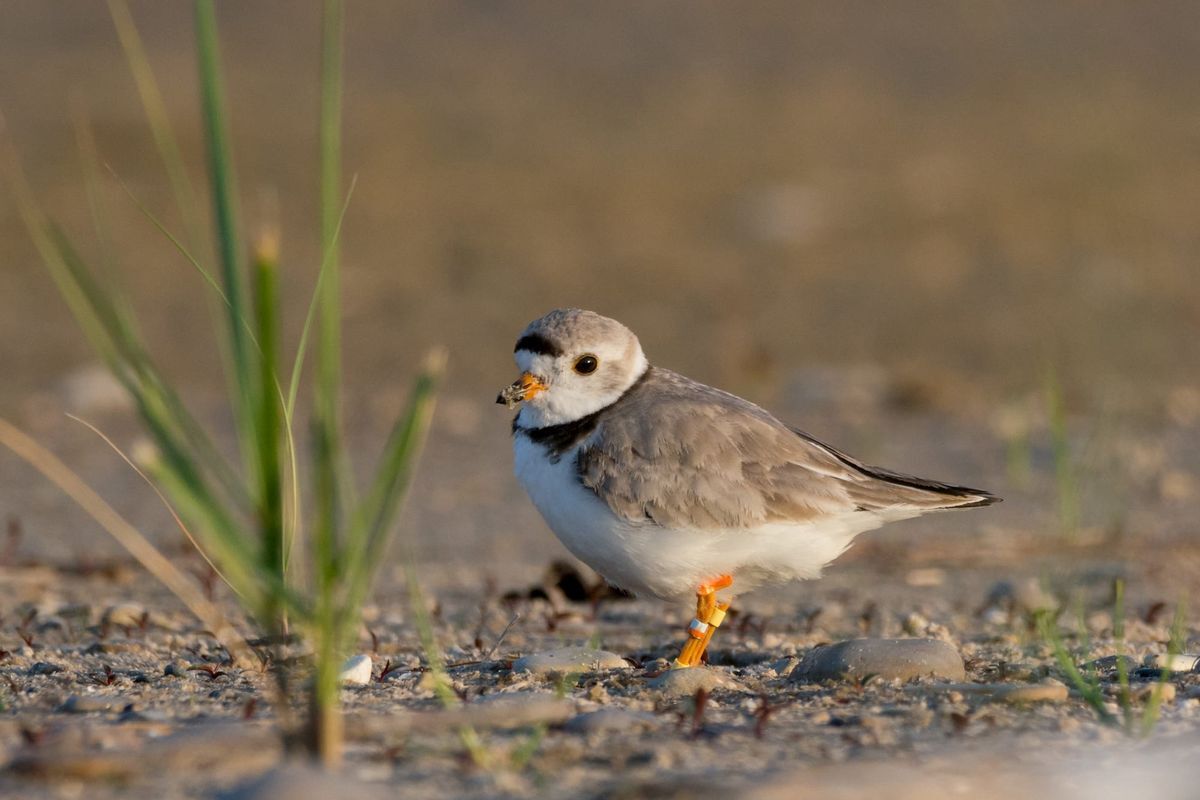
The Great Lakes piping plover (Charadrius melodus) likes to live along sandy beaches in, of course, the Great Lakes in North America. In the past, its population is estimated to have been 500 to 800 pairs. But habitat loss, nest destruction, high tides and predators took their toll and the population fell to between 10 and 20 pairs by the 1980s. The U.S. Fish & Wildlife Service placed the bird on its endangered species list in 1985.
But extinction has been prevented thanks to efforts by various conservation and bird-loving groups as well as governments and land-management agencies bent on bringing the plover population back to its traditional size and range. The Detroit Zoological Society, for instance, partners with volunteers and other agencies to protect these birds and, when necessary, raise them and release them in the wild when ready. The zoo has been working on its Piping Plover Recovery Initiative since 2003 and 88 pairs were counted in 2025. Before the bird can be considered recovered, the count will have to reach at least 150 families, at least half outside of Michigan, where they are now concentrated.