

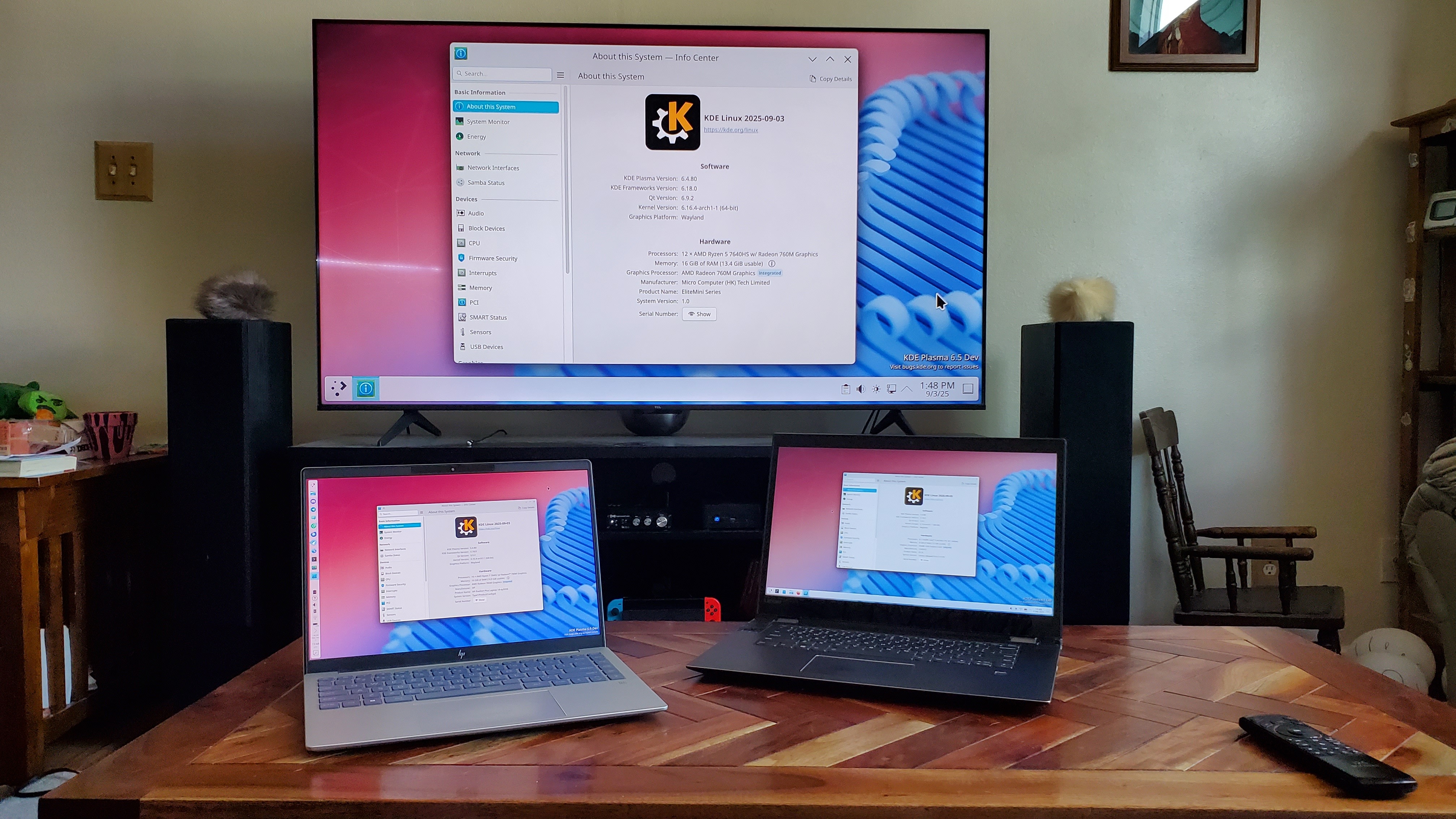
It does sound like it could become a solid option for people wanting to ditch Windows and want a simple, easy to use distro that just works out of the box with GUIs for everything they’ll ever want to do so they never have to touch the oh ever so intimidating terminal.
Well, only the base OS in /usr is immutable; /etc is writable for making system-level config changes, and your entire home folder is of course yours to do what you want with, including installing software into it. So that’s what you do: use Discover to get software, mostly from Flathub at this point in time, but Snap is also technically supported and you can use snap in a terminal window (support in Discover may arrive later).
That’s fine for apps in Flathub and the Snap Store, but what about software not available there? What about CLI tools and development libraries?
Containers offer a modern approach: essentially you download a tiny tiny Linux-based OS into a container, and then you can install whatever that OS’s own package management system provides into the container. KDE Linux ships with support for Distrobox and Toolbx.
It sounds like more work for the user than a single system-wide package manager. And in my experience there are some applications that are not designed for sandboxed installations, where you have to fiddle around with the sandbox settings to get things to work. I’ve become frustrated by this in the past and ended up going back to system-level, unsandboxed packages. Likewise, managing containers for CLI applications can be great or it can be a pain for similar reasons. Some things are just easiest when fully integrated with the OS, though it brings security and stability risks. So I haven’t been won over by immutable distros yet but I’ll be interested to see whether KDE Linux can soften some of these hard edges for the user. It sounds like they do want it to be viable for non-experts coming from Windows.
This project sounds pretty cool, I’ve always liked KDE, run Neon for many years. I’ll surely keep an eye open when this comes out of alpha.
I use Bazzite for game development. Very rarely have I had an issue installing anything, although you sometimes do need to use brew or distrobox, and you can still layer in RPMs if you want to extend the base image pretty easily. For most users flatpak should be fine. It’s been very solid for me, and more importantly I recommend it to people who may not want to spend a lot of time troubleshooting their os. Hard to break and if you manage it, easy to roll back. I’ve been generally impressed enough with the ublue images that Aurora and Bazzite are pretty much all I recommend to people transitioning off windows.
I really hope they make it so you can very easily customize and then make an installable copy of your system, like MX Linux does.
Currently making one for my mom and dad in MX since they’re basically the only ones who have something like that these days, and their Linux installs are too old for them to update anymore.
Shipping them a USB with an installer that’s easy to use with the software they’ll use already installed, and Librewolf already configured, would make this awesome.
