

To paraphrase Mean Girls, “stop trying to make hydrogen happen.”
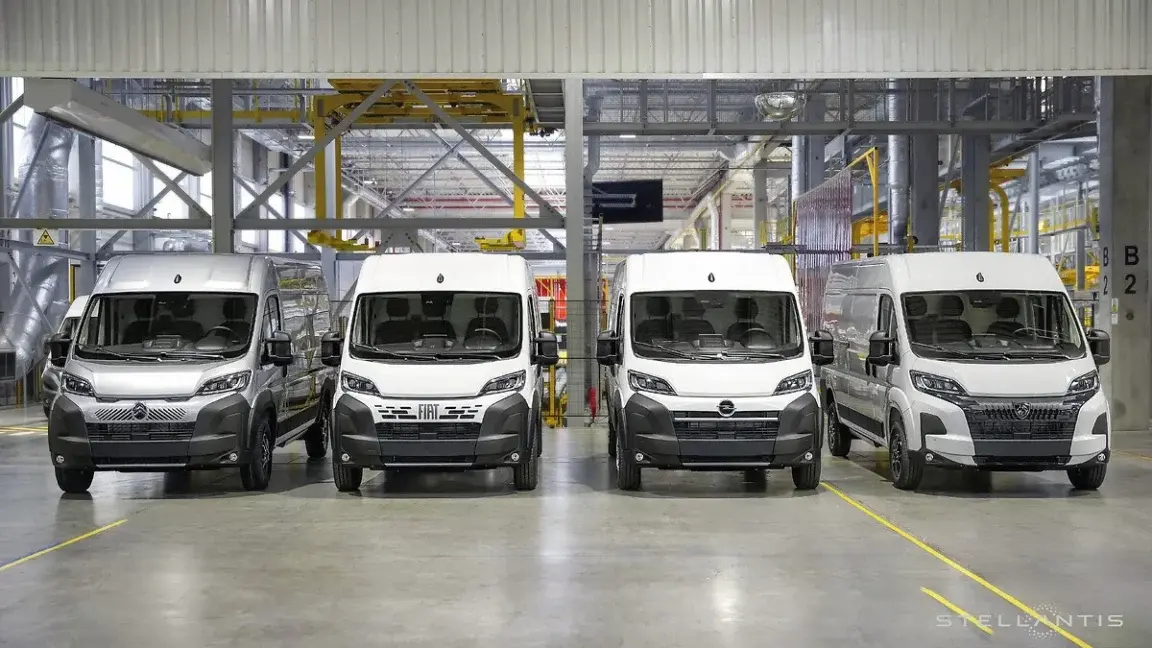
For some years now, detractors of battery electric vehicles have held up hydrogen as a clean fuel panacea. That sometimes refers to hydrogen combustion engines, but more often, it’s hydrogen fuel cell electric vehicles, or FCEVs. Both promise motoring with only water emitted from the vehicles’ exhausts. It’s just that hydrogen actually kinda sucks as a fuel, and automaker Stellantis announced today that it is ending the development of its light-, medium- and heavy-duty FCEVs, which were meant to go into production later this year.
Hydrogen’s main selling point is that it’s faster to fill a tank with the stuff than it is to recharge a lithium-ion battery. So it’s a seductive alternative that suggests a driver can keep all the convenience of their gasoline engine with none of the climate change-causing side effects.
But in reality, that’s pretty far from true.
As noted in the article comments, not only are all of the theoretical benefits just not realized, but it’s also nothing but greenwashing since hydrogen is a byproduct of fossil fuel production (“green hydrogen” seems like a pipedream.
Now if only the US wasn’t slowly shooting itself in all ten toes with EV production and renewable energy policies…
? You can get Hydrogen through simple water electrolysis. In fact you can do it at home. That’s like how 4% of all hydrogen is manufactured.
You may not realize this, but 4% is not most.
You should also ask yourself how most of the electricity is generated to electrolysis the hydrogen.
You didn’t say “most” on your original post. You might want to edit it if that’s what you meant.
I suppose that’s fair, but given the context, an insignificant amount of… still not green hydrogen is sort of irrelevant
It takes more energy than it’s worth.
The infrastructure isn’t there, and hydrogen is more dangerous than gasoline if it leaks.
I’d love to see a source on that.
This Report by the US department of energy says otherwise.
My chemistry lab experiment. 😅
Spicy gas go boom.
I suppose a slow leak wouldn’t be that bad though. A catastrophic failure from a collision would be not great.
I was definitely in the same camp of thinking (I mean Hindenburg etc, duh). But there’s been a bunch of studies where, because hydrogen basically immediately dissappates up and away, unless you’re in an extremely cramped area it’s much safer in collisions and unexpected containment breaches.
Even then, it actually poses less of a threat to life because it doesn’t create smoke or burn for awhile like gasoline does.
Hydrogen does not have to be a byproduct of petroleum production, you can drill just for hydrogen.
We’ll see.
Once there’s enough hydrogen drilling and hydrogen production no longer depend on fossil fuel, then maybe H2 vehicules will make sense. Or maybe H2 will still be impractical due to other drawbacks.
Meanwhile it make sense to focus on less polluting options.
Theoretically one can slap a shit ton of solar panels to produce H2 with excess energy. Not very efficient, but still very green.
Oh great, punch more holes through the aquifer that can’t be repaired
to date there is zero evidence of meaningful deposits of geological hydrogen. There is definitely hydrogen in the crust, but, so far zero evidence that it accumulates in meaningful amounts in the areas we can currently drill to.
lol my wife literally was the project manager for a hydrogen site in Arizona. No clue where you got your information, but it’s just absolutely incorrect.
The United States Geological Service. Has put out several reports on the topic of geological hydrogen deposits and that was their conclusion in everyone.
A pocket producing an amount is not the same as a significant deposit.
Also it seems to be a good energy storage…for cases where you have irregular energy production. Create hydrogen via electrolysis using the energy surplus from wind, photovoltaic etc.
And if you need the power, you get it back via fuel cells.
I think I saw a documentary about the shetland islands, where they have (or had) a power surplus from wind farms mich grater than they where able to transfer to the main land.
I guess these are the cases which make sense…but creating another supply network to bring the hydrogen fuel everywhere might not be the way to go…