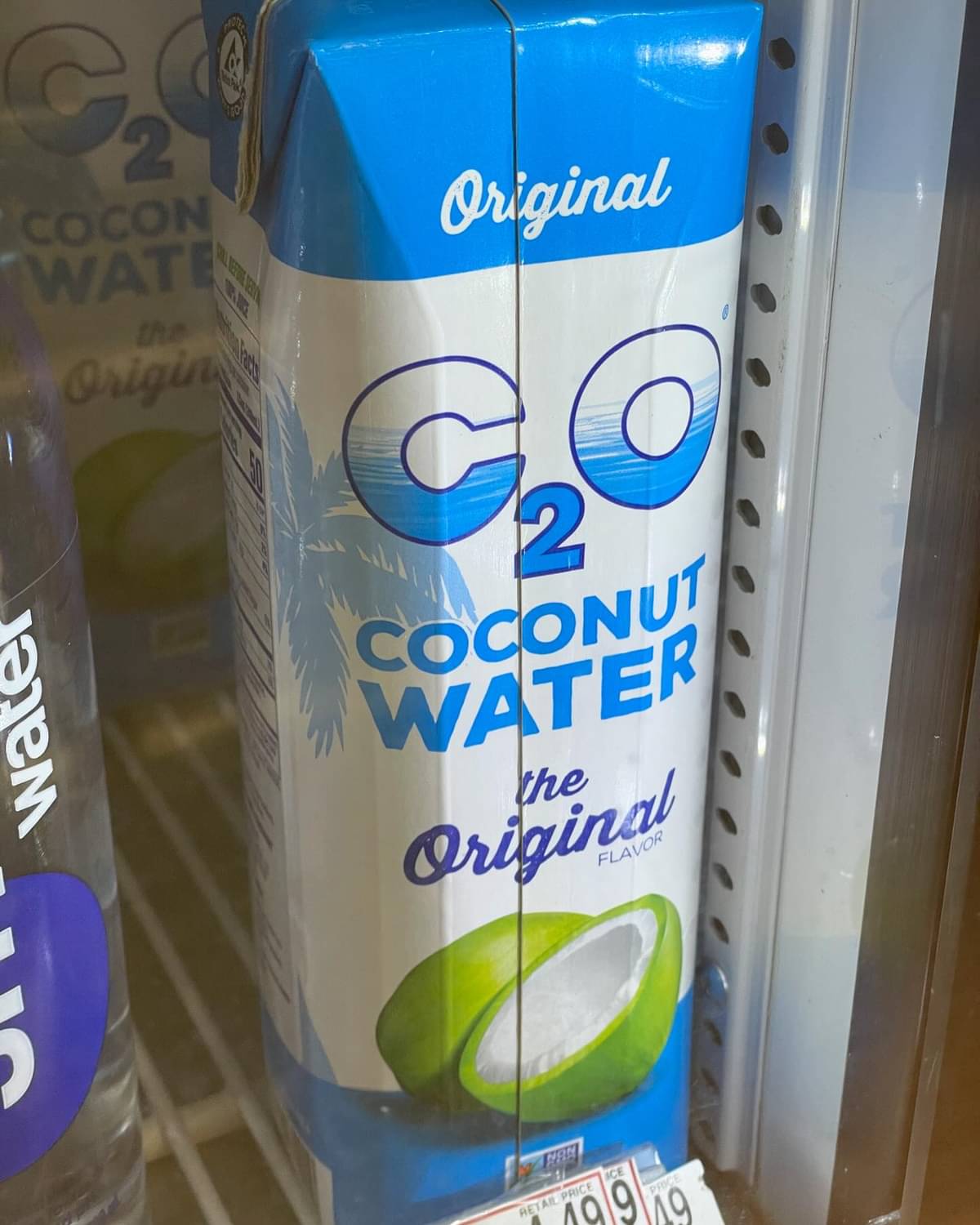
Apparently it’s not even really all that stable, so that whole container would rapidly decompose into probably carbon dioxide (CO2) and a bunch of pure carbon (think charcoal). At least that’s my hunch. There is a Wikipedia article on the stuff, but it’s pretty short, since it’s a pretty unusual chemical (https://en.m.wikipedia.org/wiki/Dicarbon_monoxide ).
CO2 is of course extremely common. I’d love to see what a chemist can describe about a bottle of C2O though!


deleted by creator
Apparently it’s not even really all that stable, so that whole container would rapidly decompose into probably carbon dioxide (CO2) and a bunch of pure carbon (think charcoal). At least that’s my hunch. There is a Wikipedia article on the stuff, but it’s pretty short, since it’s a pretty unusual chemical (https://en.m.wikipedia.org/wiki/Dicarbon_monoxide ).
CO2 is of course extremely common. I’d love to see what a chemist can describe about a bottle of C2O though!
Bad! Don’t!
deleted by creator
That was the ELI10, subsection “Basic Lab Safety.”
If you want an ELICHEM5320 that’s on you!
Hi, I’d like the ELICHEM5320 pls
That’ll be $5000.