
Logline
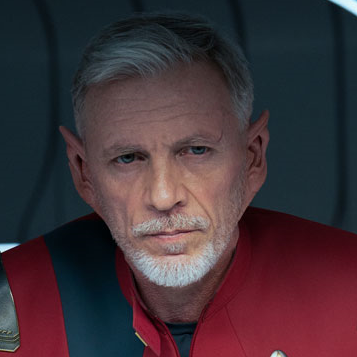
Commander Una Chin-Riley faces court-martial along with possible imprisonment and dishonorable dismissal from Starfleet, and her defense is in the hands of a lawyer who’s also a childhood friend with whom she had a terrible falling out.
Written by Dana Horgan
Directed by Valerie Weiss
This was a fantastic episode. One thing I liked in particular was that they had an actual lawyer defend Una, and not just have Pike do it.
They kept the tradition alive by having a starship captain handle the prosecution, though.
But in contrast, this lawyer (Neera) won by mainly by being a good lawyer (albeit in a tv legal drama kind of way). Setting things on fire with the first witness to create a bunch of fog and doubt about the premise of the case, realising that other important regulations impinge on the case and setting up testimony to substantiate the effect of those regulations.
My memory of most other officer-lawyers is that their methods tend to focus more on the moral “issyew” (Picard’s pronunciation of “issue” in Measure of a Man).
Oh yeah, an actual lawyer and one who was not assigned by Starfleet. Una was also spot on with her complaint that her original counsel was paid by those prosecuting her. 👏
What a beautiful episode. The message was great and it wasn’t ambiguous enough for people to really misinterpret or miss it while still remaining an indirect allegory for current times. The allegory was clearly about either homosexuality or undocumented immigrants and I appreciate that people from either group can likely relate to this episode. As a gay guy I have to say I definitely did.
Also, the scene with Spock’s “outburst” was hilarious and I loved seeing the (on the surface) emotionless Spock once again.
Overall I loved the episode and I’m very glad to see one I love after personally disliking the previous one.
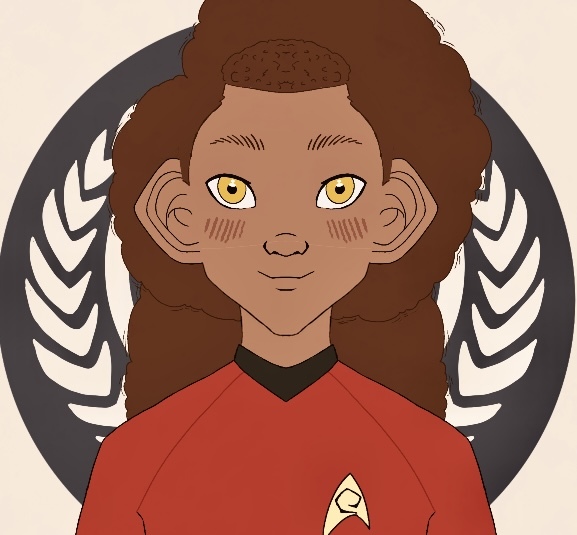
The allegory was trans people. Hence all the talk of needing to ‘pass’ to be accepted and the wonderful lil touch of Unas child cast being the colours of the Trans flag
It is not unlikely that this is the allegory they had in mind primarily, but so much of the bigotry and hatred depicted applied to gays, blacks, jews, women and probably more groups, too.
We’re rhyming history, every generation we’re trying to overcome prejudice, oppression and hatred against a new minority, only for some to conjure up a new distinguishing feature to define a minroty to be ostracized. It feels like treading water sometimes, can’t we just cut through the bullshit in one go, but no, we have to go through all the steps, while some new group (or a subgroup of a previous group) has to endure all the pain this brings. Sometimes it feels like we’re not really getting better. But maybe we are. But it’s still too slow, it still repeats itself, and nowadays we might experience multiple such cycles in our lifetime, when at some point it took generations to get that kind of progress?
There were also parts of it that could easily be interpreted as Jim Crow era politics. Passing was a thing for Blacks as well. Splitting into two different cities reminded me of both redlining and “separate but equal.” Of course, history repeats itself, and this allegory could also be applied to Jews, Native Americans, and any other persecuted minority, including gay and trans people. Una’s whole situation could pretty easily be mapped onto a “don’t ask, don’t tell” situation as well.
I agree. It could also be read as an allegory for undocumented people - her family’s fear of going to a hospital, for me, echoed the fear that many undocumented people feel around seeking help from any organization that might be affiliated with the government
Splitting into separate cities is way more reminiscent of ghettos, which is extremely dark. I don’t think the show quite grapples with how monstrous this actually is, ignoring my concerns about the gene modification stuff as a metaphor, if we take it on face value as a signifier of marginalization this is not some cultural bias the Federation needs to work through, what’s described is borderline genocidal.
Ah, I’d missed that detail. I was on the fence about whether or not it was a trans allegory because it didn’t initially feel like there were as many similarities in her story to being trans as there was to homosexuality and being an undocumented immigrant but upon further consideration I have to agree. Though it does seem to me like it is also about those other groups I mentioned. I suppose it’s a bit of a catch-all (which worked great).
The way Illyrians were segregated into Illyrian and non-Illyrian cities except for people who could pass echoes the Jim Crow era of US history, with black people being segregated and some of them trying to pass for white.
The refusal of service to those who were found to be Illyrian is like antisemitic attitudes in pre-war Nazi Germany, or the refusal of service to homosexuals. Most of what happened can be compared to any persecuted minority, racial or sexual.
That’s the beauty of a good metaphor. And the ugly universality of bigotry.
I don’t know how well that metaphor works since Illyrians are aliens. The Federation is already full of aliens with biology and abilities different than humans. So what if Illyrians have modifications that make them different than humans? Vulcans have two sets of eyelids and are adapted to live in harsh deserts humans can’t survive in. They’re also telepathic, three times stronger, and have perfect memory.
Does that mean the Federation is a segregated society between all different races? If they split cities between Illyrians and non-Illyrians, wouldn’t they also be splitting cities between Andorians, Vulcans, Tellarties, etc.?
I don’t think Spock was emotionless. For one, an “outburst” is emotional. That he noticed it just means he’s aware of it and used to not do it. Then, whenever he spoke of Una on the trial was super emotional. Praising her is because he likes her, not because it is logical (in the setting).
I really enjoyed it. Star Trek is at its strongest when it gives itself time to mull over philosophical, ethical, and social issues. This episode really knocked it out of the park. Just really well-written overall.
“I regret that you had to witness that outburst.”
Best line in the show!
Yeah Spock makes this show much better
I really like this Spock, don’t get me wrong, but I’m finding his increasing “humanness” a bit distracting. I mean, making a joke in court? That was a bit far-fetched.
One of the problems that this show has to grapple with is that we already know Spock very well from Leonard Nimoy’s portrayal. I’d go so far as to say that - notwithstanding a few gaps - every major event of his life is known to the audience, and we are very familiar with how he’s “meant to be”.
What then is an actor to bring to such a part? Ethan Peck can’t just replicate Nimoy’s performance - for one thing, it would be boring. The writers take advantage of this series being a prequel to do the only thing they can: show how Spock became the Spock that we know from TOS. They use his appearance in the TOS pilot “The Cage”, where he was visibly more emotional and “human”, as a touchstone, and make his journey towards emotional control and “Vulcan-ness” part of his character arc for this show.
I went into it a little in another post, but I think Spock’s manner is more familiar and “one of the guys” because he’s allowed himself to become emotionally attached to the rest of the crew, and that bleeds into his personality, making him more liable to use humour and jokes to relieve tension. A few years later, when Kirk takes command and many of these officers have moved on, he decides that he will be more emotionally guarded, letting his guard down only with Uhura and Chapel - and only in brief, relaxed moments.
I took as needling the Vulcan Jag…which he couldn’t resist. The set-up was his uncontrolled outburst in the Enterprise mess.
The joke in the court felt kinda cringe, though I otherwise really like Spock in SNW
While it was played as a joke, the whole “was she hiding something” had me on first watch going “but everyone is hiding something, surely”
Spock was highlighting this with his trademark precision.
In my opinion that might have been the perfect Star Trek episode. Well written, relevant to what we face in modern day society, and a celebration of the crew of the Enterprise as well as the world as we wish it to be. A civil rights trial for the 21st (and 23rd century). I needed to see this today.
I really like the look fo the dress uniforms. Surprised that they never got Pike to the stand, especially after Una confessing that she told Pike 4 months ago.
Now that the cast has been reset, I’m ready for them to explore some strange new worlds.
Surprised that they never got Pike to the stand, especially after Una confessing that she told Pike 4 months ago.
I think Pasalk was pretty out of line with his approach - his questioning essentially amounted to a criminal investigation of someone else. My knowledge of law isn’t very strong, but that seems inappropriate.
I couldn’t help but wonder whether they’re setting him up as a badmiral or it was just Chekov’s gun from the Vulcan brawl. If the latter, they did a lousy job of tying them together … I was going with option A while watching and only considered B afterward.
Loved it. Star Trek has always been handwavy with legal rules in favour of a compelling debate and this was no exception.
As a Canadian, I instantly started thinking about the metaphor in terms of laws the Canadian government had against indigenous people practicing or teaching their cultural practices.
On the other hand, as a gay man, I was thinking about when homosexuality was considered a criminal practice and how sometimes gay men will stay in the closet to avoid discrimination.
One of the things that’s most interesting to me is how many minorities groups Una’s experience maps to in some rhyming way.
I thought trans people were a good fit for the metaphor, given the body alterations that can be involved.
I think how the genetic augmentation ban was portrayed in Una’s case in particular - a military court martial - was similar to “Don’t Ask Don’t Tell”, so LGBTQ+ groups do seem to fit better than, say, race or sex. Even with DADT no longer in force, there’s topical parallels, like you suggest, with trans people. But there was an emphasis on the Illyrians’ genetic augmentation being “their custom”, so you can apply religious or cultural prejudice equally as the allegory.
Every show is handwavy about legal rules, not just Trek! Trek at least has the benefit of usually being a military court for a fictional military organization.
Honestly, the trial episodes of Star Trek tend to be the some of the best. Drama without explosions are when it’s different from most other sci-fi franchises, and it’s good to see it come back. SNW really is the best current Trek show.
Measure of a woman
This was an absolute gem. I don’t have much of substance to add just now (except that those dress uniforms are very nice), but after being on the whole disappointed by the season opener I am extremely pleased with this episode. Definitely one of the strongest in the show so far, which is no small feat.
I really loved the dress uniforms. Particularly the details on the collars and on the medals. I only wish they’d done a little more with the Admiral dress uniforms. Leaving them all in Federation Blue like early Discovery is a little odd.
Superb episode, a real high mark. The 1st episode was so disappointing I was worried they’d gone of the rails with the nonsense kung fu segment in the middle, but Ad Astra Per Aspera was a perfect episode.
The writing was great, and the pace and rhythm perfect with highs and lows, good use of emotions and a perfect ending. I love these character driven episodes - we learnt more about Una, and also La’an in effective way, but also about the context and imperfections of the Federation. The cast is also great, making the close family like dynamics of the Enterprise command staff feel real.
I’m glad they also didn’t put Pike on the stand. It allowed Una and Neera to shine, and Neera (Yetide Badaki) who was a superbly crafted and acted character - she ran the gauntlet of dislikeable to a most loved character in one episode.
Ad Astra Per Aspera
A beautiful title, I remember watching the anime Ad Astra a few years back. They had a ROUGH time.
Through hardships, to the stars.
You had your playtime, acting like one of them. Accept your dismissal, take your licks and go home.
Una: No. (Why not?) Because I shouldn’t have to hide anymore. None of us should. I know I should have done better. I didn’t stand up when I should have. I’m standing up now.
YES! GIVE ME THAT STRENGTH!
So it was either dishonorable discharge OR Dishonorable discharge with 20 years in a penal colony.
That’s a rough decision.
GIVE EM HELL UNA!
So La’An has an idea that the evidence against Una might have been illegally obtained. This is going to be a really in depth court drama from Star Trek!
La’An: We need to find out who turned her in. It might well be the only way to save her.
But Uhura strictly refuses La’An’s illegal order. :|
Counselor: Admiral, it would seem that the rules of Starfleet only apply when a captain deems that they do. (Robert April: Is there a question Counsellor?)
You have shown that you have been repeatedly willing to break the very first order of starfleet and you are hailed a hero. you can break the law if you so choose. So, hiding behind order and protocol to explain why you would not have admitted Una Chin-Riley to Starfleet is a sanctimonious falsehood, is it not?
And of course the JAG gets pissed off at that type of reasoning, how convenient.
Counsellor: My client did not ask to be genetically modified. It is an Illyrian cultural practice done to children before they are even born. It is done for survival and yet she has been arrested because of a violation of a law. But the Admiral has just shown us that Starfleet regulations are are flimsy and subjective at best.
Spock’s line about what una was hiding OMG!!!
Spock: Yes, I did get the feeling that she was hiding something.
Neera: What was she hiding?
Spock: An affanity for Gibert and Sullivan musicals.
A BRITISH TAR IS A SOARING SOUL AS FREE AS A MOUNTAIN BIRD HIS ENERGETIC FIST SHOULD BE READY TO RESIST A DICTACTORIAL WORD
Spock: Perhaps. Although I think it is illogical for Starfleet to punish itself.
Neera: I’m afraid I don’t understand.
Spock: The loss of Una would be destructive to Starfleet as an organization. She is an extraordinary officer.
Una: She is a Mentor Spock: I have learned a great deal about leadership by serving under her.
M’benga: She puts the lives of her crew above her own. Always.
Spock: She is a friend.
La’An: Family. Una is Family.
And we get more into exactly That.
Counselor: Could it be that you carry your family’s augmentations, and you believe that because of them you may become dangerous?
Una: Yes, I do.
OH MY GOOOOOOD…
Counselor: There is nothing wrong with you Lieutenant, no hidden monster inside. But I do know how they make us feel. They look down at us for so long that we begin to look down at ourselves. Genetics is not our destiny despite what you may have been taught. The fear of yourself it’s not your own. It was drilled into you. You’re not born a monster. You were just born with a capacity for actions, good or ill. Just like the rest of us… i guarantee you are not the the person who leaked Una’s true identity to Starfleet.
“Ad Astra per aspera”
To the stars through hardship.
…
Una: My family, we went to the non-illyrian city. You see, some of us could pass. We could blend in, so we did. We left everyone else behind. Our families. Our friends… We left them all. I regret it to this day.
…
I wanted my crew to know who me for who I really was. I thought maybe if they did, I would finally be safe. And starfleet would finally understand Illyrian’s better.
So it was four months in between Ghosts of Illyria and last season’s finale.
Neera: She believed in the best of Starfleet, and that through it she could find salvation from the hardship and danger of her everyday life. Danger she faced just for being born an Illyrian. Dangers born on prejudice. Spurred on by laws against people like her. But through her hardhsips, Una saw the stars. Una joined Starfleet because she believed it was the only thing that could save her life. She fled persecution, and within Starfleet she sought safettu. She Asked for Asylum and Captain Pike granted it.
What an amazing courtroom episode! Did a lot of work for equality in the current moment.
I was recalling a lot of the classic courtroom episodes too, The Menagerie, Drumhead, Measure of a Man. This is top tier stuff.
I also feel relevant to our current controversies.
I loved April getting called out for bending/breaking rules.
Seems that captains of the Enterprise breaking the Prime Directive is a very old tradition indeed.
I always thought the genetic modification ban was pretty flimsy. It wasn’t even established until DS9 since TNG had the Darwin Research Station.
I really don’t like how strict they made it in SNW. Why should humans dictate the laws for all races in the Federation? What happened to the Denobulans? Phlox said that they genetically modify themselves.
DS9 said that genetic modification was still allowed for the treatment of serious illnesses. So it doesn’t make sense for all permanent genetic modification to be banned.
Also, in DS9, genetic modification was more like performance enhancing drugs. Bashir’s modifications gave him an unfair advantage over other people. It’s kind of like someone cheating to get into a good school. But that argument also has problems since there are aliens with naturally superior abilities compared to humans. Vulcans have perfect memory, superior physical abilities, and telepathy, they would have a big advantage over humans in a lot of things. But Vulcans aren’t banned from Starfleet.
DS9 said that genetic modification was still allowed for the treatment of serious illnesses. So it doesn’t make sense for all permanent genetic modification to be banned.
The franchise is fairly consistent about genetic enhancements (i.e., augmentation) are illegal, while medical procedures are not. The Darwin station is the biggest outlier.
TNG overall never said anything about the Federation or Starfleet being against genetic modification. It wasn’t just Darwin Research Station. They didn’t say anything about it in “Masterpiece Society” either.
Dr. Bashir I Presume was the first episode that any kind of ban was ever brought up. They didn’t even say anything about a ban in “Space Seed” or “Wrath of Khan.”
Also, when Torres was pregnant in Voyager, she wanted the Doctor to modify her baby to remove Klingon traits and no one said it was illegal.
They didn’t say anything about it in “Masterpiece Society” either.
That colony wasn’t a member of the Federation, though.> Also, when Torres was pregnant in Voyager, she wanted the Doctor to modify her baby to remove Klingon traits and no one said it was illegal.
Also, when Torres was pregnant in Voyager, she wanted the Doctor to modify her baby to remove Klingon traits and no one said it was illegal.
One could argue that’s not an augmentation.
That colony wasn’t a member of the Federation, though.
But they have discussions about it in the episode and no one brought up any laws about it. Picard even says he disapproves of it personally but says nothing about it being banned.
One could argue that’s not an augmentation.
From Dr. Bashir, I Presume: “DNA resequencing for any reason other than repairing serious birth defects is illegal.”
The Doctor specifically said that many of the modifications Torres wanted to make had nothing to do with the baby’s health.
There’s a theory that every major race has gone through some version of Earth’s Eugenics Wars, or at least the most influential ones, such that the laws against genetic modification were pushed through. Other races simply didn’t care enough to protest or protest much.
As for the Denobulans, it could be that they wound up on the wrong side of the Neutral Zone after the Romulan War when borders were drawn, so they were never Federation members. This also explains why they weren’t seen between ENT and, chronologically, their appearance in PRO.
I think a lot of the species at least agree with the idea of a eugenics ban after seeing the records of how disastrous it was for Earth, regardless of their own struggles.
And don’t forget that it went badly (in different ways) for the Klingons as well.
Well, SNW predates DS9, right, so this seems consistent with and even complementary to continuity, unless there’s something in TOS I’m missing.
I think this episode was really good…if the issue of discrimination was over literally anything other than a social practice of genetic modification. Star Trek’s hardline stance on linking social genetic modification to eugenics is one of the things that I’ve really appreciated, especially as corrosive “thought experiments” about it have sort of entered back into the discourse. I don’t think you can practice genetic manipulation on a society wide level without it going very bad very fast. At least I don’t think humans can, and the episode doesn’t really make a case for why the Illyrians are better at it.
The core message of this episode is so important, especially at this current moment, and the right of people to self determination and to safety and security in their identities and differences is right at the heart of Star Trek, so I’m glad to see SNW continue to affirm it. But…just…there are reasons, real reasons, with lots of horrific history behind them, for why normalizing genetic manipulation in the name of improving or “fixing” populations of people is still a real third rail for me, and I wish the episode had figured out how to engage with that specifically a bit more. This episode does not actually convince me that in the far future utopia of the Federation the dangers of genetic modification as a practice have been addressed, and in absence of that “It used to happen and its bad, but stuff is better now and can’t we relax a little” is a bit…hollow
I think you could fix this for me if you made it so that Illyrian genetic modification was something that members of their species voluntarily entered into in adolescence or early adulthood. Make it more of a practice that people voluntarily keep up and less of a program that their society runs and the whole thing works way better for me. That also makes the loose analogy to transgender people in our current time, and really just the right of bodily autonomy and self determination, way more coherent.
I really hated this episode for this reason. I hate the thought experiment of “what if we found a planet where everyone practices eugenics and so therefore it’s racist to be against eugenics”.
Like if the rest of the world had found an isolated Nazi Germany, would it have been discriminatory and prejudiced to be against their practices? To not let them into the military? Of course not
Like why even write that plotline? Why are the writers choosing to legitimize eugenics like this, like it ever could be neutral or good and not horrific? I’m unwilling to entertain the idea that there’s a good way to do it, just as I’d be unwilling to entertain a fictional society that showed slavery in a positive light
I agree with this. It was clear from when the lawyer called the eugenics laws “race laws” that Number One was going to get off somehow, but I really missed seeing in the courtroom somebody make the case that genetic augmentation is meaningfully different from genetic modification – in particular in the case of Illyrians, that they modify themselves to exist harmoniously with their environment and not to breed superhumans. Eugenics is bad, and genetic augmentation is also bad and I think corrosive to society, as is covered in Doctor Bashir, I Presume.
Overall, I thought it was good Star Trek, but missing a robust engagement with the issue at hand which was disappointing. A better episode than last week, though.
Oh also – it was very exciting to see a Tellarite! We barely see any of them, especially compared to the other three founding members.
EDIT: Thinking about it more, I do actually think it’s a bit objectionable to call anti-eugenics laws “race laws”. I get that Starfleet is fictional, but in our actual universe, “race laws” have tended to go hand in hand with eugenics, so it really feels a bit … unfortunate. And based on this episode’s Ready Room, they seem pretty comfortable with the idea that Starfleet and the Federation are in the wrong about genetic augmentation, and I don’t feel like they drew the line in the episode or in the Ready Room episode between augmentation and modification.
Thank you! Came on here because the episode left such a bad taste in my mouth. I’m a queer person with multiple disabilties, one of which is known to be genetic. Using genetic engineering as the metaphor for marginalized groups felt like a trojan horse to garner public sympathy for genetic engineering.
And through making genetic engineering acceptable then we’re opening up the world to letting parents engineer the gay out of their children and to engineer the neurodivergence out of their children.
Instead of being a story about accepting marginalized groups to me it feels like they’re actively pushing for a technology that can be used to wipe out marginalized groups. Why did the writers do this? They literally did not have to set this up or write it this way.
Also the references to the Eugenics Wars as though they are somehow irrelevant today just did not at all sit well with me as somebody who is high risk for covid. This whole pandemic the drumbeat has been “only those with pre-existing conditions will die” and we have been fighting for our lives to get the most minimal public health measures and the ableds just keep putting their conviences over our lives. Eugenics is still here, it’s still going strong, but we’re just not calling it eugenics anymore.
To me the vibe was that from the writer’s perspective generic modification is so obviously acceptable that it’s impossible to even come up with an argument against it that stands up to scrutiny, and that the racism against the genetically modified was just an idiosyncratic cultural trait of the federation that they would hopefully one day grow out of entirely. And I’d pretty much endorse that take. What risk of genocide could possibly be posed by letting parents give their children the modifications they think will serve them well in life? As the episode said, it’s not like augments have Khan lurking within them or anything, they’re morally no different from anyone else and no more likely to start a genocide.
The danger of letting parents choose modifications they think will serve their children in life is exactly what Bashir expresses in DS9: it gives parents, and society more generally, the power to determine what’s acceptably “normal” and flatten out anything that deviates. Geordi similarly expresses at least twice that he doesn’t want normal vision, that his blindness is not a defect that needs fixing and what’s utopian about the Federation he lives in is that his difference is accommodated and supported.
I’ve always really appreciated Star Trek’s hardline stance on this, because its a moral problem that I feel we’ve lost a little bit of sight of and is going to emerge again in the next few decades in real life. I think you could make a case for the Ilyrian environmental adaptation being different, but to do that you would have to explicitly place it against the real arguments against gene editing and work through them, and this episode went in a different direction.
Can’t believe I have to tell you that deliberate genetic modification for the enhancement of individuals and species is the definition of eugenics, and that eugenics is not “so obviously acceptable that it’s impossible to even come up with an argument against it that stands up to scrutiny”.
The problematic aspect of eugenics is sterilizing or killing people deemed inferior, people modifying their own children has none of the same issues.
That’s really incorrect. I hate that this episode is spurring eugenics apologia like this
It is correct actually. Make an counterargument if you can, but as I’ve been saying, there really isn’t one beyond trying to smear something reasonable like enhancing children with the brush of something bad like forced sterilizations by lumping them under the same “eugenics” label.
What you think “enhancement” means now is very different from what people might have said “enhancement” meant in the 60s which is very different from what they thought “enhancement” would have been in the 20s and is very different from what we might think it means in the 2050s. Homosexuality used to be a mental disorder, and it would have been an enhancement to “cure” it. There would have even been gay people who would have voluntarily taken that cure because of the distress society subjected them to, there are records of patients coming to medical professionals looking for treatment. I like the alternate solution to that problem we’re currently making progress towards, in which we accept and support that there are diverse ways for people to exist, and I do not trust that we have correctly figured out what things about human being are currently “wrong” and which things can be “improved”
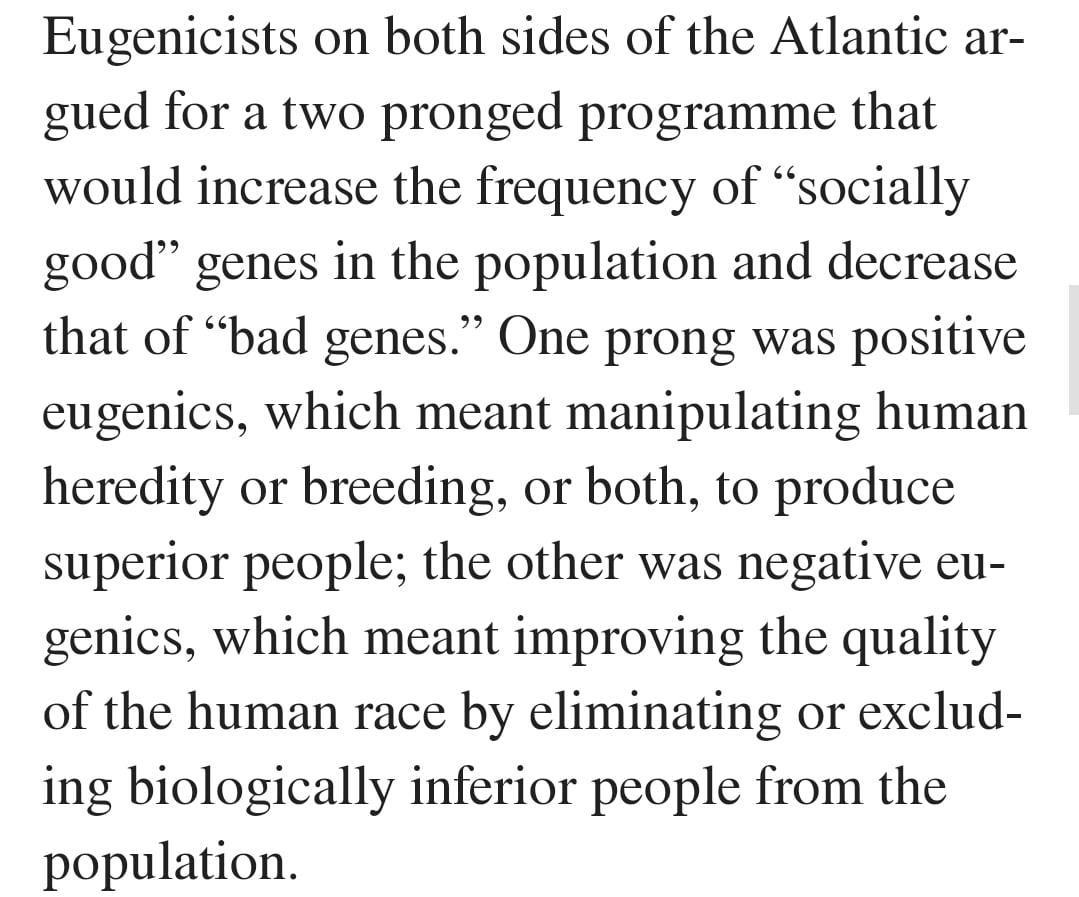
The idea that you can modify someone’s genes to “enhance” them is bog standard “positive” eugenics. It’s literally the definition of eugenics and it’s upsetting to me that you are treating this like a debate.
https://www.ncbi.nlm.nih.gov/pmc/articles/PMC1127045/
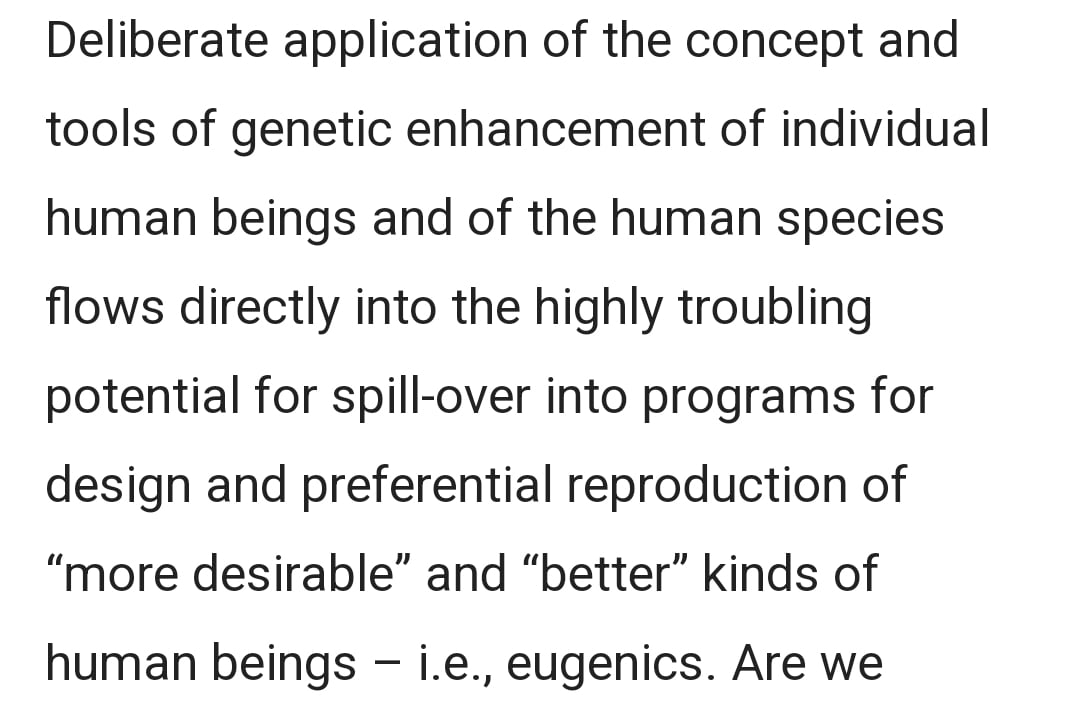
https://www.nature.com/articles/s41434-019-0088-1
https://en.wikipedia.org/wiki/New_eugenics
New eugenics […] advocates enhancing human characteristics and capacities through the use of reproductive technology and human genetic engineering.
You can see that you’re just doing what I described and making an argument solely based on “eugenics” being a broad term that includes evil things right? What is the concern you have about letting parents modify their unborn child’s genes, besides the fact that it could ungenerously be described as eugenics?
An excellent episode which is virtually certain to displace “Measure” as Trek’s most venerated hour of space court.
One thing that always strikes me about SNW—even the middling episodes—is just how vivid, bright, and beautiful this show is. Grimdark has its moments, but this visual style is a much better and more natural fit for Star Trek.