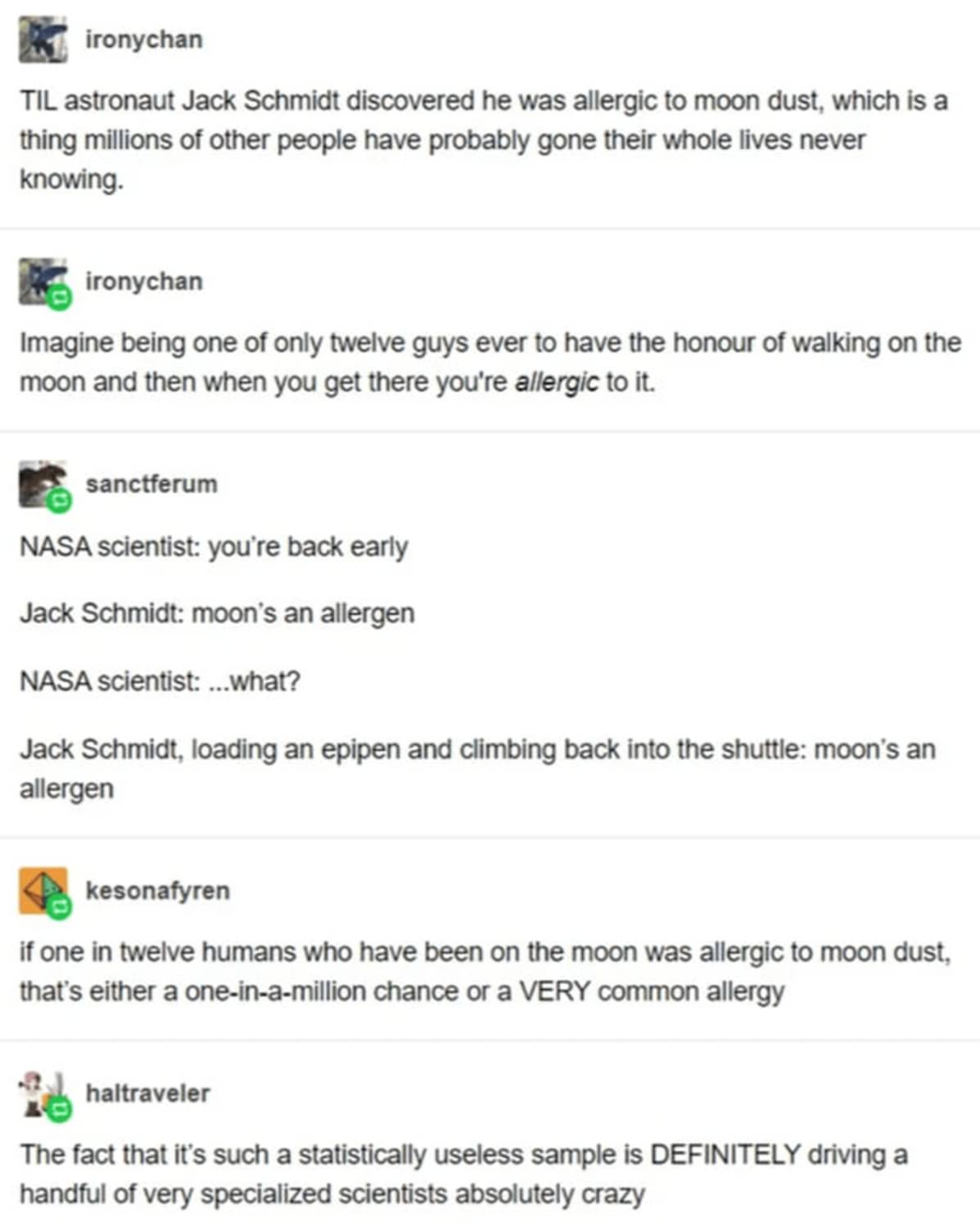
I’m pretty sure everyone is allergic to having their skin and lungs rubbed with mica.
Yeah, moon dust is basically microscopic shrapnel. No one should be breathing that shit in.
Moon dust is functionally a lot like asbestos. It is composed of a sizeable amount of tiny shards of rock that aren’t great for your lungs.
Not being allergic to finely graded rocks that have been bathing in radiation for billions of years seems more unlikely.
Isn’t moon dust just sand?
It’s sand that has never been exposed to water or oxygen. This leaves various reactive chemicals on the surface that would normally be broken down. The lack of water also means the particles haven’t been smoothed off as much. They are sharp and spiky.
The combination of these effects makes the dust quite unique, compared to earth dust.
It also reportedly smells like gunpowder.
Burned or unburned? They are two distinct smells.
Burned, according to the astronauts. I don’t know if the exact mechanism has been published anywhere, but since spent gunpowder has been oxidized I imagine that’s what’s going on with the dust as well.
50% SiO2, 15% Al2O3, 10% CaO, 10% MgO, 5% TiO2 and 5-15% iron
And 100% reason to remember the name.
All those oxides but the iron is pure? SUS.
Sand, but sharp due to a lack of water erosion, and formed mostly from asteroid impacts and thermal cycling. So it’s more like glass dust. It’s possible it has similar effects on lungs as asbestos, but we don’t know for sure.
Ah got it.
Jack Schmidt = Anakin confirmed.
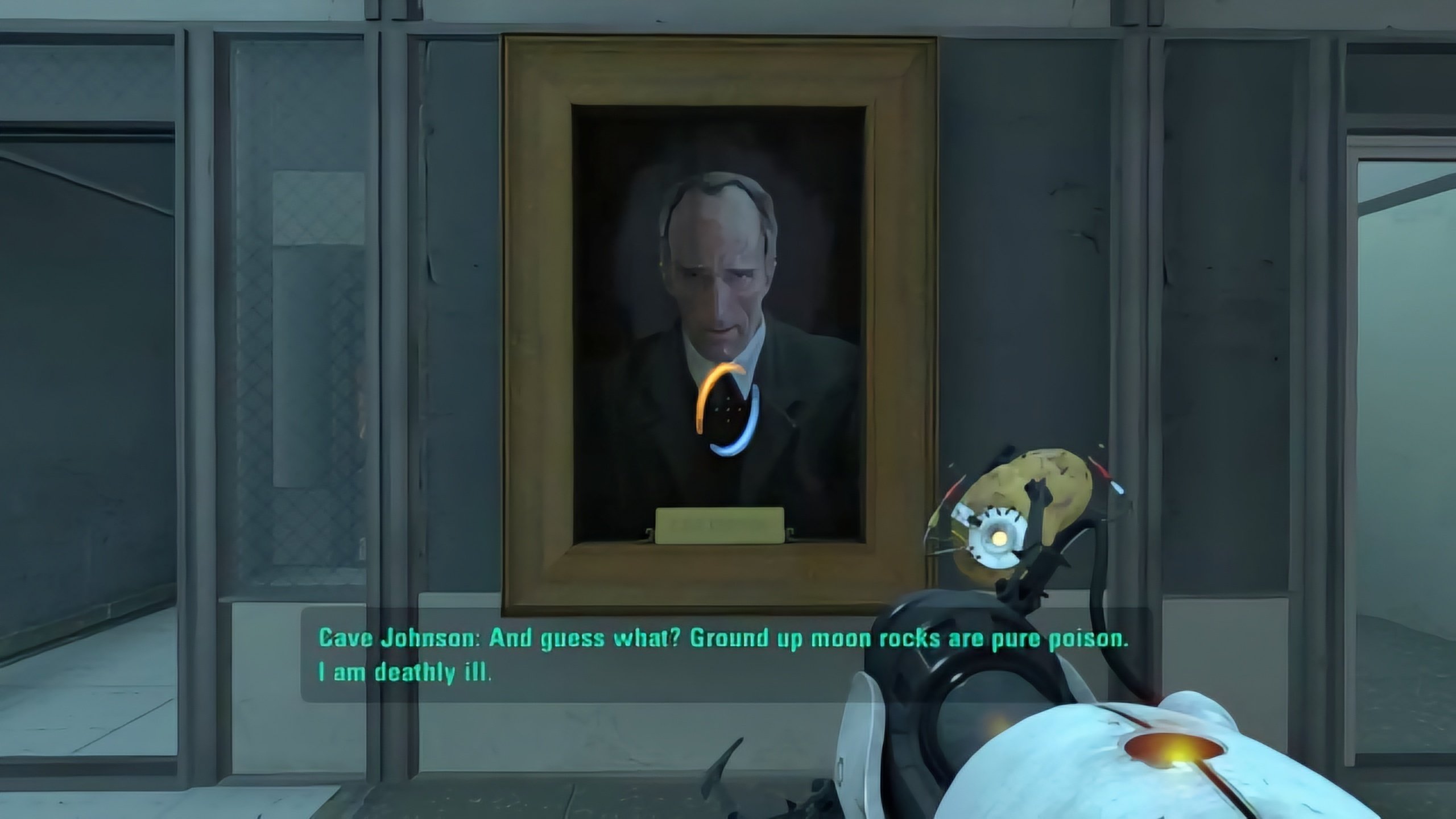
More like Jack Schmidt = Cave Johnson
So, if someone were to crash the moon into the earth to stop it escaping, as many as 1/12 of the population could experience a reduced quality of life?
Might need to consider not doing that I suppose.
The sample size is at least a little bit bigger…
Some guy stole moon rocks (presumably still had moon dust on them) to bang his gf on them.
what’d be the smallest sample size that would yield a relevant result?
30? 1000?
Me. Just get me there
Can we not… Just… Bring back some moon dust?
deleted by creator
Well, if humans were a homogeneous population maybe that could work. But just imagine the huge number of factors at play here. Like, demographics, cultural background (different exposures & different allergy rates in general I would guess), genetic susceptibilities, individual lifestyles (e.g smoking) and probably a lot more! Even a sample size of 1000 seems pretty small to test for general human allergy rates to moon dust. If you were talking about just one population of humans, e.g. the US, you would certainly need more than 30 but maybe not 1000.