Attached: 1 image
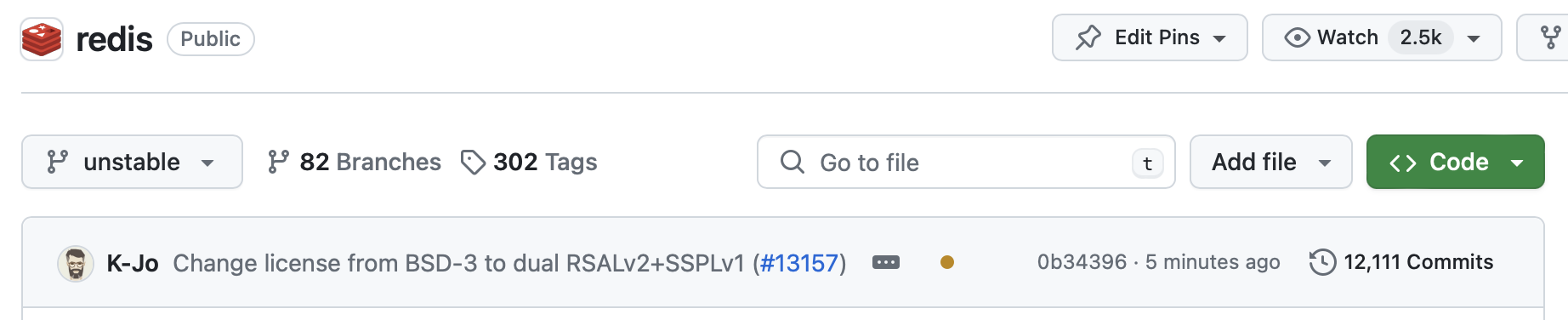
Welp. It's official. #Redis is no longer #OSS
While I wasn't a contributor to the core, I presented on it dozens of times, talked to thousands, and wrote a book about it.
I probably wouldn't have done any of that with that kind of license.
Very disappointed.
Didn’t they switch to a license with stronger mechanisms to keep the source available? SSPL, is basically AGPL but have even stronger protection from large corperations to use the code in their data centers without contributing the changes back. This is basically a move to prevent AWS/Google/Microsoft/et al, from leaching on the contributors work without giving anything back.
Or am I reading this wrong?
EDIT: Note, that the Mastodon account is to an AWS employee… so for him, this might be bad, since it no longer allows them to have their own internal fork without contributing back. Now, they will need to use a real for and maintain that them selves without leaching on the redis contributors.
They could just use AGPL. Amazon would need to contribute back, but with no restrictions on who and how can run it. Current licence has a clause that prevents any providing of the software on the network.
Does that prevent my managed Mastodon instance host from providing Redis over the network to my Mastodon, or does that count as them providing Redis to themselves and then providing Mastodon to me?
Weirdly OSI doesn’t classify the SSPL as an open-source license because it doesn’t guarantee “the right to make use of the program for any field of endeavor”, calling it a fauxpen license. I don’t think the FSF has commented on the license, though I would be curious what they say about it.
I imagine they consider it to not give the right to make use of the program for any field of endeavor, because providing the source of the entire stack needed to run the service you provide makes it impossible for users to host their service on stuff like AWS, since it is proprietary.


Didn’t they switch to a license with stronger mechanisms to keep the source available? SSPL, is basically AGPL but have even stronger protection from large corperations to use the code in their data centers without contributing the changes back. This is basically a move to prevent AWS/Google/Microsoft/et al, from leaching on the contributors work without giving anything back.
Or am I reading this wrong?
EDIT: Note, that the Mastodon account is to an AWS employee… so for him, this might be bad, since it no longer allows them to have their own internal fork without contributing back. Now, they will need to use a real for and maintain that them selves without leaching on the redis contributors.
I suggest an alternative title to this post: AWS employee is mad since Redis change license to prevent them from leaching
They could just use AGPL. Amazon would need to contribute back, but with no restrictions on who and how can run it. Current licence has a clause that prevents any providing of the software on the network.
Does that prevent my managed Mastodon instance host from providing Redis over the network to my Mastodon, or does that count as them providing Redis to themselves and then providing Mastodon to me?
Weirdly OSI doesn’t classify the SSPL as an open-source license because it doesn’t guarantee “the right to make use of the program for any field of endeavor”, calling it a fauxpen license. I don’t think the FSF has commented on the license, though I would be curious what they say about it.
I imagine they consider it to not give the right to make use of the program for any field of endeavor, because providing the source of the entire stack needed to run the service you provide makes it impossible for users to host their service on stuff like AWS, since it is proprietary.
I think checking the sponsors page for OSI will be informative.
I mean aws can suck it