cross-posted from: https://lemmy.world/post/11840660
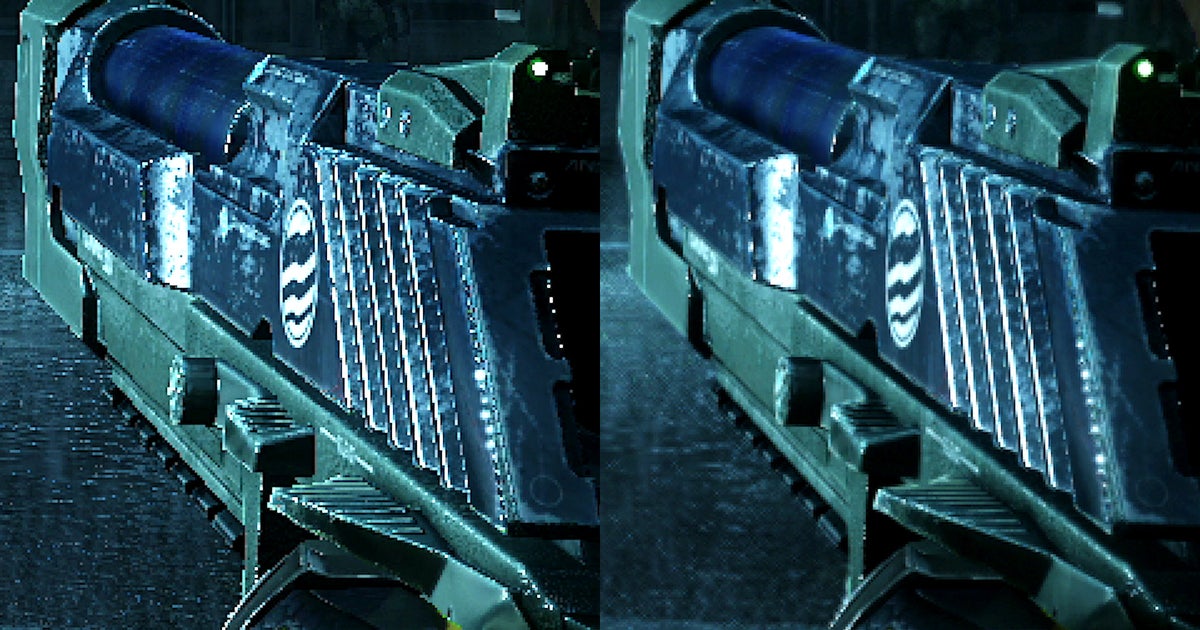
TAA is a crucial tool for developers - but is the impact to image quality too great?
For good or bad, temporal anti-aliasing - or TAA - has become a defining element of image quality in today’s games, but is it a blessing, a curse, or both? Whichever way you slice it, it’s here to stay, so what is it, why do so many games use it and what’s with all the blur? At one point, TAA did not exist at all, so what methods of anti-aliasing were used and why aren’t they used any more?
The first things I always turn off are motion blur, anti-aliasing and ray tracing.
Motion blur just makes it look like you’re drunk, anti-aliasing makes everything look like it’s smeared with vaseline and ray tracing tanks your FPS for not much added quality.
I don’t think I could stomach a game without AA. It’s on par with playing a game with an unstable 30fps frame rate, it’s just nauseating.
Try playing Forza without AA. Ray Tracing tanks your performance, but it gives great visual Enhancements, once you experience it, there’s no going back.
I don’t really play racing games or Forza so maybe it’s unique to Forza or racing in general but every RPG, action, adventure, strategy, survival, shooter and sim game I have played looks worse with AA and ray tracing is not worth cutting your FPS in half for.
Motion blur just makes it look like you’re drunk
Someone hasn’t tried motion blur since 2004 GTA
Same. I also disable stuff like filmgrain and lens-flares, whenever possible.
I always have film grain enabled. It provides some half decent dithering that helps mask color banding, especially noticeable on my low end monitor.
It’s like you’ve used each thing once in some specific game where it was badly implemented and decided that’s how it looks in all games.
There is no objective “it looks like this”, every game does things slightly or very differently. I’m certain you are unusually blind to detail, have serious vision problems, or you’re just very good at convincing yourself of your own bad ideas.
There are actually a few unreal engine games where you can’t disable AA in the settings and I have tried to play with it on but I just end up disabling it in the ini files anyways because it looks bad. I have not encountered AA that does not make the game look blurry.
I have never met anyone who doesn’t disable motion blur just outright so didn’t think anyone would ever defend that.
Antialiasing is a byproduct of moving away from CRT display technology. The natural image softening in CRT tech is not replicated in LCD and LED displays.
TAA is one of the better options, but at the end of the day it will be difficult to create a true AA solution that doesnt have artifacts, without utilizing supersampling.
Interesting take. Do you think that natural image softening would come back in newer technologies?
I’m not that guy, but I don’t think so. The trend will likely be that we get to the point where we render and display in such a high resolution that you can’t even see pixels anymore. We’re getting there already with smaller 4k displays where turning on AA doesn’t have an appreciable difference in 4k native rendering.
I agree with this. Outside of some media that may release with special effects designed to mimic the softer image of a CRT, I think display technology will just progress to the point where nothing will use AA at all because the resolution is just too high to really tell. I mean, its already like that with 4k TVs, you sit far away enough that you usually can’t tell the difference between 4k and 1080p.
deleted by creator
At one point
I was there, 3000 years ago, when first of the consumer AA almost usable on my Voodoo 1.
deleted by creator
All temporal effects kinda blow.