

Hm, like most opinion pieces, there aren’t any hard numbers from studies really shown besides the initial percentages. And I immediately picked up on the second paragraph’s
Compared to older generations, younger generations have reported higher rates of victimization in phishing, identity theft, romance scams, and cyberbullying.
Yeah no shit those metrics will skew towards Gen Z being more victimized if you’re lumping cyberbullying into the mix! They’re one of the first generations that have had to deal with their peers harassing the everloving shit out of them all hours of the day online. As a millennial, I didn’t have to even think about putting up with that until at least high school. I’d really want to see what questionnaire wording they were using for the survey data. If the question was legitimately “Have you ever been a victim of phishing, identity theft, romance scams, or cyberbullying?” then I think almost everyone with a social media account for their whole life would need to check “yes.”
Self reporting is also notoriously unreliable
I also wonder if they controlled for the fact younger people are online more often in the first place.
Yeah no shit those metrics will skew towards Gen Z being more victimized if you’re lumping cyberbullying into the mix!
They’re high in each of those categories individually, not (just) if you add the categories together and compare the totals. Millennials are slightly higher in Romance scams and identify theft though.
BUT these numbers are also self-disclosed. I’m not sure how you’d correct for this in a survey, but I could easily believe that these two generations are simply more likely to realize they’ve been victimized, and have a higher exposure to the internet (and thus to scams).
I’d be more interested in something like a sit-down test, to be honest. It’d be easier to account for time spent online and self-awareness of victimization, and more likely to isolate “internet street smarts”, as far as I can tell.
Considering what the boomers and Gen x have put the millennials through, I’m not surprised they’re susceptible to romance scams.
We just want to be loved.
Also worth considering with self-report that Gen Z may just be more open about their failings
Click this link for discord nitro free!
I’m so used to seeing damned bots spamming that everywhere, my half asleep ass immediately reached for the report button lol. It’s just instinct now. Pavlov’s Discord Nitro.
😮 Where’s the link? I don’t use Discord but I like free /s
Anything is free if you just grab it and walk away!
I worked in fraud until it broke my soul. Yeah I believe it. The amount of young adults that fall for Facebook scams especially is pretty staggering.
I’ve no idea what’s going on in this entire thread
A bunch of my millennial peers acting like their boomer parents with “kids these days” and “back in my dad we had common sense!” takes despite promising themselves for decades they’d have at least a tiny bit more humility than the aforementioned overly judgmental parents.
Surveys are really interesting in that, they often find things that are quite strange, and you are left wondering who was included and who wasn’t. For example, I found it kind of surprising that gen z and millennials are way more often to ‘touch grass’ than the older generations
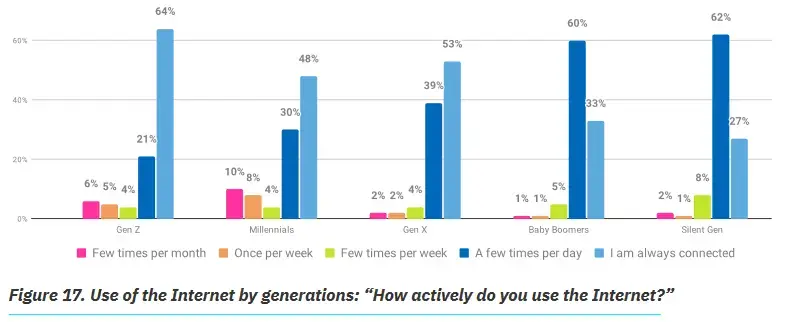
but it may make sense in the context of who actually got polled - I know I wouldn’t bother to fill out an online poll or one that I received in the mail without compensation, and I suspect a decent amount of disconnected individuals would feel similarly. It was an online survey, so it’s not too surprising that they caught people who are connected to the internet, but its kind of surprising they found people who are rarely online.
This is a very insightful and informed take. TBH, I did NOT do my due diligence of critical thinking before posting this article. I’ve succumbed to knee jerk reactions once again.
Crypto moment