Bless you. I love that guy. So gosh darn nit-picky on the details and its the best!! Never thought hour long videos on heat pumps or refrigerators or car headlights would hold my attention or be a favorite part of my week but he makes it happen.
His Christmas light videos are a highlight of the season every year!
Makes sense. Heat pumps are one of the few heating systems that can achieve greater than 100% efficiency. (energy in vs total heat output)
As long as you can keep the evaporator above the evaporation temperature of your compressed refrigerant, you’re golden. Burried lines are excellent for that in colder climates, but the space for it isn’t always easy to find.
It’s a little more expensive, but most places can find the space by drilling straight down. Still worth it from what I’ve seen in most places.
deleted by creator
The coldest temperature ever recorded in the UK is -27. That’s right around the inflection point for where heat pumps become less efficient than electric heaters. Until the gulf stream fails, the UK is pretty safe to use heat pumps everywhere.
deleted by creator
I’ll chime in here since I own 2 heat pumps and live in a cold climate (often below 20C). Our house is heated with 100% electricity and after installing heat pumps our power bill dropped by about 18%. That includes all electricity, not just heating, so the gain in heating efficiency was very considerable.
deleted by creator
Removed by mod
deleted by creator
The Guardian is a UK publication.
deleted by creator
Generally, cold climate heat pumps are an efficient source of heat down to -15 degrees Fahrenheit
“Generally” is the wrong way to approach this. What you should be looking at is the specific capabilities of the actual system that you are considering installing. Some of them can go much colder.
If the Mitsubishi FE18 isn’t efficient in your climate… then don’t buy that unit. Simple.
If it’s really cold where you are… then you could consider a ground source heat pump instead one that uses air as a heat source. The ground doesn’t get anywhere near cold to have efficiency issues no matter where you are in the world and ground source heat pumps don’t cost all that much… though they do require a bit of digging.
Also, if your heat pump is inefficient for a couple really cold weeks a year… oh well. You’re still coming out ahead because it’s very efficient the other 50 weeks a year. It’s not like they stop working at extremely cold temperatures, they just produce a bit less heat than you might like for the amount of power consumed. Maybe they’re “only” 80% efficient instead of 600% efficient… you know what else is 80% efficient? Heating with gas.
So? It is basically always as efficient as resistive heating at its worst, and the vast majority of the time it is massively more efficient. And even then they can remain more efficient even as low as -25C and might need resistive heating backup at places that get below that. But even in places that can dip below that they are often not that cold all year round. So overall throughout the year they are way more efficient on the majority of days even if you need a less efficient backup system.
We really need to think of the whole situation rather than just focus on the but sometimes part of the problem. Yes, sometimes they dont work as well. But overall through a year for the vast majority of places a heat pump can be all you need and is a lot more efficient than other heating systems.
deleted by creator
And what point does that happen? According to the article and other sources say similar things:
Even at temperatures approaching -30C, heat pumps outperform oil and gas heating systems, according to the research from Oxford University and the Regulatory Assistance Project thinktank.
And the lowest recorded temperature in the UK since 1961 is -27.2 °C. So the times you need to fall back to resistive or other backup systems is 0% of the time. And what do you count as a cold climate? is 0C cold? or -10C? -20C? I know many people that would say yes at any other those and I bet there are others that live in places that go way lower. Yeah, what you said is technically true, but without these numbers is almost a meaningless statement. In the UK, and most of europe this article is basically saying that heat pumps are more effective than other sources of heat even at colder temperatures and it takes extremes before they require alternative heating methods.
The way you worded your post it makes it sounds like on a average coldish winters day heat pumps become useless and there is little point in having them. Even if that is not what you intended.
No shit
A sticking point I encountered - the drop in efficiency as the weather gets colder means you need a unit sized to heat your home on the coldest days you expect to encounter. So you need to buy a heat pump that’s larger than you need for 98% of the year just so you don’t freeze that other 2%. In addition to higher cost an oversized unit is less efficient because it’s cycling more.
So this is where “heating strips” or “backup heating” come in, and then I get we’ve come full-circle.
I don’t see how this is “full circle”. In places where it does get that cold, most homes already have a form of heating for the house. Adding on a heat pump or, at least in my case in the Midwest, replacing the central AC unit with a heat pump just means that you’re only kicking that original heating system on a few days out of the year. That’s a massive reduction in use compared to being the only source of heat for half the year.
It’s a problem that new construction homes would need to fix if they don’t want an NG connection at all, but it’s not unsolvable.
I think modern inverter units are not less efficient when oversized. They are able to run at varying levels rather than cycling.
Those “heating strips” are only used a few weeks every year in my case.
The study isn’t wrong, but it’s also not right, IMO.
This doesn’t seem to mention the cost of the energy, just how “efficient” it is… which, honestly, “efficient” can imply several things, and they don’t seem to clarify what (at least from my first pass of this doc).
The issue is that even if you’re getting 3-4 times as much heating/cooling as you could with something else, per jule of energy potential that is put into the system (in whatever form that is), if your energy cost for that source of power is high, it’s going to lose the financial argument every time.
Sure, a natural gas furnace will consume “more fuel” and produce less effective heat than a heat pump, but if you’re paying 10x the cost for electricity, then you’re still going to end up spending more per degree of heating than with the cheaper fuel.
Where I am, electricity is pretty cheap, but natural gas is tremendously cheaper per jule… so we can actually pay less by using the “inefficient” fuel for our home.
I don’t think the numbers are dramatically different at the end of the day, but this study seems to completely ignore the core issue that most people will be concerned with… which is: “will this save me money?” Which is arguably the more important metric.
honestly, “efficient” can imply several things, and they don’t seem to clarify what (at least from my first pass of this doc).
How would you like to define it?
How about this for an analogy - which of these two is more efficient:
-
Plant some wheat in your back yard, buy fertilised eggs to hatch into chickens, plant tomatoes and basil, plant an olive to grow a tree, and eventually, years down the track, you can make yourself a bowl of pasta.
-
Notice your next door neighbour already cooked some pasta and made more than they can eat. Ask politely and they’ll just give you a serving.
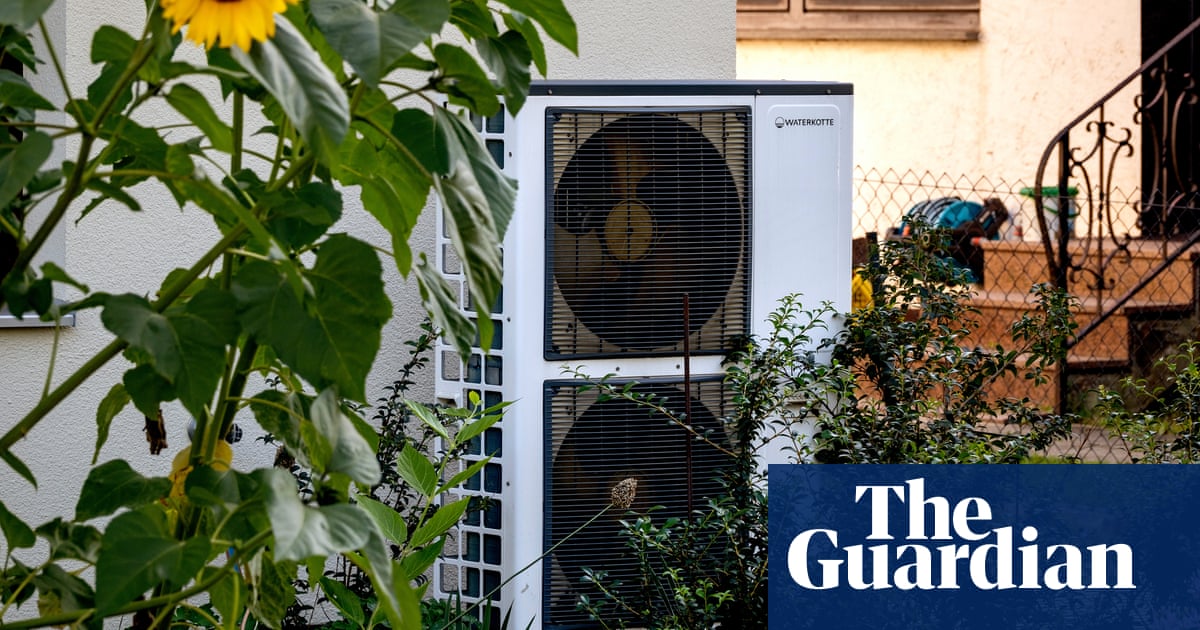
Obviously - the second option is more efficient, and that’s effectively what a heat pump does. They don’t heat up your home, they just take a bit of heat from the air outside and move (pump) it into your home. It’s far far more efficient than creating new heat from scratch with a gas system.
Exactly how much more efficient will depend on the outdoor and indoor air temperature, and on the brand/model of heat pump you buy, and other factors (such as the length of the pipe between the outdoor unit and the indoor unit). You really should ask for specific advice on your home - but in general, a heat pump is extremely efficient.
Where I am, electricity is pretty cheap, but natural gas is tremendously cheaper per jule… so we can actually pay less by using the “inefficient” fuel for our home.
Have you actually looked into it, or are you just making assumptions?
I can tell you that my heat pump, in my house (yours will be different), in my climate, adds about $5 per week to my electricity bill. Is your gas bill less than $5 per week?
Or at least - that’s how much it cost before I had solar panels. Now that I have solar… it uses about 20% of the power typically produced by the solar panels on my roof leaving plenty of excess power that we sell to the grid for about the same amount of money as what we spend buying power overnight. Since we installed solar our entire electricity bill is about $0 (and we use power for a bunch of other stuff, including to cook breakfast and dinner when the sun typically isn’t shining*). We don’t have a large solar system either - in fact, installing solar cost less than installing heat pumps.
(* our solar system comes with instruments and software to measure our consumption - and I can tell you that heating up a family meal with an electric cooktop uses more electricity than heating an entire house with heat pump… because the cooktop is creating heat, and the heat pump is simply moving heat)
-
Where I am, electricity is pretty cheap, but natural gas is tremendously cheaper per jule… so we can actually pay less by using the “inefficient” fuel for our home.
Most of the push towards rapid adoption of heat pumps is happening in Europe, where geopolitical developments (to put it mildly) caused gas prices to spike last winter. The nature of the natural gas logistics means that different continents can have wildly different prices (unlike petroleum, where you can always throw it on a ship and send it from where it’s cheap to where it’s expensive), so a lot of European countries are seeing these debates play out against the backdrop of their own energy markets. Germany passed a law this year that would phase out new gas furnace installations, so that’s why a lot of the debate is happening with a focus on German markets.
Whether (or how quickly) a transition to heat pumps pays for itself in euros will depend a lot on what happens in the future to gas and electricity prices.
What’s also interesting is that you have to factor in the costs and CO2 emissions of the fuel source and it’s delivery method. A new building code for a county in my area was adopted which requires calculations for energy efficient HVAC systems and also CO2 emissions with those systems. Surprisingly, natural gas has less CO2 emissions associated with it, while electricity is 2.86 times as much. This is because grid electricity is mostly produced by fossil fuels, then needs to be delivered to the site but there are many losses along the way. So even if the all electric equipment is twice as efficient as the equivalent natural gas equipment, it still contributes more CO2 production. This is part of the issue with phasing out natural gas and moving to all electric in its current state. But with that is the push (and requirements) to produce energy on site and shift towards net zero energy for commercial sites, which is definitely better than using grid power from an emissions standpoint.
would be a neat story in 1920
Has not been updated for a while, but relevant link…
https://www.energy.gov/eere/buildings/residential-cold-climate-heat-pump-challenge
Electric fans are even more efficient, and about as effective.
What???
This is about heating homes in winter, what are you talking about?? Electric fans are more efficient at what?