
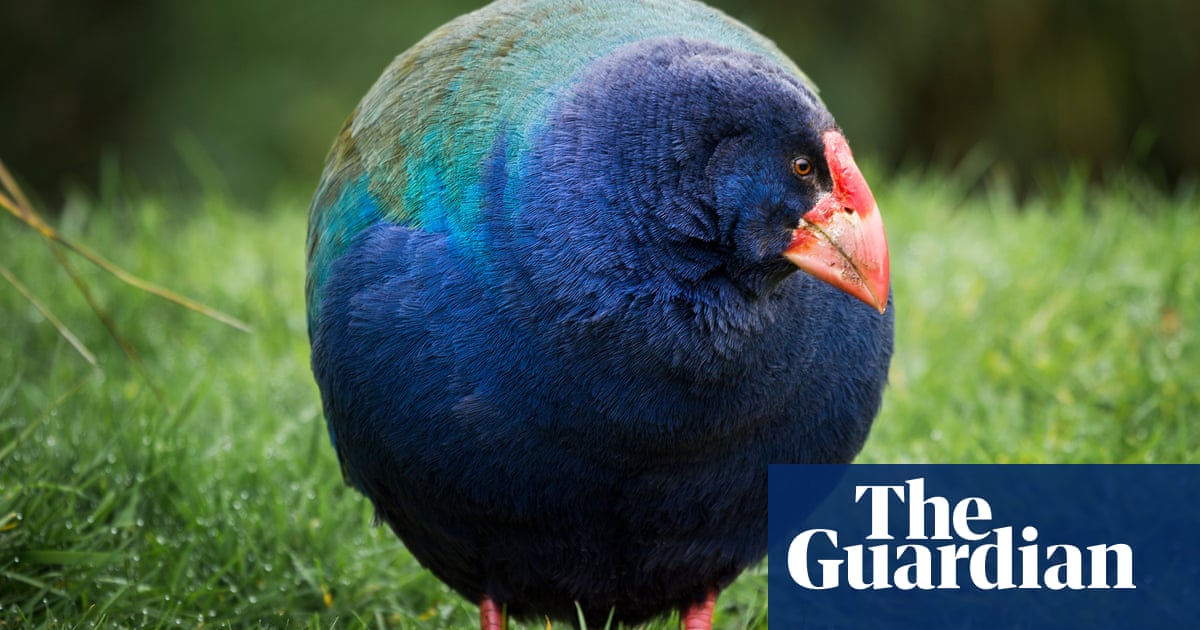
In New Zealand, the return of wild takahē populations marks a cautiously celebrated conservation victory, and the return of one of the world’s rarest creatures. The birds had been formally declared extinct in 1898, their already-reduced population devastated by the arrival of European settlers’ animal companions: stoats, cats, ferrets and rats. After their rediscovery in 1948, their numbers are now at about 500, growing at about 8% a year.
Id hadnt heard of these guys, but learning about them has been neat. Its nice to see an ecological success story.
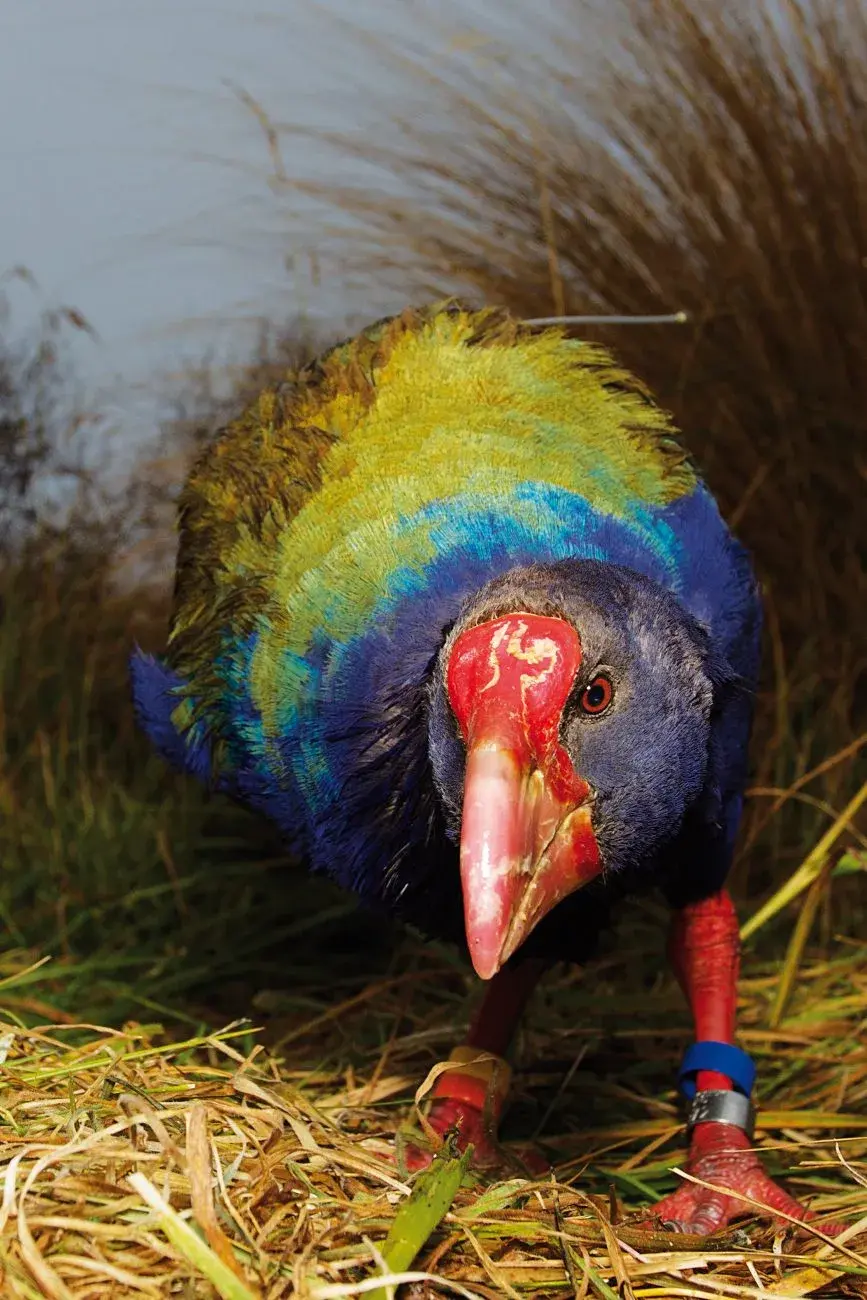
Look at them! New zealand has the best assortment of small dinosaurs.
I’m from the US, and usually all we hear about Australia and New Zealand is of the scary, deadly animals. I’ve been happy to see so many articles on Lemmy about all the work they are doing on endangered animals like this bird and the bandicoots.
I’m also surprised that so many of these programs seem to involve indigenous people. I don’t know much about that part of the world, but I wish we would involve our native people in things like this. It feels we still keep ourselves cut off from each other. It makes all these feel good animal stories into feel good people stories.
Fun fact: Australia and New Zealand are 2,516 miles apart, and don’t share much of the same wildlife.
The Indigenous people of Aotearoa make up 16% of the population so they are demographically a much larger political and social force than in the US or Australia.
I’ve posted several articles about links between various Indigenous cultural traditions and ecological conservation over at !conservative@kbin.social if you’re interested.
Thank you! Those are some pretty significant facts. I’ve got much to learn about things over there!
Thanks for this article, it’s very cool!
The deadly animals are from Australia, not New Zealand.
That’s very, very cool!
I think I’ve read a story or two like this before - where a creature once thought extinct is found again. Does anyone know about how many times or how frequently this has happened?
The only one I know off the top of my head is the coelacanth that I was thrilled to get to see a preserved one at the Smithsonian.
There’s some more I found. The bird in this article is the prettiest of the list. The others may be a bit underwhelming.
The zanzibar leopard is a good one. Quite pretty too. Millers Grizzled Languar is another.