You just mentioned 2 different Google accounts: if your devices are connected to Google accounts they are already getting a lot of information from you that way, and Google knows that those 2 accounts are related.
- 0 Posts
- 29 Comments
Joined 3 years ago
Cake day: July 21st, 2023
You are not logged in. If you use a Fediverse account that is able to follow users, you can follow this user.
I have a setup which is not ideal, but I believe improves privacy while preserving convenience: I never connected my TV to the internet, and instead use a MiBox TV S 4K for all my streaming with custom DNS blocking trackers and ads.
I guess there might be other Android TV boxes that allow you to change the DNS server. It might be worth checking a bit around if you decide to go down this route.
In my case, I found this Reddit post and was able to change the DNS server on the MiBox to NextDNS, where I could later activate relevant blocklists (SmartTV, Xiaomi, Google). I also perform monitoring of the domains the MiBox connects to and have blocked a couple manually.
This way I have an AndroidTV experience with the streaming services that I want, and with the domains I don’t want blocked.
Hey there, I’m sorry about this craziness. My comment was not really directed at you, but I was just quoting part of the original post that mentioned you.
I was trying to suggest that OP is confusing criticism of the GrapheneOS community with criticism of the OS. You make a good point and, as I pointed out, you were not criticising the OS, but the community. Not the same thing.
Even @TheAnonymouseJoker@lemmy.ml gives it backlash despite being a moderator of Lemmy’s biggest privacy community. A quote here: “grapheneOS trolls are downvoting every single post and comment of mine, and committing vote manipulation on Lemmy. They are using 5-6 accounts.” That was in response to downvotes on a comment posted in the c/WorldNews community, which is entirely unrelated to technology.
It seems to me that you might be confusing things: You say that people hate the OS but share a comment complaining about the community of users/fans, not about the OS.
I have never used GrapheneOS and cannot comment on the OS, but I have seen some users in different communities commenting that GrapheneOS is the only valid alternative OS and discrediting any other OS. It becomes tiring pretty fast.
It’s removed from Elsevier’s site, but still available on PubMed Central: https://www.ncbi.nlm.nih.gov/pmc/articles/PMC11026926/#
The worse part is, if I recall correctly, articles are stored in PubMed Central if they received public funding (to ensure public access), which means that this rubbish was paid with public funds.


 3·2 years ago
MP3Tag sounds cool, but there’s no Linux version it seems :(
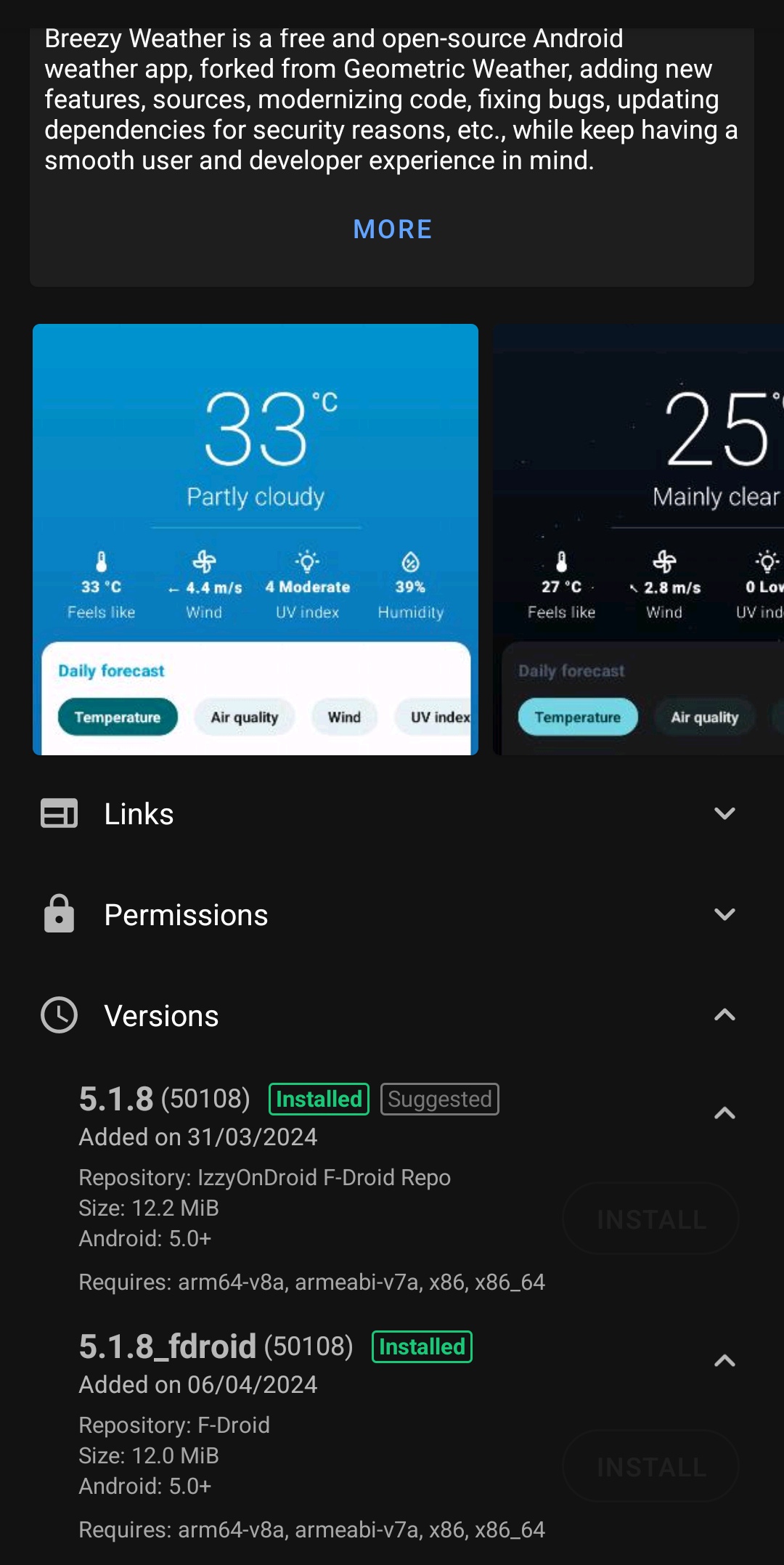
But also on the main F-Droid repository. I can see both results when I search (see screenshot in my other reply).
I can. Have you tried updating the repository information in your app?
There is already a paste button, although not directly shown. I can access it in 3 different ways (but I have made some changes to the default settings, so it might not be exactly the same for you):
- on the toolbar on top of the keyboard (you need to extend it by tapping the > button on the top left). You can customise the buttons that show up here in “Settings/Preferences/Additional keys/Select toolbar keys”
- by long pressing the comma key (my favourite way), a pop up shows with several keys, among them the paste key.
- by long pressing the enter key
I followed the recommendation of the developer and installed the file from GApps packages (“swypelibs”). They provide a link in Heliboard’s README, scroll down to the FAQ section and look for “How to enable glide typing”
Heliboard https://github.com/Helium314/HeliBoard
 31·2 years ago
If you have some kind of Android TV device you can probably install SmartTube to have no ads and sponsorblock: https://github.com/yuliskov/SmartTubeNext
Yes, I feel like F-Droid has been getting some shit lately for no reason. I think it’s good that Obtainium exists and that we have more options of easily getting apps outside the Play Store, and even better: FOSS apps.
However, I see a trend towards “F-Droid is bad and Obtainium has arrived to save us from it” and get the feeling that many times people don’t even understand how both things work. Obtainium is basically doing what some people were doing for long time using RSS, it’s not a revolution. When I tried it, it failed to properly detect the latest versions and updates of several apps, so I was personally not impressed.
Thanks, I know about reproducible builds, but I still don’t see how the GitHub release is more secure than the F-Droid build. In both cases you need to trust whoever built the apk.
It is known that F-Droid uses the published source code, reviews it for anti-features, and they build hundreds of apps used by thousands of people. If they did any tampering or had a security hole we would learn about it pretty fast (we just need one user of one of their built apps to report).
On the other hand using a GitHub release we need to trust the developer of the app: trust that the source code has no malicious code in it (or review the code ourselves, does anybody do that?), there’s no third party reviewing it, and trust that the apk they release uses exactly the published code. The user base of an individual app’s GitHub release is way smaller than that of all apps built by F-Droid, so by chance it would take way longer for users to detect any security problem.
So, as I see it, it boils down to either trusting a big community with a long story of building and providing FOSS apps, a good reputation, and offering reproducible builds on all apps that managed to achieve them; or trusting dozens of different developers, most of whom we know nothing of.
Why is using the GitHub release more secure than using the F-Droid build?
I use a phone holder and my phone sits there with my maps app showing me the navigation.
deleted by creator
I’m interested in reading about those. Dou you have a link or a list of some of those issues?
As @netchami said, Bromite hasn’t been updated in months, it shouldn’t be used. Cromite is a proper successor forked by one of the contributors of Bromite.
It’s not absurd at all. They know the IPs, they know those devices use the same network, and they also know where they are located pretty accurately: the Google Street View cars also scan for WiFi networks and map them to their location.
2 devices consistently connected to the same router, to the same network, in the same place… must belong to the same person or to 2 people sharing a home. If cookies set by other websites and seen by Google show similar browsing habits, it’s probably the same person.