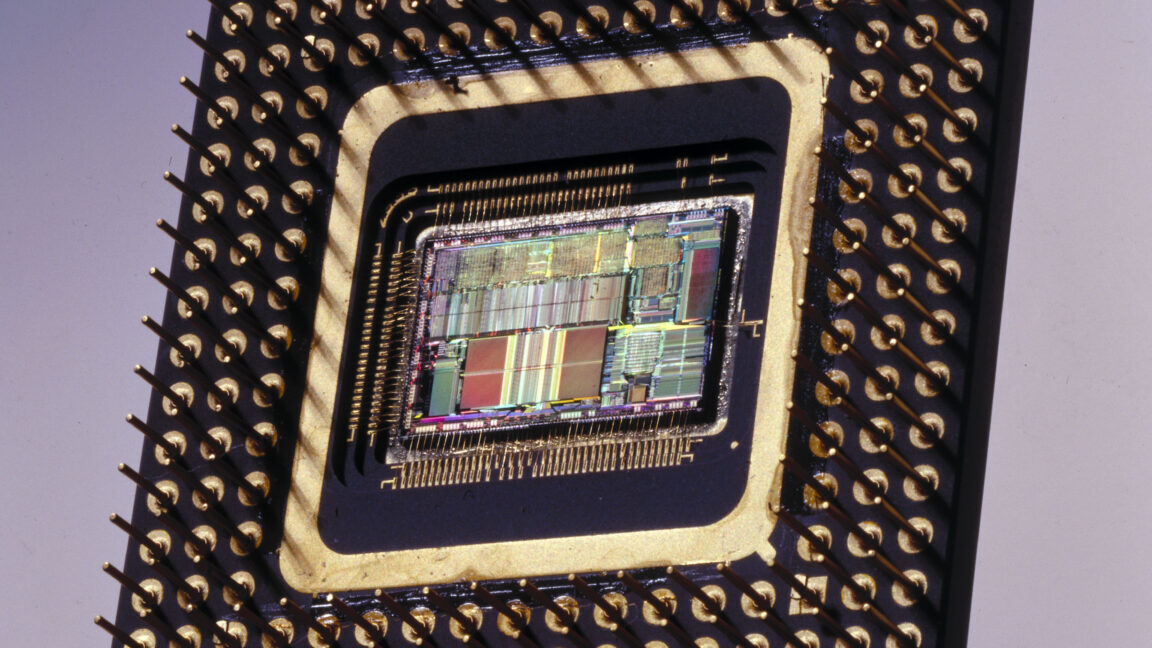
I didn’t know whether to mark this NSFW or not but it’s time to buy a new computer if you haven’t upgraded in multiple decades.
This is absurd! Think of all the 486 cpus that will become EWASTE! LINUX HATES THE ENVIRONMENT!
/s in case not obvious.
That’s a real showcase of how linux actually cares about its users over other companies. It’s great to see that hardware I buy now will be supported on linux for a long long time into the future.
Whew. My 586 is safe.
I remember when Mandrake was a young distro – a redhat derivative – and they (gasp) chose to compile for i586 instead of i386. People were like VROooooOM! And a bunch of other people were like: why would you target CPU instructions that not everyone has?!
I switched to Mandrake for that (back in the day).
For now
The Linux kernel still supports Pentium but most Linux distros do not. The only two I can think of are Adelie and Gentoo. Nothing based on Debian does (Pentium Pro minimum).
Nooooooooo my…wait I’ve never actually owned a 486. Carry On.
Boo.
Me neither but I did own an 6502 based compy.
My first PC was a Pentium 2 though.
First they came for 486, and I did not speak out - because I’ve never actually owned a 486…
I never owned a 486 either. My first upgrade after the 286 was a Pentium.
I think it should be possible to still run Linux on almost every 25 years old computer.
If the computer is older than this, it really becomes a piece of history and I can accept that it’d take efforts from the user to keep it in use, just like a collection car.
I only hope no bricking update is gonna be proposed to the people running such old hardware. The distribution should check if the hardware is compatible with a newer kernel before updating.
Still I think it’s important that Linux remains the OS of choice for old hardware and that the some distros remain deficated to these museum pieces.
Linux newb here. So I’m assuming this would make the kernel smaller, and take up less space. Would it be significant?
It’s probably less about making the kernel smaller and more about security and reviewing code. The less code you have to maintain, the fewer vulnerabilities even if it’s old code.
I would doubt almost 20 year-old code is taking up a lot of space or presenting new vulnerabilities. And it’s obviously open source so if anyone needs it, they can always use an older kernel or maintain it. Sometimes, your oldest code is insane. I wish there was a budget for every company and government to pay retirees part time to go back over their oldest code that’s still in use. A lot of retired programmers would do it for fun and nostalgia. And to be horrified something they wrote 20 years ago hasn’t been updated or replaced.
I wish there was a budget for every company and government to pay retirees part time to go back over their oldest code that’s still in use. A lot of retired programmers would do it for fun and nostalgia.
There is no budget for it AFAICT but there is https://github.com/abandonware and others trying to help on that path.
The size difference is not significant. This is about the maintenance burden. When you need to change some of the code where CPU architecture specific things happen you always have to consider what to do with the code path or the compiler flags that concern 486 CPUs.
Here is the announcement by the maintainer Ingo Molnar where he lists some of the things he can now remove and stop worrying about: https://lore.kernel.org/lkml/20250425084216.3913608-1-mingo@kernel.org/
The Linux kernel is well over 30 million lines of code (lots of that is drivers).
This change shrinks the kernel by about 15,000 lines. That is not nothing, but it hardly moves the needle.
It is just one less thing to have to worry about and one less constraint to limit flexibility in the future.
Actually, most devices today run an amd64 kernel (amd or intel cpus in typical desktops or servers) or arm (phones, some modern notebooks). Those architectures never supported 486 cpus.
I assume, the code removed is in the x86 branch, excluded when compiling for other architectures. As others said, I guess this is mostly about maintainance effort and testing.
(But then i don’t know much about the kernels. Maybe there’s some interplay between amd64 and
x64x86 architectures.)Maybe there’s some interplay between amd64 and x64 architectures.
AMD64 and x64 are the same thing. Do you mean AMD64 and x86? There is definitely interplay there, as AMD64 implements the x86-32 instruction set.
yes, i meant x86
Probably not a lot of space savings, but certainly a reduction in complexity, which helps programmers keep everything together and frees their time to work on the newer stuff
Sorry, my bad. I found my old 486 PC in my parent’s attic recently, and started planning to get it running again
but what abt my 386SX tho
If anyone is actually using a 486 still, you can try using the kernels that the CIP maintains https://git.kernel.org/pub/scm/linux/kernel/git/cip/linux-cip.git They actually still support kernel 4.4
The latest kernels still work on 486 - kernel 6.14 currently.
I just meant after support is dropped. The CIP I think supports each of its kernels for 10 years? So whatever the last kernel is before they officially drop support will still be maintained by them for a long time. :)
Got it. I was not familiar with this Linux Foundation initiative. Very cool.
It looks like they support the LTS kernels as an extension of Debian. So, kernel 6.12 will get 10 years of support after Debian Trixie launches with it this summer.
That means 486 will be fully supported until at least mid 2035. Amazing.
That’s what I’m saying! It’s kinda awesome how long things get supported in linux land!
deleted by creator
“My baby, you have blossomed into a wonderful adult. It’s time to stop relying on us now, though. Go on and do big things, or something…”
Is the coming of age ceremony when he loads Doom?
Following the links in the article, someone got windows xp to load on a 486…
It’s sad, when you think about it, because I was under the impression that Linux was perfect for old/ancient machines, but if support for old hardware gets thrown away…
Old kernels still run on it, it just won’t get new versions.
The reason Linux (and BSD) is perfect for old machines is that the source code is available, so anyone can maintain it if they want to. It doesn’t mean the core Linux team has to maintain it for them though.
Yeah, you’re right.
You really got dogpiled hard there, as if being corrected half a dozen times wasn’t enough, they had to downvote you to oblivion as well :(
I don’t mind that people write that old hardware can still be used, because they are correct, but the number of downvotes breaks my heart.
As somebody that offered a “correction”, I can assure you that I did not downvote.
Latest 486 “distro” released 3 months ago:
https://github.com/marmolak/gray486linux
Same userland as Alpine Linux. Newer version of MUSL than current Void Linux ships with. Up to the minute kernel.
The oldest kernel version still getting updates at kernel.org is from 6 years ago. So, we may still have active 486 support in official kernels for years yet.
Even after that, the kernel will stay available. You can always backport any important security fixes yourself.
And this is just the kernel. A 486 will run current c libraries for decades most likely.
You can still use Linux on 386 and Git commits as recent as a year ago say things like “adding support for new hardware”.
https://github.com/marmolak/gray386linux
Again, even on a 386 you have the same C library and userland as found in current Alpine Linux.
Good
Its like… Bro… Its a 486 CPU
You can still run perfectly good software on it. You’ll just be limited by the resources, so you’re not playing Crysis by any means.
Just a few years ago I got a 286 up and running with Minix. It was neat, but I didn’t get as far as compiling the Ethernet driver, so I didn’t really do much with it and it eventually finished its journey to recycling.
Wow, to wake up and see that a large number of people have downvoted my simple noob comment is definitely something. C’mon people, chill, I am quite new to all this stuff.
And how much have you paid for the last 18 years of support? You can continue to run Linux on old hardware, as long as you’re willing to pay for the development. 18 years is one hell of a freemium model.