lautan@lemmy.ca to Science Fiction@lemmy.world · 2 years agoSandworm size chartlemmy.caimagemessage-square28linkfedilinkarrow-up1340arrow-down147
arrow-up1293arrow-down1imageSandworm size chartlemmy.calautan@lemmy.ca to Science Fiction@lemmy.world · 2 years agomessage-square28linkfedilink
minus-squareFuglyDuck@lemmy.worldlinkfedilinkEnglisharrow-up8·2 years agoSo, the sarlacc. The bits of it we see in the movies, are its mouth (the pit with the spiky stuff,) and its (apparently beaked) tongue. The sarlacc is probably quite a bit larger. (Maybe not dune sand worm big.)
minus-squareEmoDuck@sh.itjust.workslinkfedilinkarrow-up1·2 years agoHow do sarlaccs multiply? They are not very mobile, so I assume some sort of pollen/spore situation. So it’s “mouth” might also be it’s genitals
minus-squareFuglyDuck@lemmy.worldlinkfedilinkEnglisharrow-up1·2 years agoI dunno. I’d have to either be spores or parthenogenesis. Given their size they can’t be that common,


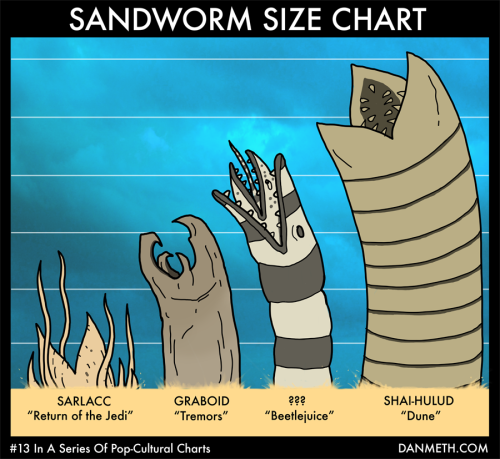
So, the sarlacc. The bits of it we see in the movies, are its mouth (the pit with the spiky stuff,) and its (apparently beaked) tongue.
The sarlacc is probably quite a bit larger. (Maybe not dune sand worm big.)
How do sarlaccs multiply? They are not very mobile, so I assume some sort of pollen/spore situation. So it’s “mouth” might also be it’s genitals
I dunno. I’d have to either be spores or parthenogenesis. Given their size they can’t be that common,