
Ubuntu’s popularity often makes it the default choice for new Linux users. But there are tons of other Linux operating systems that deserve your attention. As such, I’ve highlighted some Ubuntu alternatives so you can choose based on your needs and requirements—because conformity is boring.
From an engineering perspective, I prefer Debian distros. Apt is the greatest package manager ever built. For a production server, I’d choose Debian or maybe Ubuntu if I needed to pay someone for support.
But for a desktop, Ubuntu kinda sucks. These days, I think I’d recommend Fedora to Linux noobs.
And for my toys at home, I run Arch btw.
Heard. Debian in the streets, Arch in the sheets!
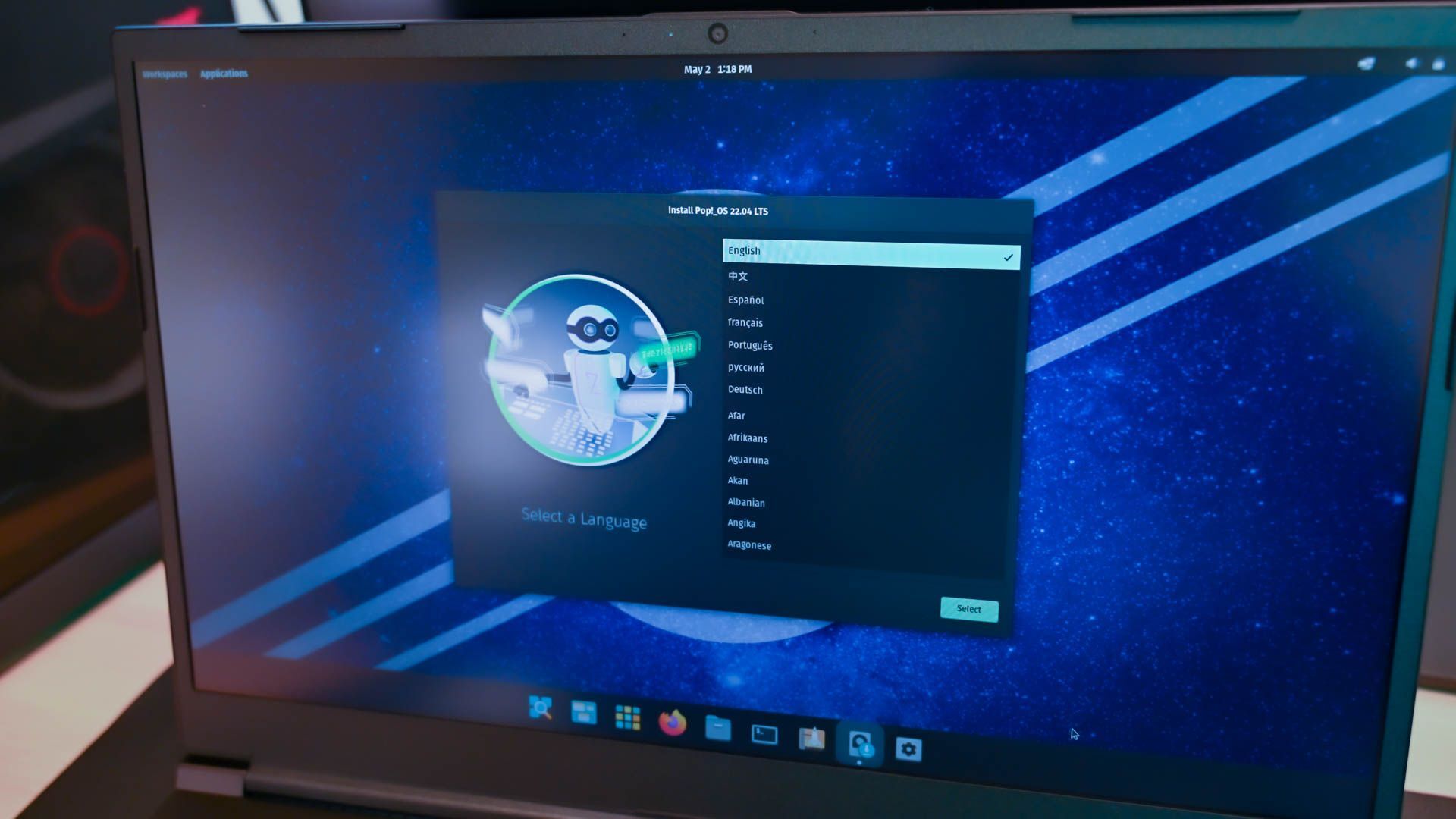
What about Ubuntu derivatives for desktop? My go to recommendations are Pop! OS and Linux Mint (which I use).
deleted by creator
Pop! Os user going on a year now and I can’t recommend it enough, at least as a first distro.
the de matters more for new users honestly, so I usually recommend: gnome: ubuntu
kde: kde neon
cinnamon: mint
cosmic: popand just let them choose what they want
Apt is the greatest package manager ever built.
What’s your rationale for making that claim?
See the other thread.
TL;DR: Useful abstractions and a hell of a dependency solver.
How do you compare it with Pacman?
I was fighting rpm hell on redhat for the 3rd or 4th time using red hat linux 5 to 6 or perhaps 6 to 7. When i first installed debian potato on my daily driver. We had 20 ish servers, but the constant hunt for the right combo of rpm’s made me distro jump my own machine. A while later i was floored when i could apt-get full-upgrade to the next debian version without rpm hell and almost everything just worked. Never installed another redhat machine and have been using debian + kde ever since. And 99,3% of all servers i maintain are now debian. A few odd ubuntu machines for $$reasons.
Is rpm hell gone for good nowadays?
I think yum does a better job. But i never installed another redhat machine so who knows. Been thousands of debian machines over the years tho. Luckily now it is right click -> vm from template or terraform apply. and not hours swapping floppy discs ;)
Apt is the greatest package manager ever built.
Urgh, no, it’s not. Everything about it is super crusty if you go beyond simply installing packages and adding others’ PPAs IMO.
- Packages often enable the services they install right away. Someone told me they got locked out over SSH because they installed a firewall package that locked everything down by default, and the service got started on install. I guess that’s technically more of an issue with the way things are packaged rather than the package manager itself, though.
- To temporarily install a package (so that it will get uninstalled with the next autoremove) you need to use aptitude to install the package, or run apt-mark auto after installing (which will also clear the manually installed flag if it was manually installed before), apt has no syntax for it.
- dpkg-scanpackages is eternally slow, I had to write a wrapper for it that runs it separately for every package and caches the result because I didn’t want to wait multiple minutes for it to rebuild the PPA package index
- The standard packaging tools (dh-make or debuild, I think I’ve looked at both) are insane, so much so that I gave up and wrote something that takes files similar to Arch PKGBUILDs which calls dpkg-deb at the very end.
I could probably list more but I haven’t had to touch apt in a while, thankfully. But it is probably the #1 reason I avoid anything Debian-based. #2 is probably their Frankenstein sysvinit/systemd setup.
I do have to say that apt remove vs purge is pretty cool though.
What do you like about it?
Packages often enable the services they install right away.
That’s a problem of the package, not the package manager.
Generally this fits with Debian’s philosophy. But regardless I think it’s out-of-scope for why Apt is good. You could make a distro with Apt and not have your packages do this.
To temporarily install a package […]
I’m not talking about
aptthe CLI tool, but the actual package manager. The plainapttool is only designed to be a convenience wrapper for common workflows implemented in other tools.As you correctly pointed out, Apt has the distinction between packages installed as a dependency (“auto installed”) versus packages installed directly (“manually installed”). This is precisely one of the reasons why I consider Apt the best package manager. (Yes, I know other package managers can do this, not all though.)
If you want to install a package as manual, then later mark it as auto, you can do that with
apt-mark.dpkg-scanpackages is eternally slow.
Are you maintaining a PPA for others?
Frankly, I’ve never run into this problem.
The standard packaging tools […] are insane.
dh_makehelps you create a package that adheres to Debian policy, and there is good reason for Debian to have those policies. But if you’re just packaging something yourself, you don’t have to use it. It’s just a template for new packages.At the end of the day, all you really need to create a deb is to create two files
debian/controlanddebian/rules. These are the equivalent to a PKGBUILD. The control file specifies all of the dependency metadata, and therulesfile contains the install script.The difference in packaging philosophy is that PKGBUILDs are external and they download the upstream sources. On the other hand, in Debian, they rehost the upstream package and add the
debiandirectory. This means that building Debian packages is mostly hermetic: you don’t need access to the network.What do you like about it?
Mostly that it makes super useful distinctions between concepts. But there are other goodies.
- Manually installed versus auto installed.
- Uninstalled versus purged.
- Upgrade versus Dist Upgrade.
- Dependency versus suggestion versus recommendation.
- The alternatives system.
- Pinning, and relatedly that packages can include version constraints in their dependencies.
- Interactive configuration at install time.
- Support for both source and binary packages.
I also do appreciate that Debian pre-configures packages to work together with the same set of conventions out of the box. But again, that’s a property of the packages, not of Apt.
I’m not talking about apt the CLI tool, but the actual package manager. The plain apt tool is only designed to be a convenience wrapper for common workflows implemented in other tools.
Sure, but the interface is probably just as important as the actual logic behind it, isn’t it?
As you correctly pointed out, Apt has the distinction between packages installed as a dependency (“auto installed”) versus packages installed directly (“manually installed”). This is precisely one of the reasons why I consider Apt the best package manager.
Honestly I would consider that one of the fundamental things a package manager must do, I didn’t think it was a special thing haha
If you want to install a package as manual, then later mark it as auto, you can do that with
apt-mark.Yeah, I know. But if you want to manually install a package like that, you have to remember the extra step after it’s finished installing instead of before the install. It’s just unergonomic, for something that could be a flag (e.g. in
emerge -1) and that I at least use fairly often.Another problem with it being a two-step thing is that if you do it unconditionally in a script, it doesn’t retain the flag from before the previous installation command, you need a third step, i.e. checking if the package was installed before. My use case for this was installing dependencies for a package build which should be able to be removed again afterward, while not affecting the subset that were already installed explicitly.
Now that I think about it, it’s probably a good idea to always check if a package needs to be installed before installing it if you script it, though, because otherwise it might be unnecessarily reinstalled. Fair enough.
Are you maintaining a PPA for others?
Yeah, I maintain some software/config/meta packages for the computers at the uni I study at. Before, I’m pretty sure the packages were manually packaged with every update and I wanted to automate it a bit and also make clear how to get from the source tarballs to the final build.
On the other hand, in Debian, they rehost the upstream package and add the debian directory. This means that building Debian packages is mostly hermetic: you don’t need access to the network.
Ahh, the way it’s structured makes a lot more sense knowing that. Coming from packaging stuff for Arch, Gentoo and NixOS, where the packaging process is essentially the same for all three, with you usually supplying source download URLs, I had absolutely no idea how debian/rules would allow me to do anything and felt like I was missing a big thing. I guess it really is just a Makefile that you run directly, and that makes sense if you already have the sources in your tree?
- Pinning, and relatedly that packages can include version constraints in their dependencies.
This, at least version constraints, is another one I’d consider essential tbh. The rest are great though, I agree.
Sure, but the interface is probably just as important as the actual logic behind it, isn’t it?
The logic is why I love Apt. Most robust dependency resolution algorithms I’ve used.
But also, I don’t have any issues with the CLI. Having a distinction between
apt-getandapt-cacheandapt-markdoesn’t feel weird to me. You’re practically just separating the top-level sub commands by a dash instead of a space. Theaptcommand is really just a convenience thing, and there are specialized tools for the more advanced things. Which is fine by me.Also, the top level
aptcommand doesn’t guarantee a stable CLI, so for scripting you’re supposed to useapt-getand friends anyway.Honestly I would consider that one of the fundamental things a package manager must do.
You’d be surprised. Homebrew (the de facto standard package manager for macOS) doesn’t do this. Though, you can at least lookup the “leaf” packages which are not dependencies of any other package.
And, most language-specific package managers can’t do this. E.g. if you install software with
piporcargo.you have to remember the extra step after it’s finished installing
If the package is in use, it shouldn’t be an orphan.
For example, what if you race with a cleanup job that is removing orphans? (Debian is hyper stable, so I often enable unattended upgrades with autoremove. I’m not so comfortable doing that on Arch ;)
What you’ve described is just an
apt-get installwhen you start and andapt-get removewhen you’re done. Or more properly setting it as a build dependency in your source package, to let Apt handle it.But also, why uninstall build tools?
This, at least version constraints, is another one I’d consider essential tbh. The rest are great though, I agree.
Yeah, version constraints are common. But most other package managers bail with an error when they encounter a conflict. Apt is really good about solving conflicts and proposing solutions. Often it will propose multiple solutions to your conflict for you to choose from.
Again, it’s the solver part of Apt that makes it the best IMO.
Last time I used latest Ubuntu:
-
Default scaling on login screen and desktop sucked. If I had vision problems it would be unusable.
-
Settings application crashed after trying to open half of the menus.
-
Despite user interface looking like it’s made for tablets, the actual touch usability was horrible. I couldn’t even resize windows without being precise as fuck and there was no windows snapping despite it being a feature on Windows for more than a decade.
-
Couldn’t double click on Windows program to run it in Wine despite it being possible 10 years ago.
-
Reliance on snaps, even though installing software from 3rd party sources still being horrible.
-
I was a longtime Debian/apt diehard but I’m coming down on the same side of late. My homelab runs Proxmox (Debian based) with Ubuntu 22.04 LTS containers for more up-to-date packages, but my attempt to use KDE Neon (Ubuntu-based) for my desktop PC was a disaster. I’ve switched to Nobara (Fedora-based), and other than having to switch from Wayland back X11 because Wayland on NVidia breaks a bunch of things I need for work it’s been relatively smooth sailing.
ubuntu uses apt too…
Yep. From an engineering perspective I prefer Debian distros. Ubuntu is a Debian distro. I said I would consider using Ubuntu in prod, and this is the reason.
What can the apt of Debian do that Ubuntu can’t
Nothing. They’re mostly the same thing.
The Ubuntu version will sometimes print “ads” to your terminal :P.
For a prod server, I’d choose Debian over Ubuntu if I didn’t have paid support, because I’m not a fan of Canonical. If I needed paid support, I’d choose Ubuntu, because Debian is strictly a community distro. (That community happens to include major companies, like Google.)
well considering the title being “ubuntu isn’t the only option” and you following “i prefer debian” with how good apt is… im sure you can see how that was misleading, then.
Imagine putting Manjaro as reliable and cutting edge over, say, Fedora.
Imagine putting Manjaro in the article instead of EndeavorOs
People love to bag on Manjaro, but I know a fair number of people who use it as their primary OS. Hell, I used it as mine for almost a year and a half; I only moved to Arch because I was super bored one weekend.
I’m not saying don’t use it, I’ve used it in the past and they get some stuff right. The included programs are generally good choices, their customisations on the DEs differentiate Manjaro from others, the GUI app that lets you trivially install different kernels with the click of a button is great. Unfortunately it ended up causing breakages a couple of times, so I moved on.
I’m saying if I were to pick a word to describe it certainly wouldn’t be “reliable”, due to their whole holding back Arch packages but not AUR ones, leading to dependency conflicts.
I honestly don’t know why they don’t hold back AUR ones as well (or don’t hold back a week, a-la EndeavourOS). That’d solve IMO the biggest issue with the distro

Plus the whole repeatedly not updating expired security certificates and telling people to just roll back their clocks to “fix” it.
If it happened only once, I’d chalk it up as an embarrassing albeit understandable mistake. But it’s happened, what, 3 times now? It’s an issue in itself, but it also brings into question what other stuff they’re messing up behind the scenes due to poor processes.
That’s fair.
Aur is explicitly stated to be unsupported on Manjaro. I don’t think you can hate on them for this
They should probably have big warnings when you actually try to go install something, then, rather than as a note in their wiki that very very few people will read.
“People I know” has never been a suitable equivalent to actual data, Mr Trump.
Lol I agree
The only data in this exchange is the anecdotal data I provided, get your head out of your ass.
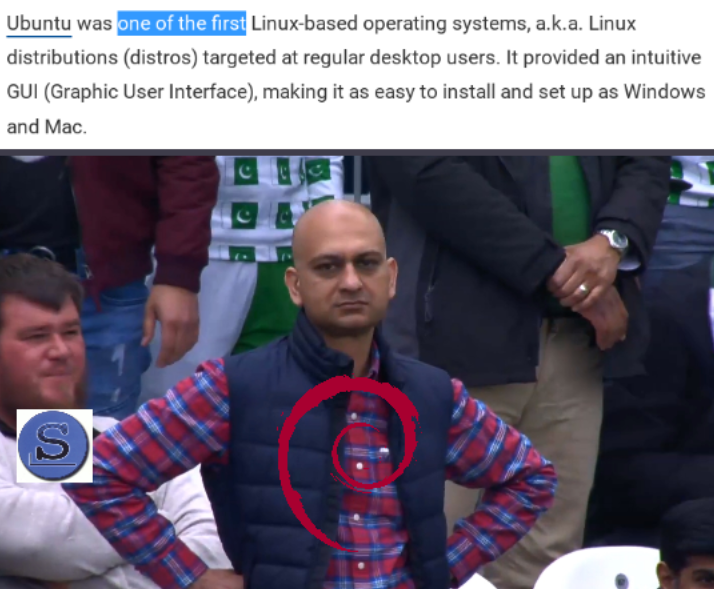
I don’t think that’s particularly wrong, tbh.
The key words being targeted at regular desktop users.
Obviously far from being one of the first distros, or distros with a GUI. But targeted at regular desktop users - i.e. “normies”? Absolutely.
People need to remember how crappy and janky the desktop was before Canonical spearheaded a lot of usability improvements.
If only they had continued along that path :/
Slackware is a garbage distro purely because it doesn’t have a functional package manager supporting dependency resolution
targeted at regular desktop users
While Slackware and Debian are the oldest still-maintained Linux distros, I don’t think either had a desktop-first approach.
I considered putting logos of some of the many more user-friendly pre-ubuntu distros in the meme but was lazy.
Debian was intended to be for regular desktop users back then too, though.
…Except Debian wasn’t even user-friendly when I used it two years after Ubuntu’s release. Red Hat Linux (not RHEL, which came later) was the only distro I’m aware of before Ubuntu that was more UX-focused.
Edit: I forgot about a few others — SUSE, Corel Linux, Lindows/Linspire, and others. Buuuuuuut most of those distros don’t exist anymore. I still stand by that Debian didn’t used to be as noob-friendly as it is these days.
Mandrake is another
one of the first
Yeah, no.
It was one of the first that didn’t make you to want to tear your hair out, I’ll give them that.
That’s what I interpreted from the “targeted at regular desktop users” part.
Certainly not one of the first distros. But one of the first that almost any normal person would actually be able to install and use? Absolutely.
There were multiple before it that claimed to be easy for anybody to use, but most of them still weren’t by a long stretch.
there were dozens of others in the 11 years between the first and ubuntu
“Targeted at regular desktop users”
I really feel like you’re missing the idea of that sentence deliberately.
What Linux distribution came before Ubuntu that was specifically designed to be user friendly for a non-technical user?
What Linux distribution came before Ubuntu that was specifically designed to be user friendly for a non-technical user?
There were a bunch of distros advertising ease of use; several were even sold in physical boxes (which was the style at the time) and marketed to consumers at retail stores like BestBuy years before Ubuntu started.
Here are four pictures of the physical packaging for three of those pre-ubuntu desktop distros designed to be user friendly and marketed to the general public:
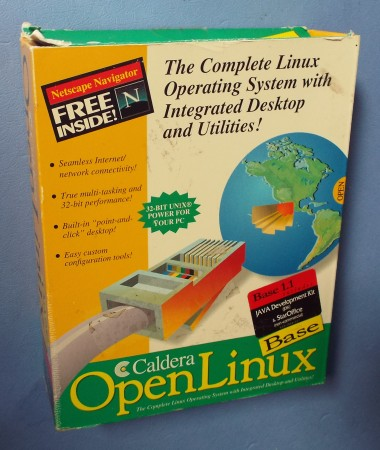
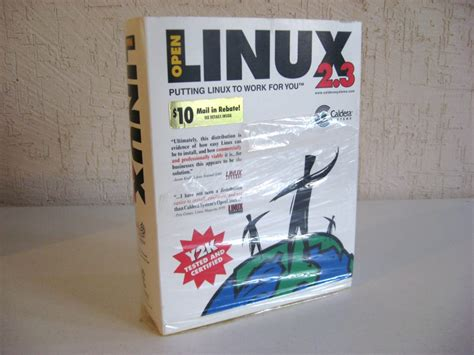
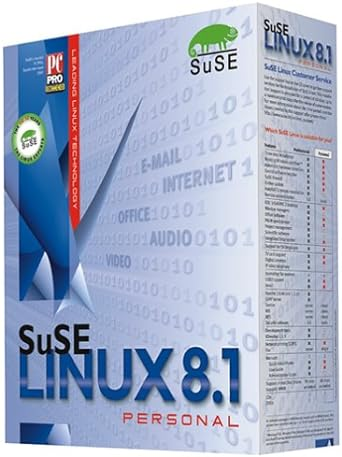
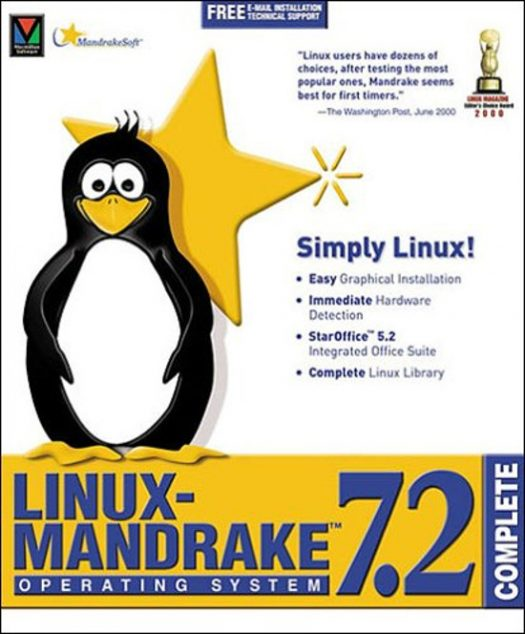
Ubuntu was better than what came before it in many ways, and it deserves credit for advancing desktop Linux adoption both then and now, but it was not “one of the first” by any stretch.
Ubuntu isn’t your only option
Thumbnail shows
Pop!_OSwhich is a fork of Ubuntu.For now. They’re switching to Debian.
Edit: I think I was thinking of Linux Mint?
Edit again: I was wrong twice, it was Vanilla.
https://linuxiac.com/vanilla-os-announces-major-shift-moving-from-ubuntu-to-debian/New article: Debian isn’t your only option
Yeah but it’s the best one
Step 1: install Debian
Step 2: install a bunch of packages essentially making it UbuntuStep 3: Don’t install Snap & have a better time
Very true. Snaps are the worst. I don’t even get why Canonical hasn’t decided to just drop them already
Sunk cost fallacy?
You are doing it wrong, then.
I was looking for some information on this but couldn’t find anything. Do you have a link or any more info on them moving to a Debian base?
Hm. I don’t think I dreamed it, but now all I can find is a Reddit post where mmstick says the next version will be based on Ubuntu 24.04.
Maybe I was conflating it with Linux Mint.
I was thinking of Vanilla. Thanks for the callout, I was lined up to be very confused at the next Pop OS release.
Ah that makes sense. I didn’t know about Vanilla so thanks for updating that.
I know Pop is updating with their own DE “soon” and thinking they were changing their base as well would have been quite an undertaking
I thought the DE was already out.
They’re making their own from scratch because modifying Gnome became too much of a pain. It’s got the same name, which is confusing.
This is probably why I had it in my head that they were doing the Vanilla thing, in that they are both departing from their long-standing fork.I mean I get that, but I could’ve sworn cosmic was already out.
Cosmic does look really nice.
No one ever recommends OpenSuse…
I am kind of afraid of the corporate influence on OpenSUSE. Same for the relationship between Ubuntu and Canonical
It also makes it more resilient in the face of hard times. Point to be noted
Is any popular stable distro free from corporate influence aside from Debian?
Correct.
openSuSE is cool. It was the first distro I installed way back around 2010 and still the one I would recommend to new people.
Tumbleweed is recommended often here.
I occasionally try out Opensuse since like 2007, but I always find the alternatives better. Why Tumbleweed over Arch, why Leap over Fedora/Debian, why suse over RHEL?
There is a shill on YT called Linuxcast. (I like his content, but he is defo a Suse shill) Personally i’d rather fix some arch fuckups, then to not have the AUR. (or if I don’t have the AUR, then just use Debian)
deleted by creator
It is not bad, but slow after Arch.
The problem with going for alternatives is support.
Imagine picking a random Linux flavor, then trying to figure out how to change settings, only to get either hundreds of different answers.
You’re not going to get a telephone number you can call, but the documentation maintained by Arch is far superior to that offered by Ubuntu. If support is your biggest concern, you’re far better served by Arch.
That’s fine for someone willing to read documentation, the average user would rather read a forum post, which Ubuntu has a shit load of posts about using and fixing it.
Lol I chuckled at that telephone number part
Ubuntu used to have the mission of being Linux For The Masses. Their marketing material used to include a bunch of trendy diverse young people standing on their logo. I’m pretty sure they’ve completely abandoned that cause in favor of trying to out-corporate RHEL. Their present-day web page has more corporate logos on it than the starting grid at a NASCAR race, and I challenge you to find the link to download “Normal Ubuntu for normal desktops.”
How much did The Masses pay for what they were using?
deleted by creator
Debian? First time i installed it wanted to use CD for packages instead of online. Don’t know why. Second time it didn’t have wireless drivers as these were non free.
It’s a great distro but not for newbies.
Fedora all the way!
Non-free-firmware is now handled automatically during installation as of the most recent Debian release, just FYI. For reference, see the note at the top of this wiki page: https://wiki.debian.org/Firmware
That’s a recent development. I also though you had to get a specific build, not the normal one.
I think they only started doing this in the past year or so. It is decently new, but I think it is a good move.
Yep, fairly recent indeed, June of 2023, but it should work with any of the official installation media.
I had this problem a week or two ago when I tried to install Debian 12 on my old MacBook pro. Ended up installing something else.
Interesting, that’s kind of surprising. Do you mind sharing which model of MacBook Pro it was? I had been considering getting one for cheap for testing purposes. Also, it may not be useful to you at this point, but I figured I’d drop a link to the Debian Wiki which has a page for MBP-specific info, in case anyone reading might benefit: https://wiki.debian.org/MacBookPro
I have a late 2011 MacBook pro with a broadcom wireless card.
I’ve used this laptop to distrohop a bit and the wireless driver is always an issue. You have to install the broadcom DKMS driver or wi-fi will randomly disconnect after a random amount of time.
Debian is in many ways the “deep end”. A big part of its development philosophy is prioritizing their weirdly rigid definition of Free Software and making it hard to install anything that doesn’t fit that. I’m not saying it’s not a good distro, but IDK if it’s beginner friendly.
deleted by creator
Normal users want that potential for getting their hands dirty to be zero at best
Exactly this. To normal people the computer in their house is merely a tool; just another appliance that needs to work every time without any fuss.
Fedora is also apparently newbie friendly. IME, RHEL is not, but their free developer license is good if you want to learn working with it. Some employers use RHEL exclusively, so it’s not a complete waste.
deleted by creator
Debian is good until you need to install a PPA :\
out of the loop since I’ve moved to debian and been using flatpak for the last few years, what software are you installing via PPA that isn’t generally available via flatpak?
deleted by creator
“PPA” is Ubuntu’s branding for third party repositories. So, of course you will have a hard time adding a Ubuntu-specific third-party repository to anything that isn’t the Ubuntu version it’s made for…
Debian of course supports third party repos, just like Ubuntu. On Debian they just aren’t called “PPA”.
For more information on how to add third party repos to Debian (or Ubuntu, if you don’t use Canonical’s weird tooling), check out the Debian Wiki page on UseThirdParty or SourcesList. There’s also an (incomplete) list of third party repositories on the wiki: Unofficial. And just like with PPAs, anyone can host a Debian repo.
One time the installer got stuck on my hardware. Never again. Debian deserves a lot of credit but personally I will not go near an OS unless I am certain in advance that the initial installation will go without a hitch.
To add to that, there’s so much “support” out there for Debian and by proxy Ubuntu. You can Google any error and you’ll find the fix. That’s what draws new people to them. Even my self even though I’m not new to the Linux ecosystem. Ubuntu makes a perfectly good and stable server operating system.
Manjaro: Reliable and Cutting-Edge Features
Rarly laughed that hard. Reliably is by defenition wrong. Manjaro delays packages a few days in their main compared to Arch this can cause issues and makes them not compatible with the AUR which one of the most advertised and enabled by default feature.
You can read more about other problems here, https://github.com/kruug/manjarno
Yeah, that one made me chuckle as well. But I guess the article ‘had to be written’ for reasons & it does actually have some overview value & nice pics … which I guess is what new users have to go on before they actually dive in.
AUR is unsupported on Manjaro. Go back to Arch if you want that without issues
I like that they hold the updates back. Manjaro is as reliable as any other desktop Linux I’ve used.
Anyone else notice that the first three are Ubuntu?
Corporate wants you to find the difference…
“They’re the same picture” Pam from The Office
“New to Linux? Where the most daunting thing about switching to it is how many choices you have in configuration? Well, good news! You have more choices than you think!”
So Ubuntu, Ubuntu and unstable arch… here let me have a go:
- Fedora
- Tumbleweed
- Endeavour OS
- easy install arch with extra repos, zfs and and dracut
- Bonus for the curious
- void
- Redcore Gentoo
I agree with the Fedora recommendation. Just a all round great experience.
Well as a psychopath, I always recommend beginners start with Gentoo. Guaranteed they won’t go back to Mac or Windows. /s
By starting the switch to Gentoo, they either learn Linux well enough to never want to go back, or they fubar their system so bad that they can’t go back.
Back in early 2000s I ran Gentoo as daily driver for a year, while almost a Linux noob, but eager to learn. Installation instructions were long, but excellent.
It was fun, and worked well, but in the end the long compilation times got the better of me. Now I heard they are including binary packages, so the itch is coming back.
Right now running opensuse tumbleweed, which works fine, sometimes too smoothly.
Right? I’ve been on Tumbleweed a few years - never actually expected it rolling so effortlessly.
My personal recommendations for beginner distros:
-OpenSUSE
-Fedora
-EndeavourOS
-KDE Neon
-ElementaryOS
-Zorin OS
-Linux Mint
Or you could just install ordinary Debian, since it’s stable and well-supported. Kind of a GOAT among distros, alongside Slackware.
To any Linux curious users,
I consider myself to be an intermediate Linux user. I have hosted applications and services on Linux servers in the cloud and use it as my primary operating system. I recommend Linux Mint. If you have an nvidia GPU, then I recommend PopOS as they have a version that has nvidia drivers pre-installed.
When I first started with Linux, I thought that Mint was less capable than other distros as it was the most user friendly. But I learned that you can do anything you want with any Linux distro. It is just that Mint is the least likely to give you trouble with random things.
With that all being said, you will have far fewer issues with Linux than you will with Windows.
Additionally, you can get legit troubleshooting steps for linux that actually work. With Windows it seems that there are 100 ways to possibly fix an issue and they feel like patching a sinking boat.
i’ve been pushing mint for years because it truly is just that good. everything just works. easy to learn. lots of easy customization available by default for even beginner tinkering. there is no headache or issues with drivers, patches, or software, ever.
but unfortunately (most recent versions) have become more prone to heavy slow downs and the new store in the latest update is utter trash.
First year of Linux for me was Mint, loved it, have since switched to popOS which I will admit has been less stable than mint with the DE very infrequently locking up, it does self recover. Only REISUB’d Mint twice and I don’t actually think I’ve had to on Pop yet, some recent nvidia driver made it angry but rolled back without issue