

2·
3 months agoGood luck captaining the sub! I hope you find joy in it.
Good luck captaining the sub! I hope you find joy in it.
My understanding of the physics is that there’s no lower limit. People can detect even individual photons.
As long as the pulse has enough energy to change the state of the material in your retina, you will sense it. Intuitively, if an attosecond pulse can melt steel, you can bet you’ll see “something” if you fire it at your eyes, even if it’s the last thing you see.
Not always, but most times, yeah.
“If I say they behave like particles I give the wrong impression; also if I say they behave like waves. They behave in their own inimitable way, which technically could be called a quantum mechanical way. They behave in a way that is like nothing that you have seen before. Your experience with things that you have seen before is incomplete. The behavior of things on a very tiny scale is simply different. An atom does not behave like a weight hanging on a spring and oscillating. Nor does it behave like a miniature representation of the solar system with little planets going around in orbits. Nor does it appear to be somewhat like a cloud or fog of some sort surrounding the nucleus. It behaves like nothing you have seen before.”
Also Richard P Feynman.
Apparently it’s due to the wave nature of light, and proves that photons are not “just” particles. You have three polarizers there: two in your hand and one in the screen.
This link explains it: https://alienryderflex.com/polarizer/
In brief, light oscillates transversally to its motion and a polarizer lets through the component of the oscillation that projects onto the polarizer’s allowed direction. If you have two filters at 90° you get 0% transmission, but if you have an intermediate step, 90° to 45° is 70% transmission, and 45° to 0° is now 50% final transmission. Because light is sometimes analog.

Oh, “And Another Thing”? I didn’t enjoy that at all. It was like a rehash of old jokes and I felt the author was barely familiar with the previous work. I remember coming across one rehashed joke they clearly hadn’t understood completely. Can’t remember the details, though.
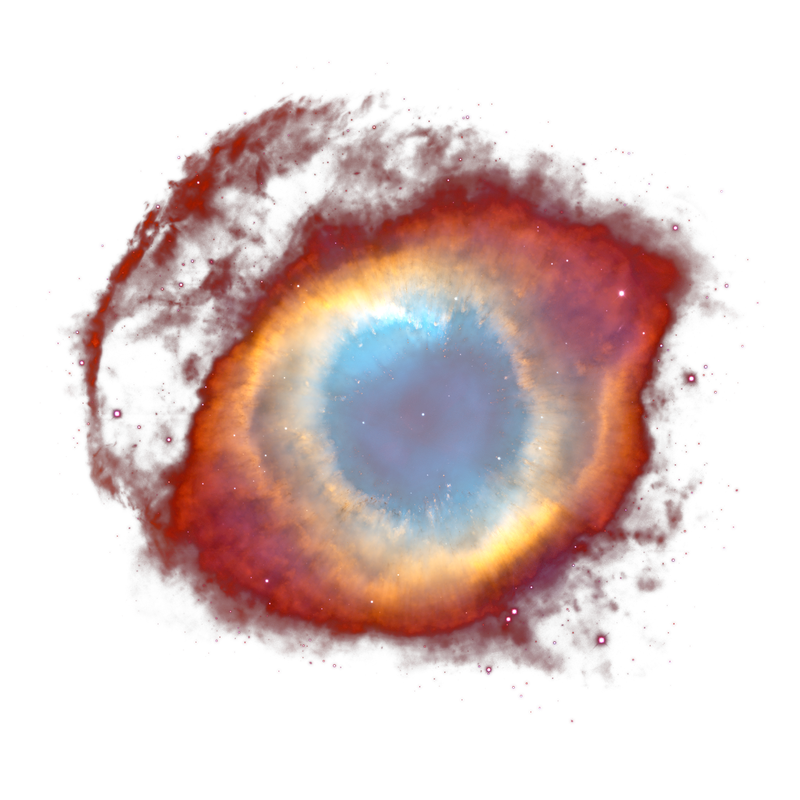
“Tim… how high did you say you turned up that signal? This planet did have oceans a while ago, didn’t it?”
deleted by creator
Initial analysis suggests that the object – referred to as TWA 7b – could be a young, cold planet with a mass around 0.3 times that of Jupiter (~100 Earth masses) and a temperature near 320 Kelvin (roughly 47 degrees Celsius). Its location aligns with a gap in the disc, hinting at a dynamic interaction between the planet and its surroundings.
Debris discs filled with dust and rocky material are found around both young and older stars, although they are more easily detected around younger stars as they are brighter. They often feature visible rings or gaps, thought to be created by planets that have formed around the star, but such a planet has yet to be detected within a debris disc.
Once verified, this discovery would mark the first time a planet has been directly associated with sculpting a debris disc and could offer the first observational hint of a trojan disc – a collection of dust trapped in the planet’s orbit.
TWA 7, also known as CE Antilae, is a young (~6.4 million years old) M-type star located about 111 light-years away in the TW Hydrae association. Its nearly face-on disc made it an ideal target for Webb’s high-sensitivity mid-infrared observations.
Is that damage on the panel’s upper-right? Looks like a “splash” of white dust on the rim.
EDIT: no, probably a reflection.
The spring on its own:

Ok, that could be true. I assumed they meant the “building” phase that some frameworks go through.
Except… the compilation step doesn’t add type safety to JS.
As an aside, type safety hasn’t been something I truly miss in JS, despite how often it’s mentioned.
Could you tell him just “you should have another MRI at a clinic”?
That rule does not seem very ethical to me, in any case.
Ok, that’s interesting! I didn’t realize there was controversy around this definition.
Today, the International Astronomical Union places the dividing line between brown dwarfs and planets at 13 Jupiter masses. This is the minimum mass required to ignite deuterium fusion.

The color was originally going to be called beccapurple, but Meyer asked that it instead be named rebeccapurple, as his daughter had wanted to be called Rebecca once she had turned six. She had said that Becca was a “baby name,” and that once she had turned six, she wanted to be called Rebecca. As Eric Meyer put it, “She made it to six. For almost twelve hours, she was six. So Rebecca it is and must be.”
You know what you did.
The image just loaded very slowly for me (i.e. after about 10 seconds). In some posts it never loads at all, but there is a thumbnail in the main screen. This is on sync.




Not sure if you’re trying to say there are no litigation clauses or that there are “no litigation” clauses…